
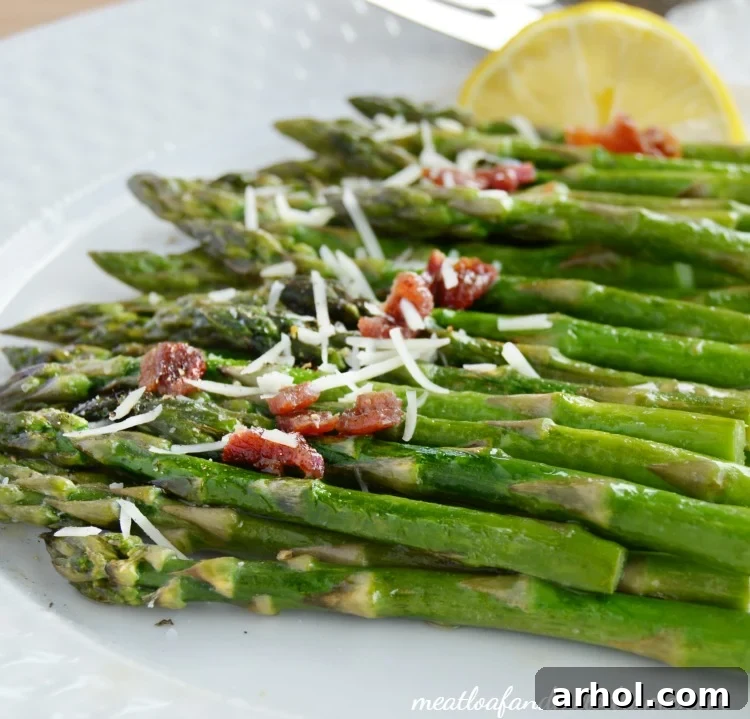
Sauteed Asparagus with Bacon, Lemon, and Parmesan Cheese: Your Ultimate Spring Side Dish
Spring bursts with vibrant colors and fresh flavors, and nothing epitomizes this season quite like tender, green asparagus. Forget the days of unappetizing canned vegetables; this recipe for Sauteed Asparagus with Bacon, Lemon, and Parmesan Cheese transforms simple spears into an extraordinary side dish. It’s a symphony of freshness, savory bacon, zesty lemon, and sharp Parmesan, delivering a taste experience that is both sophisticated and incredibly easy to achieve. Perfect for weeknight dinners or elegant gatherings, this dish promises to be a staple in your springtime culinary repertoire.
From Canned Calamity to Fresh Delight: My Asparagus Journey
For many years, my relationship with asparagus was, to put it mildly, fraught. Growing up, the only asparagus I ever encountered came from a can. It was a mushy, stringy, and frankly, gag-inducing experience. The thought of it still sends shivers down my spine – soft, overcooked, and far from the crisp, vibrant vegetable it was meant to be. I had firmly categorized asparagus as a “hard pass” in my culinary book, convinced that it was an inherently unpleasant food.
It took the persuasive powers of my husband to finally change my mind. One day, he suggested we try fresh asparagus, insisting it was an entirely different creature from its canned counterpart. Skeptical but willing to humor him, I reluctantly agreed. That decision marked a pivotal moment in my food journey. To my absolute astonishment, the fresh asparagus was nothing short of delicious! It was tender yet crisp, with a subtly sweet, earthy flavor that was completely captivating. What’s more, our children, often the toughest critics, also gave it their seal of approval. It turns out, my husband was right – fresh makes all the difference.
Since that transformative experience, fresh asparagus has become a beloved staple in our home. While I don’t recall the exact method we first used, over time, I’ve perfected a simple yet incredibly flavorful way to prepare it. My go-to approach involves a quick sauté in olive oil, then finishing it with a squeeze of fresh lemon, crumbled crispy bacon, and a generous dusting of Parmesan cheese. This method highlights the natural goodness of the asparagus while adding layers of irresistible flavor and texture.
Simplifying the Delicious: My Go-To Method
One of the beauties of this Sauteed Asparagus with Bacon, Lemon, and Parmesan recipe is its inherent simplicity and adaptability. I often plan ahead, cooking extra bacon during breakfast or dinner to have some readily available for crumbling. This not only adds a rich, smoky flavor profile to the asparagus but also makes this side dish incredibly quick to prepare. For convenience and budget-friendliness, I also opt for pre-shredded Parmesan cheese from the store, though freshly grated Parmesan will undoubtedly elevate the flavor even further.
This dish is a testament to the idea that sometimes, the most exquisite flavors come from the simplest combinations. The olive oil and butter create a perfect medium for sautéing, allowing the asparagus to reach that ideal tender-crisp stage. The lemon adds a crucial bright acidity that cuts through the richness of the bacon and cheese, lifting the entire dish. And the salty, umami notes from the Parmesan cheese tie all the elements together beautifully, making every bite a delight. It’s truly a harmonious blend of ingredients that transforms a humble vegetable into a star side.
Sauteed Asparagus with Bacon, Lemon and Parmesan Cheese Recipe

Sauteed Asparagus with Bacon, Lemon and Parmesan
By: Dee
Fresh asparagus sautéed to perfection with crispy bacon, bright lemon, and savory Parmesan cheese for an irresistible side dish. This quick and easy recipe is bursting with flavor and is ideal for any spring meal.
Prep Time: 5 minutes
Cook Time: 10 minutes
Total Time: 15 minutes
Servings: 5
Course: Side Dish
Cuisine: American
Ingredients
- 1 bunch of fresh asparagus (approx. 1 lb)
- 1 tablespoon olive oil
- 1 tablespoon butter
- 1 lemon wedge (for fresh juice)
- A generous dash of grated Parmesan cheese
- 2 strips of crumbled cooked bacon (pre-cooked or freshly crisped)
- Sea salt to taste
- Freshly ground black pepper to taste
Instructions
- Prepare the Asparagus: Begin by thoroughly washing the fresh asparagus under cold, running water to remove any dirt or grit. Gently pat the stalks dry with a clean kitchen towel or paper towels.
- Trim the Woody Ends: To ensure the most tender and enjoyable experience, trim the woody ends of the asparagus stalks. A common and effective method is to hold a stalk at both ends and gently bend it; it will naturally snap where the tough, woody part meets the tender, edible part. Discard the woody ends. Alternatively, you can visually inspect and cut off the bottom 1-2 inches.
- Heat the Skillet: In a large skillet or frying pan (a cast iron pan works wonderfully for this), heat the olive oil and butter over medium heat. Allow the butter to melt completely and become slightly shimmering, indicating it’s ready for the asparagus.
- Sauté the Asparagus: Add the trimmed asparagus spears to the hot skillet in a single layer if possible. Sauté for approximately 6 to 10 minutes, stirring occasionally to ensure even cooking. The asparagus should turn bright green and become tender-crisp. The cooking time will vary depending on the thickness of your asparagus spears; thinner spears will cook faster. We prefer ours with a slight crunch, but you can cook it a little longer if you prefer a softer texture.
- Warm the Bacon: Just before the asparagus is finished cooking, add the crumbled, cooked bacon to the skillet. Toss it gently with the asparagus for about 1-2 minutes to warm it through and allow its savory flavors to meld beautifully with the asparagus.
- Season and Serve: Once cooked to your liking, remove the asparagus and bacon from the heat. Transfer them immediately to a serving dish. Generously squeeze fresh lemon juice from the lemon wedge over the sautéed asparagus.
- Garnish and Enjoy: Finish by sprinkling a generous dash of grated Parmesan cheese, sea salt, and freshly ground black pepper over the entire dish. Serve immediately and savor this vibrant, flavorful, and perfectly crisp side!
Nutrition Facts (Approximate per serving)
- Calories: 47 kcal
- Fat: 5g
- Saturated Fat: 1g
- Cholesterol: 6mg
- Sodium: 32mg
- Vitamin A: 95 IU
- Vitamin C: 2.1mg
- Iron: 0.1mg
Nutrition information is automatically calculated and should be used as an approximation only. Values may vary based on specific ingredients and preparation.
Tips for Perfectly Sauteed Asparagus Every Time
Achieving perfectly cooked asparagus is key to enjoying this delightful dish. Here are a few tips to ensure your sautéed asparagus is always tender-crisp and full of flavor:
- Choosing the Best Asparagus: Look for spears that are firm, straight, and have tightly closed tips. Avoid any that look limp, wrinkled, or have open, flowering tips, as these indicate older asparagus. Thinner spears tend to be more tender and cook faster, while thicker ones might require a minute or two longer.
- Proper Trimming: The “snap test” (bending the spear until it naturally breaks) is a fantastic way to ensure you’re only cooking the tender parts. If you’re trimming a large batch, you can snap one spear and then align the rest of the bunch with that one to cut them all at the same point.
- Don’t Overcrowd the Pan: Sautéing works best when vegetables have room to breathe and brown slightly. If you’re cooking a large quantity, work in batches to avoid steaming the asparagus, which can lead to a soggy texture.
- Medium-High Heat is Your Friend: A medium-high heat setting helps achieve a beautiful sear and crispness on the exterior while allowing the interior to cook through. Too low heat will result in steaming, and too high can burn the exterior before the inside is tender.
- Cook to Your Preference: The cooking time of 6-10 minutes is a guideline. Some prefer their asparagus very crisp, almost raw-like, while others enjoy it softer. Taste a piece around the 6-minute mark and adjust cooking time to your desired tenderness.
- Seasoning at the Right Time: Adding salt and pepper towards the end of cooking helps the flavors cling to the spears without drawing out too much moisture too early. The lemon and Parmesan are best added right after cooking for maximum impact.
Delicious Variations & Serving Suggestions
While this classic recipe is a winner, it’s also wonderfully versatile. Here are some ideas to customize your sautéed asparagus:
Flavor Variations:
- Garlic Lover’s Delight: Add 1-2 cloves of minced garlic to the skillet during the last 2-3 minutes of sautéing for an aromatic boost.
- Herb Infusion: Fresh herbs like thyme, rosemary, or finely chopped parsley can be tossed in with the asparagus during the final minutes of cooking.
- Spicy Kick: A pinch of red pepper flakes sautéed with the asparagus will add a subtle heat.
- Different Cheeses: Experiment with other hard, salty cheeses like Pecorino Romano or even a sprinkle of crumbled feta for a different tangy note.
- Nutty Crunch: Toasted slivered almonds or pine nuts can be added at the end for an extra layer of texture and flavor.
- Balsamic Glaze: Drizzle a touch of balsamic glaze over the finished dish for a sweet and tangy finish (perhaps omit the lemon if using balsamic).
Serving Suggestions:
This Sauteed Asparagus with Bacon, Lemon, and Parmesan is a perfect companion to a wide array of main courses:
- Grilled or Roasted Meats: Pairs beautifully with grilled chicken, roasted pork tenderloin, or pan-seared steak.
- Fish and Seafood: The lemon and asparagus complement baked salmon, pan-fried cod, or shrimp scampi wonderfully.
- Pasta Dishes: Serve alongside a light pasta primavera or a simple lemon-garlic pasta.
- Egg Dishes: A fantastic addition to a spring brunch, served with quiche, frittatas, or scrambled eggs.
- Grain Bowls: Add a nutritious and flavorful punch to your quinoa or rice bowls.
Health Benefits of Asparagus
Beyond its delicious taste and versatility, asparagus is also a nutritional powerhouse. It’s low in calories but rich in essential vitamins and minerals, making it a fantastic addition to any healthy diet. Asparagus is an excellent source of:
- Vitamin K: Important for blood clotting and bone health.
- Folate (Vitamin B9): Crucial for cell growth and DNA formation.
- Vitamin A: Beneficial for vision, immune function, and skin health.
- Vitamin C: A powerful antioxidant that supports immune health.
- Dietary Fiber: Aids in digestion and promotes a feeling of fullness.
- Antioxidants: Including flavonoids and polyphenols, which help fight oxidative stress.
Its diuretic properties can also aid in reducing bloating, and its unique blend of nutrients supports overall well-being. So, enjoy every bite of this flavorful side dish knowing you’re also nourishing your body!
Frequently Asked Questions (FAQ)
- Can I make this Sauteed Asparagus ahead of time?
- While best served fresh and hot, you can sauté the asparagus a few hours in advance and reheat gently. However, for optimal crispness and flavor, we recommend cooking it just before serving. The bacon can be cooked and crumbled ahead of time to speed up the process.
- How should I store leftovers?
- Store any leftover Sauteed Asparagus with Bacon, Lemon, and Parmesan in an airtight container in the refrigerator for up to 3-4 days. Reheat gently in a skillet over low heat or in the microwave until just warmed through.
- What if I don’t like bacon or want a vegetarian option?
- Absolutely! You can easily omit the bacon for a delicious vegetarian side. For a savory vegetarian alternative, consider adding toasted breadcrumbs or finely chopped sun-dried tomatoes to the finished dish.
- Can I use frozen asparagus for this recipe?
- Fresh asparagus is highly recommended for this recipe to achieve the desired tender-crisp texture. Frozen asparagus tends to become softer and more watery when sautéed. If you must use frozen, thaw it completely and pat it very dry before adding it to the skillet, and be aware that the texture will be different.
- My asparagus turned out soggy. What went wrong?
- Soggy asparagus is usually a result of overcooking or overcrowding the pan. Ensure your skillet is hot enough, don’t overcrowd the pan (cook in batches if necessary), and keep an eye on the cooking time, aiming for that vibrant green, tender-crisp stage.
It’s truly that easy to create a side dish that’s bursting with flavor, wonderfully crisp, and definitively not soggy! Once you try fresh sautéed asparagus, you’ll never look back at the canned version again.
While I still dream of trying asparagus wrapped in bacon sometime soon, for now, this sautéed version provides all the incredible flavor without needing to turn on the oven. It’s a fantastic, quick solution for adding a fresh vegetable to any meal. Even my pickiest eater, our youngest, enjoys this recipe, and the other kids usually clean their plates too. It’s a true crowd-pleaser and a healthy way to get everyone to enjoy their greens.
Thank you so much for stopping by and exploring this delightful recipe. I hope you’re inspired to try it in your own kitchen!
Sharing At:
- Inspiration Monday
- Wow Us Wednesdays