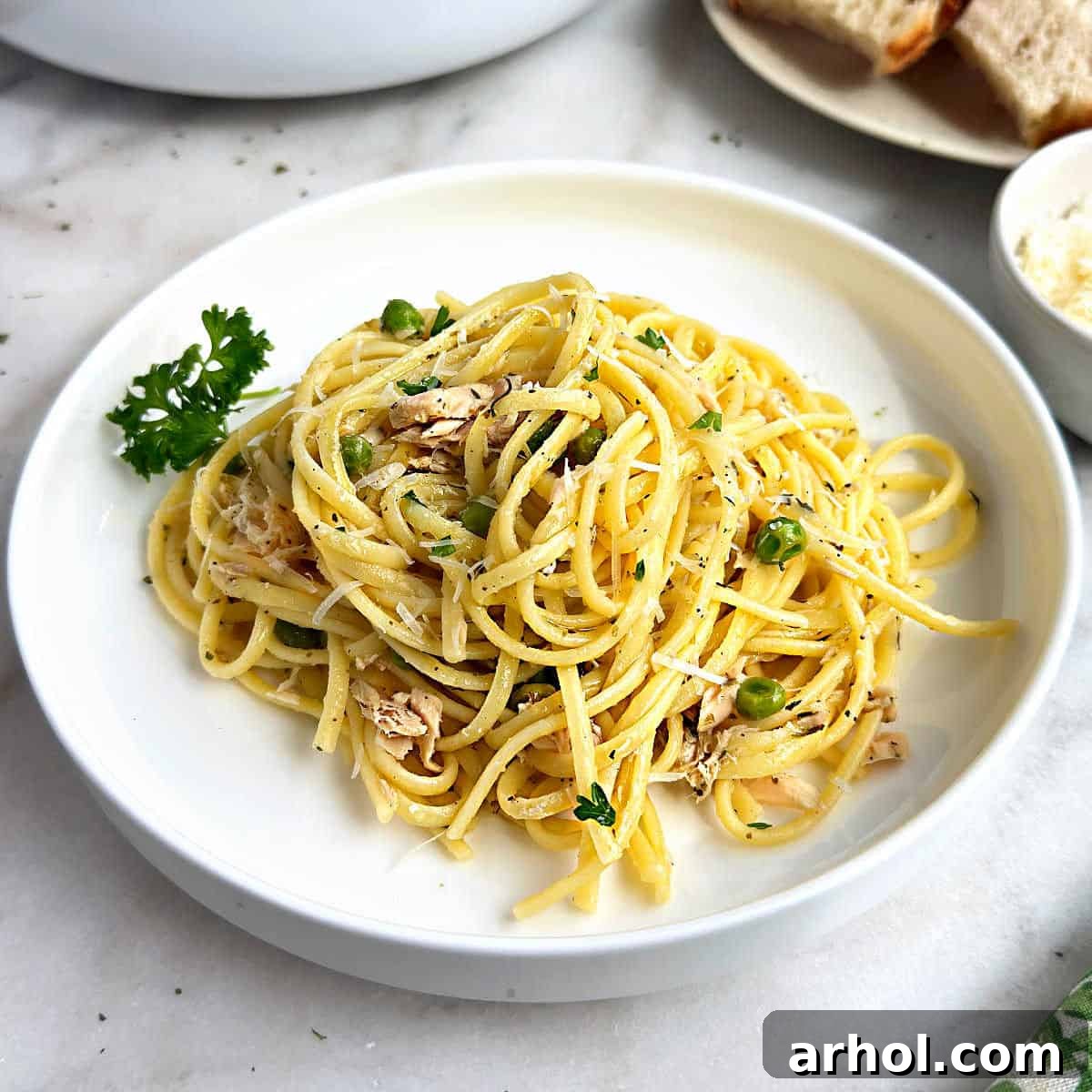
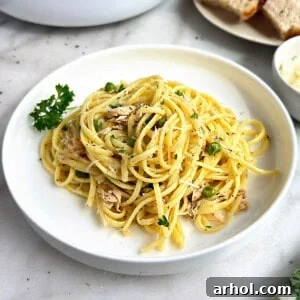
This effortless tuna pasta recipe transforms simple pantry staples like canned tuna and spaghetti into a satisfying, quick dinner in mere minutes. Ideal for bustling weeknights, unexpected guests, or even a wholesome lunch, it stands out for its incredible budget-friendliness and versatility. Dive into a meal that proves deliciousness doesn’t have to be complicated or costly.
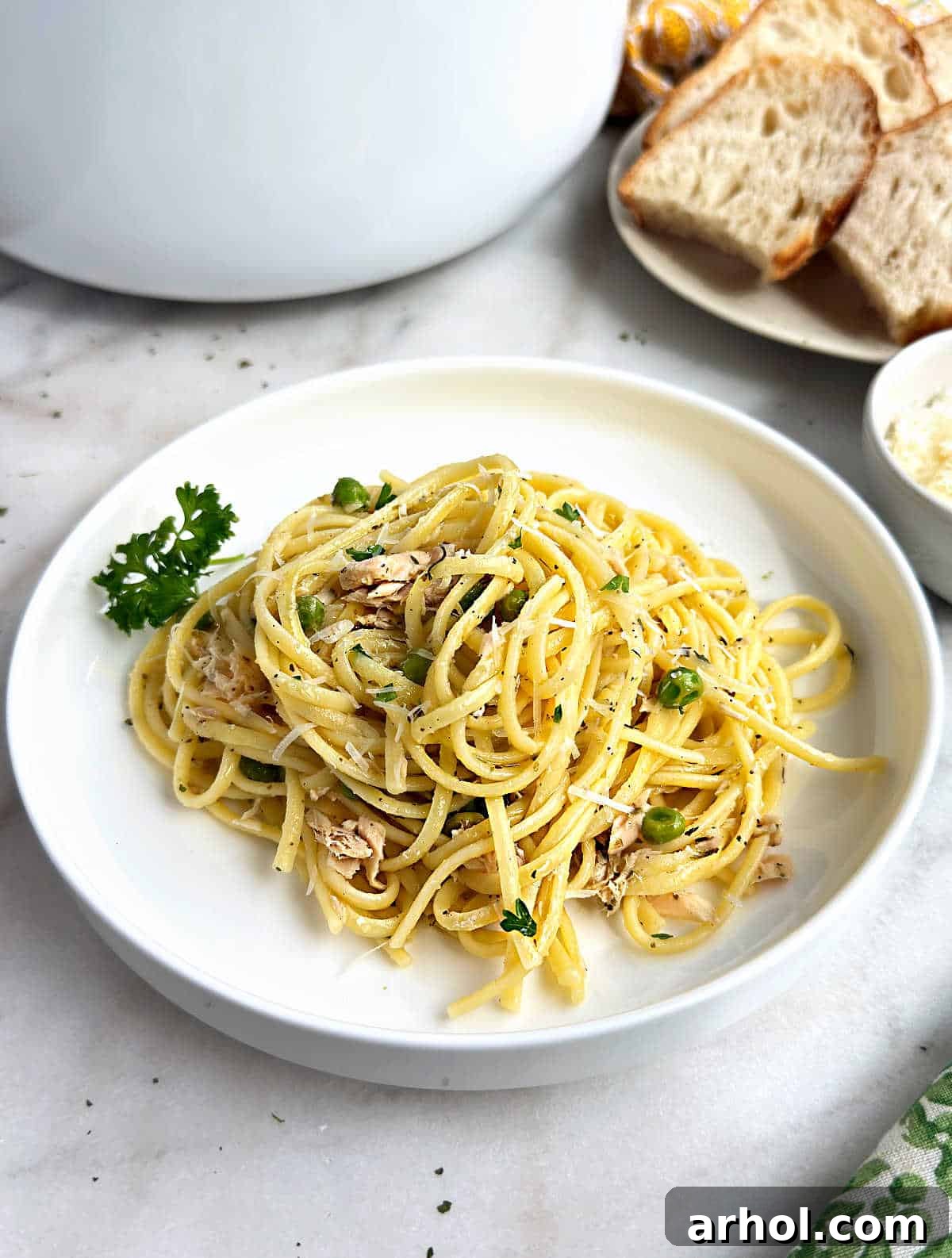
For generations, canned tuna pasta has been a cherished go-to in kitchens worldwide, especially when a speedy, wholesome meal is needed. It’s the ultimate pantry powerhouse, a testament to how humble ingredients can create something truly spectacular. While tuna sometimes unfairly carries a “boring” reputation, its affordability and incredible adaptability make it a culinary hero, particularly for families seeking delicious yet economical options.
My family’s culinary traditions often featured canned tuna in comforting casseroles and crispy patties, demonstrating its broad appeal. However, this tuna pasta takes convenience to a new level. It’s even simpler to prepare, requiring minimal fuss, yet delivers all the delicious flavor and hearty satisfaction you’d expect from a cherished family recipe. Get ready to rediscover the magic of canned tuna transformed into a delightful pasta dish.
Why You’ll Absolutely Love This Easy Tuna Pasta!

- Lightning-Fast Preparation: This tuna spaghetti comes together in about 15 minutes flat, from start to finish. The longest part of the process? Simply waiting for your pasta water to boil! It’s truly a weeknight lifesaver.
- One-Pot Potential: While technically a two-step process (boiling pasta then mixing), the entire “sauce” comes together in the same pot you cooked your pasta in, minimizing cleanup and making life easier.
- Effortlessly Simple Ingredients: You likely have everything you need in your pantry and freezer right now. We use dried spices to keep prep work minimal, saving you precious time without sacrificing flavor.
- Infinitely Adaptable: The beauty of this basic recipe lies in its flexibility. Easily jazz it up with different ingredients to suit your tastes, dietary needs, or whatever you have on hand. It’s a fantastic canvas for creativity!
- Bright, Fresh Flavor: Despite its simplicity, the flavor profile is surprisingly light and bright, thanks to the fresh lemon and a thoughtful blend of seasonings. Even the pickiest eaters at your table will find themselves asking for seconds!
- Budget-Friendly: Canned tuna and pasta are among the most economical ingredients available, making this recipe a smart choice for feeding a crowd without breaking the bank.
Gather Your Simple Ingredients: What You Need
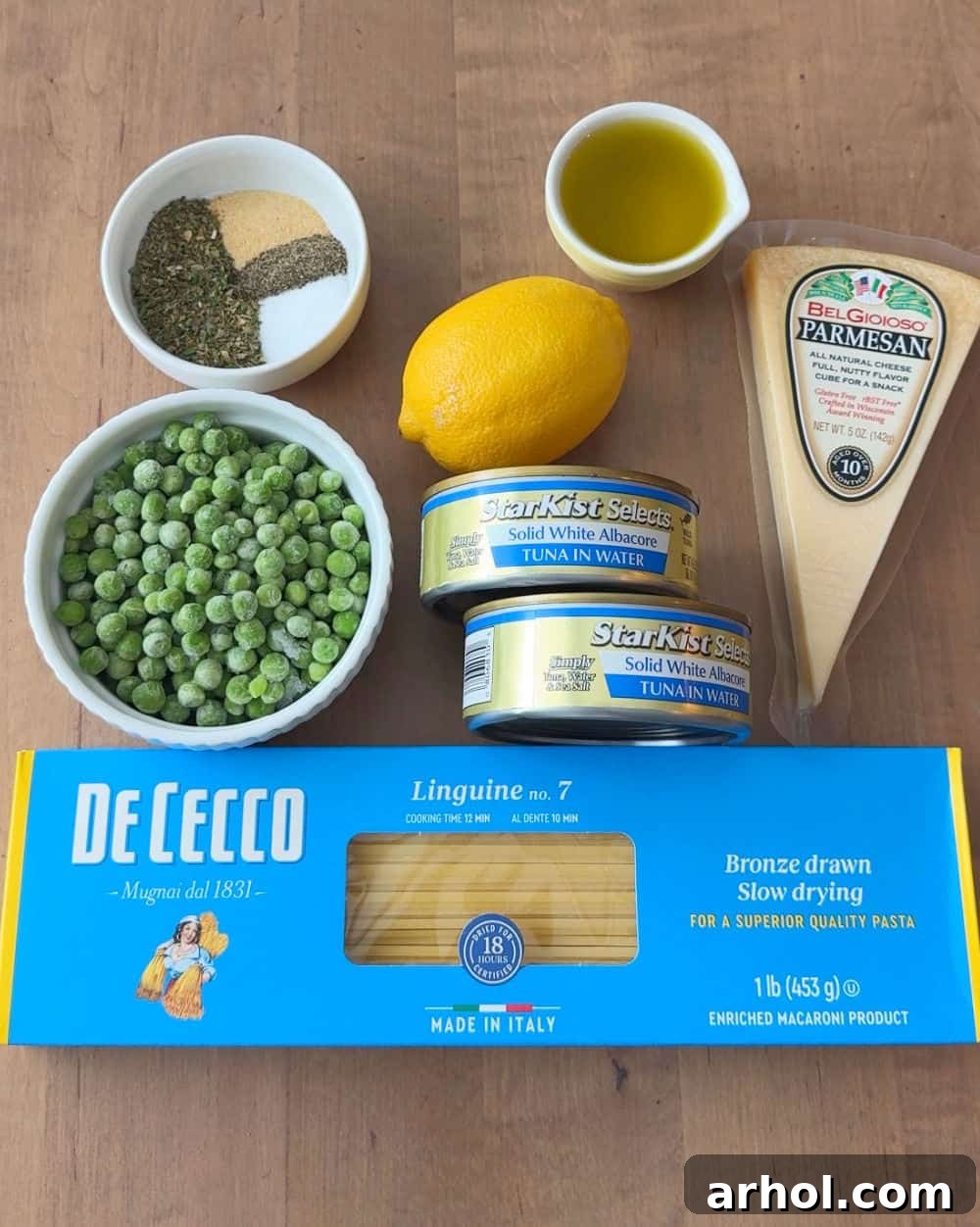
The beauty of this easy tuna pasta lies in its minimal and accessible ingredient list. You probably have most, if not all, of these items in your pantry already! For exact measurements, be sure to check the full recipe card below.
- Canned Tuna: This is the star of our dish! The type truly doesn’t matter much for this recipe, so use what you have on hand or prefer. I often reach for albacore tuna packed in water for a lighter flavor, but tuna packed in oil works just as well and can add a richer taste. Whichever you choose, ensure you drain it thoroughly and flake it before adding it to the pasta.
- Pasta: Long, thin pasta shapes like spaghetti or linguine are fantastic for this recipe, as they beautifully carry the light sauce. However, feel free to experiment with other shapes like fettuccine, penne, rotini, or even macaroni for a different texture. Just ensure it’s cooked to a perfect al dente for the best results.
- Frozen Peas: While not strictly essential, a cup of frozen peas transforms this dish into a more complete and visually appealing meal. They add a touch of sweetness, vibrant color, and extra nutrients, making it a well-rounded dinner option. No need to thaw them separately – we have a clever trick for that!
- Fresh Lemon: This is a crucial ingredient that elevates the entire dish. Fresh lemon juice adds a wonderful brightness and tang, cutting through the richness of the tuna and olive oil. Don’t skip it; it truly makes a difference! A little zest can also be added for an extra citrusy punch.
- Olive Oil: A good quality extra virgin olive oil forms the base of our simple sauce, providing a silky texture and Mediterranean flavor. You can use plain olive oil, or if you have a flavored oil (like garlic-infused or lemon-infused), it would be a delightful addition.
- Essential Seasonings: We keep it simple and flavorful with a blend of dried herbs and spices.
- Sea Salt: To enhance all the flavors.
- Black Pepper: Freshly ground black pepper adds a subtle warmth and aroma.
- Garlic Powder: Provides a foundational savory garlic note without the need for mincing fresh garlic. For an even more robust garlic flavor, fresh minced garlic can be used.
- Italian Seasoning: A convenient blend of herbs like oregano, basil, thyme, and rosemary that instantly imparts classic Mediterranean warmth.
- Parmesan Cheese: Grated Parmesan cheese stirred in at the end adds a wonderful savory depth and a hint of creamy richness to the sauce. It’s truly delicious, but if you don’t have any or prefer a dairy-free option, the dish will still be incredibly tasty without it.
- Reserved Pasta Water: Often called “liquid gold,” this starchy water is key to creating a light, emulsified sauce that clings perfectly to the pasta. Don’t forget to save some before draining your noodles!
How to Make This Unbelievably Easy Tuna Pasta
This recipe is designed for maximum flavor with minimum effort. Follow these simple steps to bring a delicious, satisfying meal to your table in under 20 minutes.
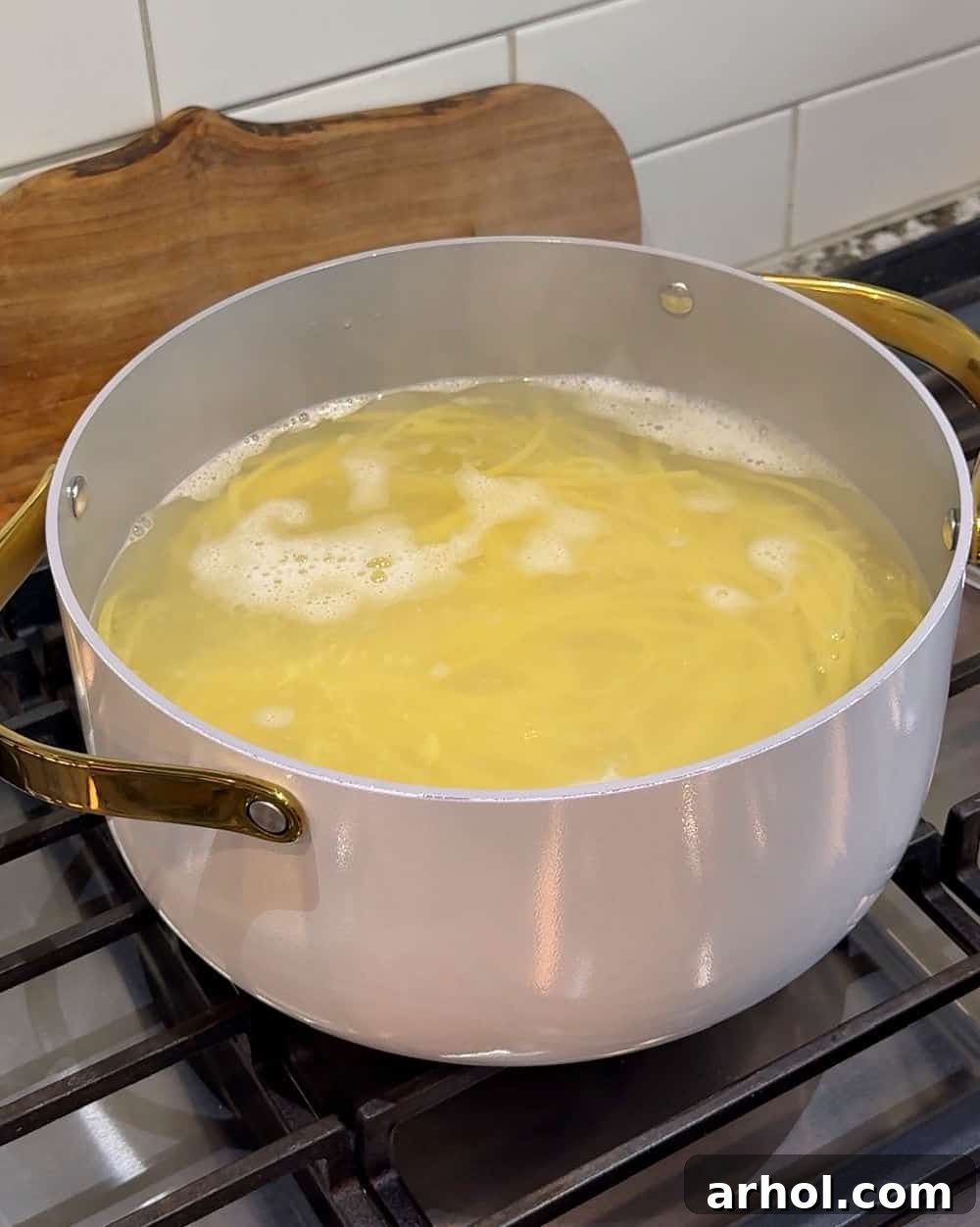
- Cook Your Pasta: Begin by bringing a large pot of generously salted water to a rolling boil. Add your spaghetti or linguine and cook according to package directions until it’s perfectly al dente. This means it should be firm to the bite, not mushy. Before draining, make sure to reserve about one cup of the starchy pasta water. This liquid is essential for creating our light sauce!
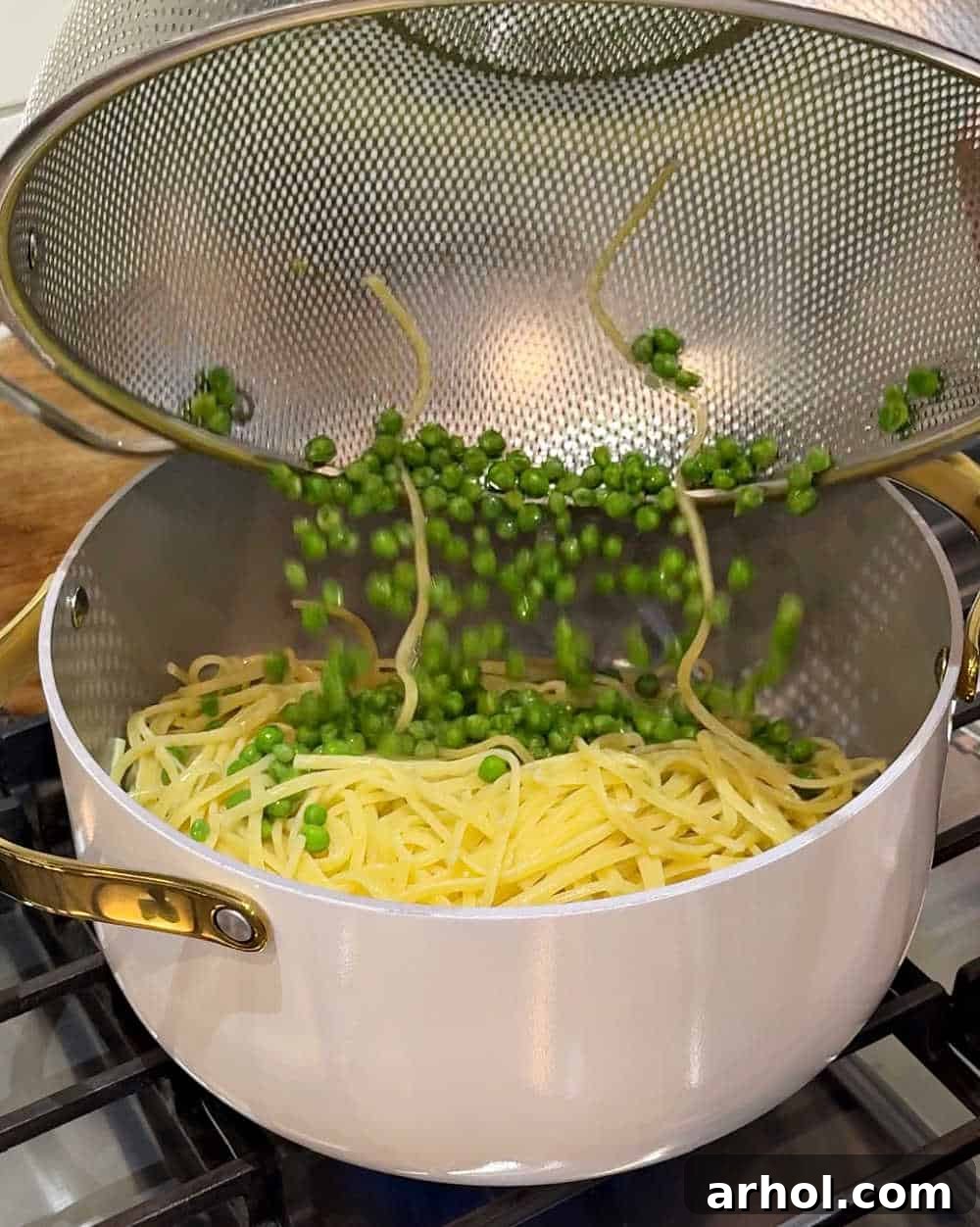
- Prepare the Peas (Quick Trick!): While the pasta is cooking, place your frozen peas into the colander you’ll use to drain the pasta. This clever trick allows the hot water from the drained pasta to gently thaw and warm the peas, saving you an extra step and another pot!
- Drain and Return: Once the pasta is al dente and you’ve reserved your pasta water, carefully drain the pasta and peas using the colander. Return the empty pot to the stove.
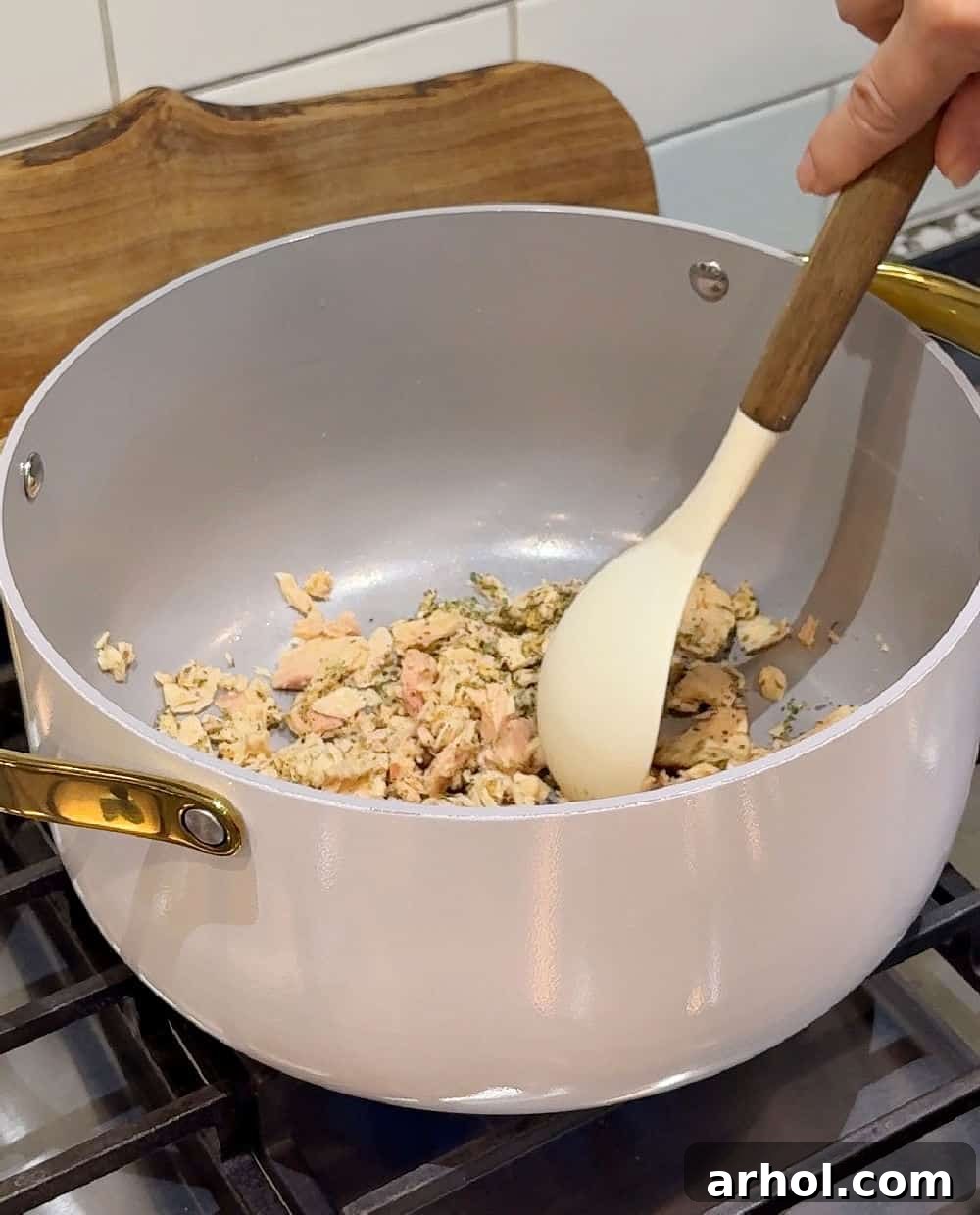
- Build the Flavor Base: Into the warm pot, add the drained and flaked canned tuna. Sprinkle in the Italian seasoning, sea salt, garlic powder, and ground black pepper. Give it a quick stir over low heat for about 30 seconds to a minute, allowing the spices to bloom and coat the tuna, infusing it with aromatic flavor.
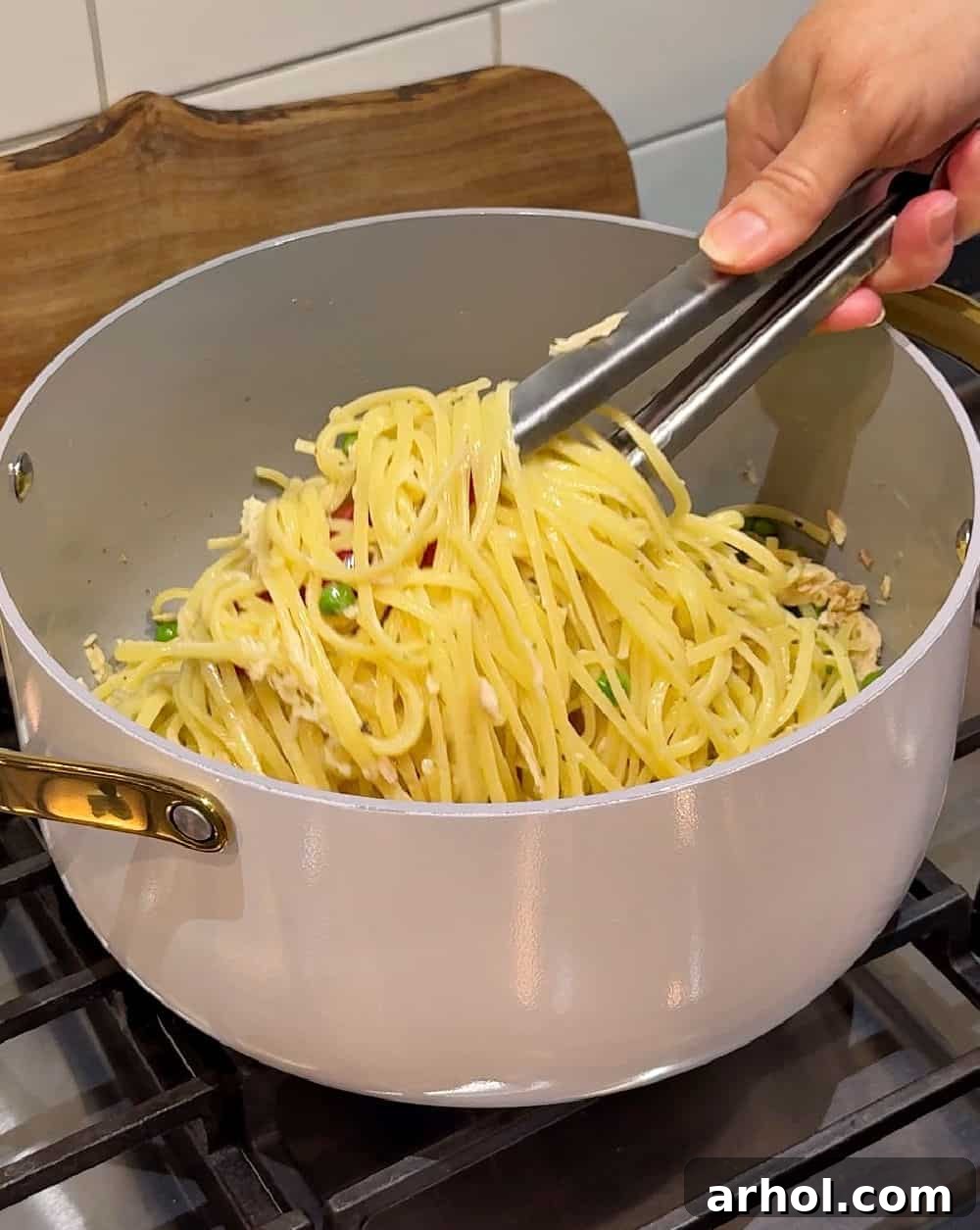
- Combine and Coat: Add the drained pasta and thawed peas directly back into the pot with the seasoned tuna. Pour in the reserved pasta water, fresh lemon juice, and olive oil. Using kitchen tongs or a large spoon, gently toss all the ingredients together until the pasta is beautifully coated in the light, aromatic sauce.
- Finish with Parmesan: Sprinkle the grated Parmesan cheese over the pasta mixture. Toss again to evenly distribute the cheese, which will melt slightly into the warm sauce, adding a lovely depth and creaminess.
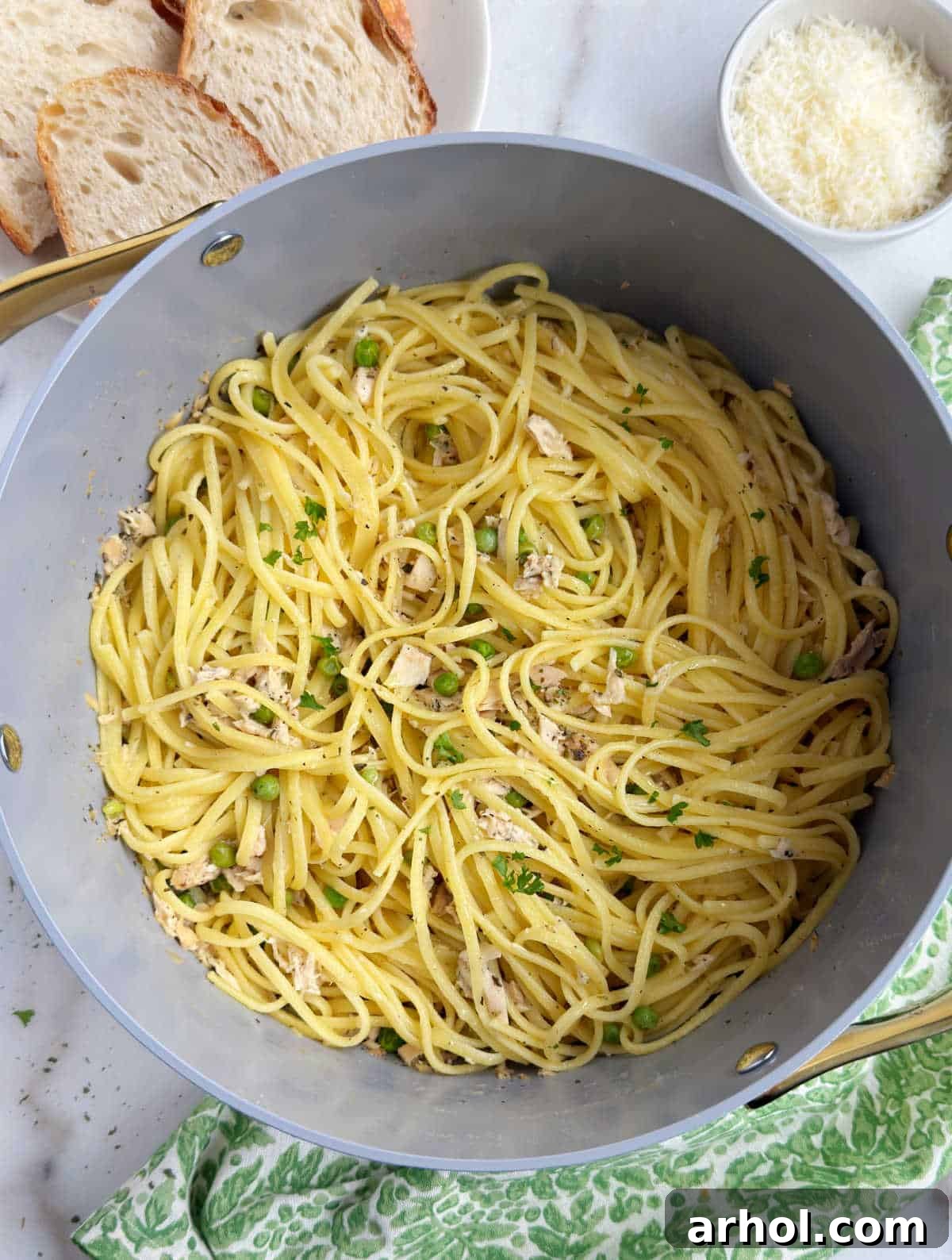
- Serve Immediately: Garnish with fresh chopped parsley, if desired, for a pop of color and freshness. Serve your delicious tuna pasta immediately while it’s warm and the flavors are at their peak. Enjoy!
Expert Tips for the Best Tuna Pasta
- Thawing Peas, Made Easy: As mentioned in the instructions, placing the frozen peas in your colander before draining the hot pasta is a game-changer. The residual heat from the pasta water will perfectly thaw and warm the peas, integrating them seamlessly into the dish without extra cooking or cleanup.
- Adjusting Sauce Consistency: This recipe creates a wonderfully light and bright sauce. If you find the pasta seems a little dry after tossing, don’t hesitate to add a splash more olive oil or an extra tablespoon or two of the reserved pasta water. Both will help achieve a silkier consistency.
- Add a Touch of Creaminess: For a slightly richer, more indulgent sauce without making it heavy, stir in a tablespoon of butter along with the olive oil and lemon juice. The butter will melt into the sauce, adding a lovely creamy finish.
- Fresh Garlic vs. Garlic Powder: While garlic powder offers convenience, using one or two cloves of fresh minced garlic sautéed lightly in olive oil before adding the tuna can elevate the flavor significantly.
- Don’t Overcook the Pasta: Al dente pasta holds its shape and texture best in this light sauce. Overcooked pasta can become mushy and absorb too much liquid, making the dish less appealing.
- Serve Warm: This dish is truly at its peak when served immediately. The flavors are fresh, and the pasta is perfectly tender.
Storage and Reheating
This tuna pasta is best enjoyed fresh, but leftovers can certainly be stored and savored. Place any remaining pasta in an airtight container and refrigerate it for up to 3-4 days. When reheating, the pasta may absorb more of the sauce and seem a bit dry. To restore its deliciousness, I recommend adding a little extra olive oil, a splash of water or chicken broth, and perhaps another squeeze of fresh lemon juice before warming it gently on the stovetop or in the microwave.
Creative Variations and Customizations
One of the best aspects of this easy tuna pasta is its incredible versatility. It serves as a fantastic base for countless additions and customizations. Feel free to experiment and make it your own!
- Spice It Up: For those who enjoy a little heat, a pinch or two of red pepper flakes added with the other seasonings will provide a delightful kick.
- Add More Veggies: Beyond peas, consider stirring in other quick-cooking vegetables. Baby spinach or arugula can be added at the very end to wilt into the warm pasta. Finely chopped bell peppers, corn, or even steamed broccoli florets would also be delicious additions.
- Boost the Mediterranean Flavors:
- Olives: Chopped black or Kalamata olives add a briny, salty punch.
- Capers: These tiny, tangy flower buds are fantastic with tuna and lemon.
- Artichoke Hearts: Quartered or chopped artichoke hearts (canned or jarred, drained) lend a wonderful texture and Mediterranean flair.
- Sun-Dried Tomatoes: Chopped sun-dried tomatoes (oil-packed, drained) can add a concentrated, sweet-tart flavor.
- Herbaceous Additions: While Italian seasoning provides a great base, fresh herbs always elevate a dish. Fresh basil, dill, or even mint (for a surprising twist!) can be chopped and stirred in at the end along with the parsley.
- Creamy Indulgence: If you prefer a richer, creamier sauce, a tablespoon or two of cream cheese, sour cream, or even a splash of heavy cream can be stirred in at the end with the Parmesan.
- Nutty Crunch: Toasted pine nuts or chopped walnuts can add a delightful textural contrast and nutty flavor.
- Flavor Boosters: A teaspoon of Dijon mustard can add a subtle tang and complexity to the sauce. A dash of Worcestershire sauce can also deepen the savory notes.
As you can see, this simple dinner is truly super versatile, allowing you to adapt it to your preferences and what you have on hand.
Frequently Asked Questions (FAQs) About Tuna Pasta
Here are answers to some common questions about making the best tuna pasta:
What kind of tuna is best for pasta?
For this recipe, any canned tuna works well! Albacore tuna in water offers a mild flavor and flaky texture, while light tuna (like skipjack or yellowfin) in water is also excellent and often more budget-friendly. Tuna packed in olive oil can add extra richness and depth, so choose based on your preference and what you have available. Just be sure to drain it well.
Can I use fresh tuna instead of canned?
While this recipe is specifically designed for canned tuna for its convenience and pantry-friendliness, you absolutely could use fresh tuna. You would need to pan-sear or grill a fresh tuna steak, then flake it into pieces before adding it to the pasta. This would result in a different, more gourmet flavor profile, but still delicious!
Is this tuna pasta healthy?
Yes, this tuna pasta recipe is quite healthy! Tuna is a great source of lean protein and omega-3 fatty acids. Combined with whole wheat pasta (if desired) and peas, it offers fiber and essential nutrients. The sauce is light, relying on olive oil and lemon rather than heavy creams, making it a balanced meal.
Can I make this recipe gluten-free?
Absolutely! Simply substitute regular spaghetti or linguine with your favorite gluten-free pasta. The rest of the ingredients are naturally gluten-free.
How can I make the sauce creamier without heavy cream?
If you want a creamier sauce without using heavy cream, you have a few options: increase the amount of reserved pasta water you add, stir in a tablespoon of cream cheese or a dairy-free cream cheese alternative, or add a generous amount of grated Parmesan cheese, which will melt and add richness. A tablespoon of unsalted butter also works wonders.
What can I serve with tuna pasta?
This tuna pasta is quite complete on its own, but it pairs wonderfully with a simple side salad dressed with vinaigrette, some crusty bread for soaking up the light sauce, or a side of steamed green beans or asparagus.
Discover More Delicious Canned Tuna Recipes
If you’ve loved this easy tuna pasta, you’ll be thrilled to explore more ways to use this versatile pantry staple. Give my grandma’s comforting tuna casserole, my mom’s delectable tuna patties, or her classic tuna salad with egg a try next!
Print Recipe
The Easiest Tuna Pasta Recipe with Canned Tuna
Dee
This easy tuna pasta recipe with canned tuna and spaghetti uses a few simple ingredients to make a quick dinner in minutes. Perfect for busy weeknights and very budget-friendly!
5 minutes
10 minutes
15 minutes
8
Ingredients
- 16 oz pasta (linguine or spaghetti)
- 1 cup frozen peas
- 8 oz canned tuna, drained and flaked
- 2 teaspoons Italian seasoning
- 1 teaspoon sea salt
- 1 teaspoon garlic powder
- ½ teaspoon ground black pepper
- Juice of 1 medium lemon
- 1 cup reserved pasta water
- ¼ cup olive oil
- ¼ cup grated Parmesan cheese
- Chopped parsley for garnish (optional)
Instructions
- Cook the pasta in a large pot of boiling salted water until al dente, reserving 1 cup of water when done.
- Drain pasta (with peas in the colander to thaw them) and return the pot to the stove.
- Add tuna to the pot and season with Italian seasoning, salt, garlic powder, and pepper over low heat. Stir briefly to combine.
- Add the cooked pasta and peas over the seasoned tuna.
- Pour the reserved pasta water, lemon juice, and olive oil over the pasta mixture, sprinkle with Parmesan, and toss to coat everything evenly.
- Garnish with fresh parsley, if desired, and serve immediately.
Video
Watch a quick video demonstration of this recipe:
Notes
I like to place the frozen peas in the colander before draining the pasta so the hot water and pasta will easily thaw the peas, saving time and an extra pot.
This dish is best when served right away for optimal flavor and texture. You can add additional olive oil or a splash of pasta water if you feel the pasta is too dry after reheating.
Nutrition
Calories: 330 kcal, Carbohydrates: 47g, Protein: 15g, Fat: 9g, Saturated Fat: 2g, Polyunsaturated Fat: 1g, Monounsaturated Fat: 5g, Cholesterol: 13mg, Sodium: 414mg, Potassium: 258mg, Fiber: 4g, Sugar: 3g, Vitamin A: 194IU, Vitamin C: 14mg, Calcium: 63mg, Iron: 2mg
Nutrition information is automatically calculated and should only be used as an approximation.
Additional Info
Main Course
American
Enjoyed this recipe? Your feedback means the world to us! Please consider leaving a comment below to share your experience or any delicious variations you tried.
Sign up for our free weekly newsletter to receive more easy, budget-friendly recipes directly in your email inbox, ensuring you never run out of delicious meal ideas!