
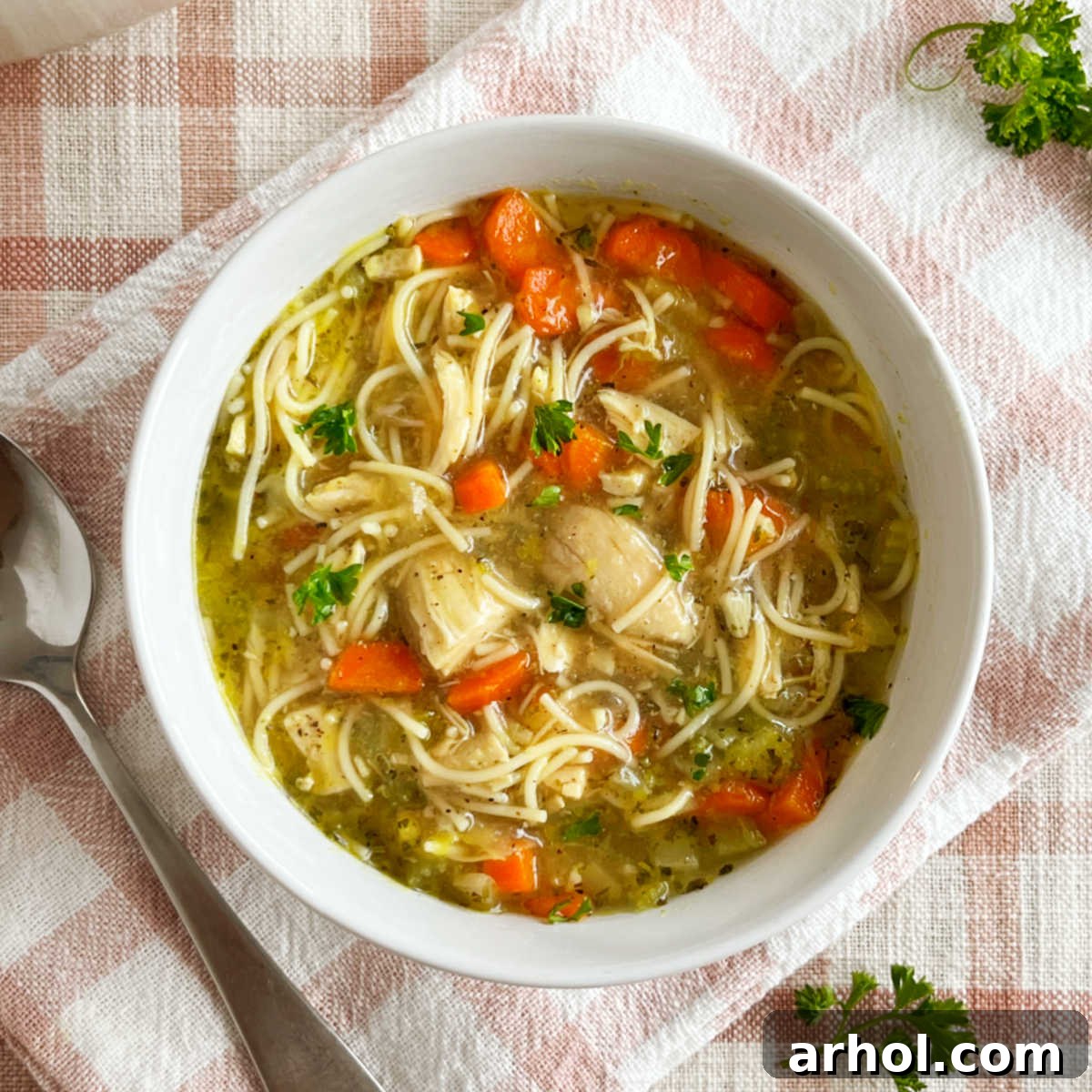
Discover the ultimate recipe for Homemade Chicken Noodle Soup, a truly comforting classic that’s incredibly easy to prepare, especially when utilizing leftover chicken. This nourishing soup comes together quickly with just a few simple ingredients, offering a warm embrace in every spoonful. Perfect for chilly evenings or when you need a little pick-me-up, our streamlined recipe lets you savor the rich, savory flavors of homemade goodness in a fraction of the traditional time.
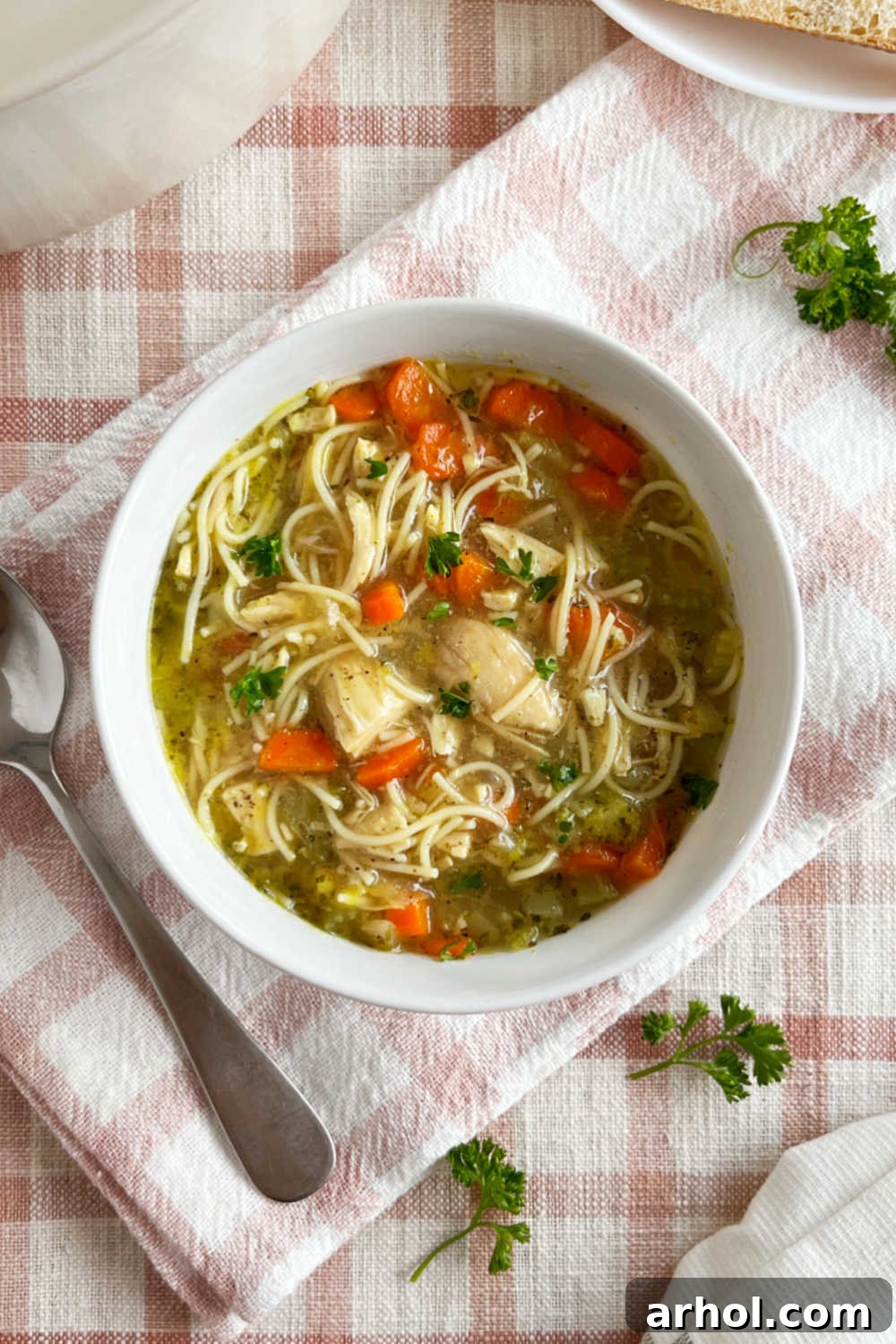
The Best Homemade Chicken Noodle Soup Ever: A Comfort Food Classic
For generations, chicken noodle soup has been hailed as a culinary hero – a dish that instantly brings comfort, warmth, and a feeling of home. Whether it’s a remedy for the common cold or a simple, satisfying meal for the family, its appeal is universal. My family’s recipe for homemade chicken noodle soup stands out as truly exceptional, and I’ve been refining it over the years to make it both incredibly flavorful and wonderfully straightforward. Forget the hours spent boiling bones and skimming foam; this recipe is designed for modern convenience without sacrificing an ounce of taste. It’s the kind of soup you’ll want to make all fall and winter long, perhaps even weekly, as it offers a wholesome, hearty meal that everyone loves and can be prepared with minimal fuss.
Traditional chicken soup often involved simmering chicken bones for several hours to create a rich, gelatinous broth, a method passed down through my grandmother’s and great-grandmother’s kitchens. While those slow-cooked broths certainly have their own profound charm and depth, my simplified recipe embraces a faster approach, allowing you to enjoy authentic homemade flavor in about 30 minutes from start to finish. This remarkable efficiency comes from leveraging readily available pre-cooked chicken and a quality chicken stock, eliminating the need for lengthy simmering and constant supervision.
For the deepest, most nuanced flavor, I highly recommend making your own chicken stock, especially from a leftover rotisserie chicken carcass using an Instant Pot. This method yields a remarkably rich, savory, and aromatic base for your soup, far surpassing the complexity of many store-bought options. However, if time is of the essence or you’re simply looking for the quickest path to comfort, a good quality store-bought low-sodium chicken broth works perfectly well, ensuring your homemade chicken noodle soup is always within reach. The true beauty of this recipe lies in its adaptability and incredible ease, making it a reliable go-to for busy weeknights, a soothing remedy, or a wholesome family meal on any day.
Table of Contents
- The Best Homemade Chicken Noodle Soup Ever: A Comfort Food Classic
- Key Ingredients for Flavorful Soup
- Step-by-Step Guide to Making Chicken Noodle Soup with Leftover Chicken
- Enhancing Flavor in Chicken Noodle Soup: Beyond the Basics
- The Best Herbs for Chicken Soup
- Storage and Reheating Tips for Leftovers
- Expert Tips for the Perfect Chicken Noodle Soup
- More Comforting Chicken Soup Recipes
- Homemade Chicken Noodle Soup Recipe Card
Key Ingredients for Flavorful Soup
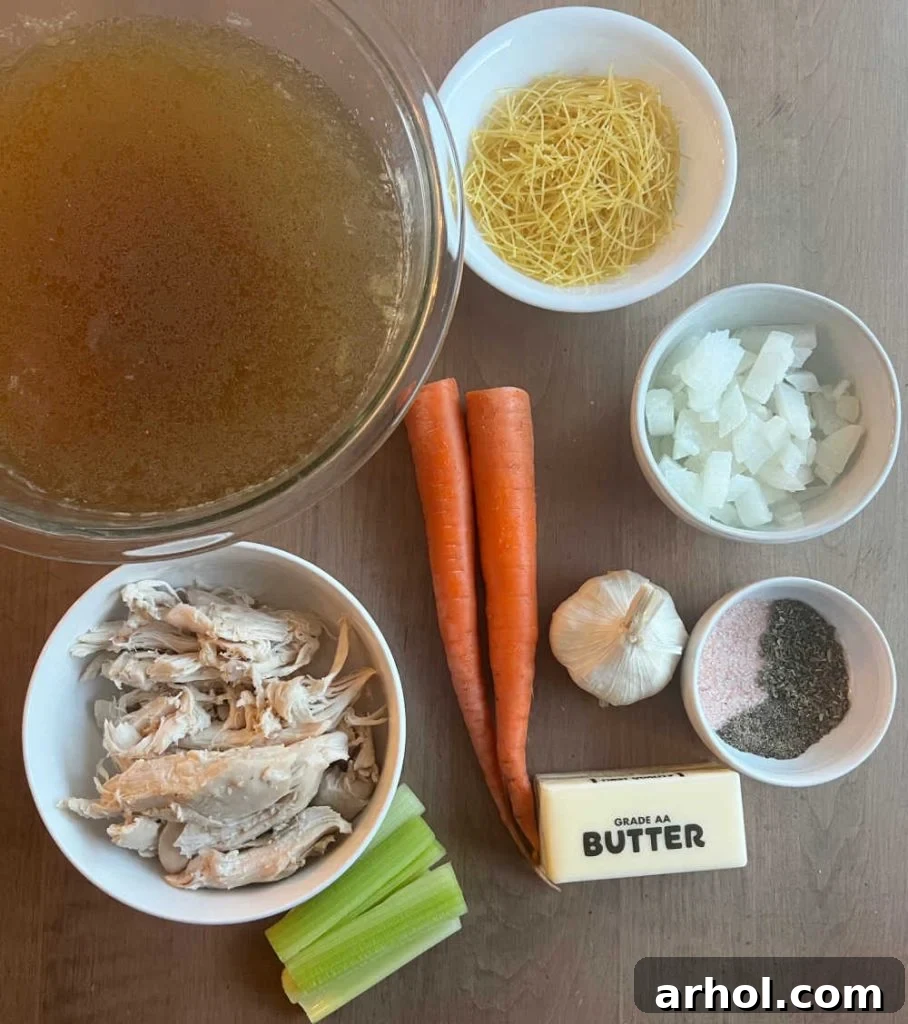
Crafting a delicious and soul-satisfying chicken noodle soup doesn’t require a long list of exotic ingredients. In fact, some of the very best soups are made with everyday items you likely already have on hand or can easily find at any well-stocked grocery store. The full measurements for each ingredient are thoughtfully provided in the comprehensive, printable recipe card further down this page. Here’s a closer look at the key components that give this soup its incredible depth, comforting character, and irresistible aroma:
- Chicken Broth or Stock: This liquid gold forms the very foundation of your soup’s flavor. While homemade chicken stock (especially one simmered from a leftover rotisserie chicken carcass, as previously mentioned) offers an unparalleled richness and complexity, a good quality store-bought broth is a convenient and perfectly acceptable alternative for busy days. If opting for a commercial brand, always choose a low-sodium chicken broth to maintain control over the overall saltiness and seasoning of your finished soup.
- Butter: Essential for gently sautéing your aromatic vegetables, butter contributes a rich, savory base that significantly enhances the overall flavor profile. While you can certainly use olive oil or another cooking oil if preferred, butter truly brings out the best in the classic mirepoix combination.
- Mirepoix (Carrots, Celery, and Onion): This classic trio of aromatic vegetables is an indispensable component for a truly flavorful chicken soup. Sautéing them until they are tender and slightly translucent releases their natural sweetness, earthy notes, and aromatic compounds, which are absolutely crucial for building the soup’s robust flavor foundation. Remember to dice them evenly to ensure consistent cooking and an appealing texture in every spoonful.
- Garlic: A few cloves of freshly minced garlic add another layer of pungent, savory flavor that complements the mirepoix beautifully and deepens the soup’s aromatic complexity. Always add garlic towards the end of the vegetable sautéing process to prevent it from burning, which can lead to a bitter taste.
- Cooked Chicken Meat: The delightful star of the show! This recipe is perfectly designed for utilizing leftover roast chicken, a store-bought rotisserie chicken, or even pre-cooked chicken breasts or thighs that you might have on hand. You’ll need approximately 2-3 cups of diced or shredded chicken. The convenience of using pre-cooked chicken is precisely what makes this recipe so incredibly fast and weeknight-friendly.
- Seasoning: A simple yet incredibly effective blend of sea salt, freshly ground black pepper, and dried herbs is all you need to bring out the best in this soup. Excellent choices include classic dried parsley, aromatic Herbes de Provence, or a versatile Italian seasoning blend. For an optional but delightful addition that offers subtle earthy notes and a beautiful golden hue, a pinch of ground turmeric can be incorporated.
- Noodles: The beloved “noodle” in chicken noodle soup! The choice of noodles can significantly impact your soup, particularly if you anticipate having leftovers. Wide egg noodles are a classic, comforting choice and absorb a good amount of broth, becoming wonderfully tender. However, for a soup that maintains its texture and broth-richness better as leftovers, consider using smaller, thinner noodles (such as German-style thin noodles) as they tend to absorb less liquid over time. Alternatively, you can always cook noodles separately and add them to individual bowls just before serving.
Step-by-Step Guide to Making Chicken Noodle Soup with Leftover Chicken
Creating this comforting and utterly delicious chicken noodle soup is a straightforward process that yields incredibly satisfying results. By following these simple, easy-to-understand steps, you’ll have a heartwarming and wholesome meal ready to enjoy in no time, making it perfect for any occasion.
1. Prepare Your Aromatics
Begin your soup-making journey by preparing your essential aromatic vegetables: celery, carrots, and onions. It’s important to finely chop or dice them into small, even pieces. This consistent sizing ensures that they cook uniformly and release their full spectrum of flavors into the soup’s broth efficiently. For an even quicker preparation, consider using convenient shortcuts such as pre-chopped frozen onions or pre-cut baby carrots. Many grocery stores also offer bags of pre-chopped mirepoix mix (a blend of carrots, celery, and onion), which is a fantastic time-saving solution for busy home cooks.
2. Sauté the Vegetables
In a large Dutch oven or a sturdy, heavy-bottomed pot, melt two tablespoons of butter over medium heat. Once the butter is shimmering and melted, add your finely chopped celery, carrots, and onions. To help draw out their natural moisture and enhance their flavors, add a generous pinch of salt at this stage. Sauté these vegetables, stirring them occasionally, until they begin to soften and become delightfully translucent, which typically takes about 5 to 7 minutes. Following this, add the minced garlic and continue to cook for just one more minute until it becomes wonderfully fragrant, taking care not to burn the garlic, which can turn bitter.
3. Build the Broth
Once your aromatics are beautifully softened, fragrant, and have created a wonderful base, it’s time to introduce the liquid component. Carefully pour in your six cups of chicken stock or broth. Stir everything together thoroughly to ensure all the sautéed vegetables are well combined with the liquid. Now, add your chosen seasonings—the remaining sea salt, freshly ground black pepper, and your preferred dried herbs such as Herbes de Provence or dried parsley. Cover the pot with a lid and bring the mixture to a brisk rolling boil over medium-high heat, allowing the flavors to meld and infuse the broth.
4. Add the Noodles
For an efficient, all-in-one-pot preparation, you can add your two cups of egg noodles directly to the boiling soup. However, it’s important to be mindful that egg noodles, especially wide ones, tend to absorb a significant amount of liquid as they cook and as the soup sits, potentially leading to a thicker soup and softer noodles. If you plan to enjoy the entire batch of soup immediately, this method is perfectly fine. If you anticipate having delicious leftovers, a smart strategy is to cook the noodles separately according to package directions and add them to individual bowls just before serving. This thoughtful approach prevents the noodles from becoming overly soft or mushy and ensures your leftover soup remains beautifully broth-rich. Should you choose to cook them in the pot and find the soup becomes too thick for your liking, simply add a bit more chicken stock or water to achieve your desired consistency.
5. Incorporate Chicken and Serve
Once the noodles are cooked to your desired tenderness (al dente is generally preferred for the best texture), reduce the heat to low. Gently stir in your two cups of leftover cooked chicken, ensuring it’s fully submerged and distributed throughout the hot broth. Allow the soup to simmer gently for a few minutes, just long enough for the chicken to heat through thoroughly. Before serving, always remember to taste the soup and adjust the seasoning as needed; you might find it benefits from a touch more salt, pepper, or your favorite herbs. Serve your healthy, homemade chicken noodle soup immediately, perhaps beautifully garnished with a sprinkle of fresh parsley for an extra pop of color and invigorating freshness. My family consistently raves that this is truly the best, most comforting chicken soup recipe they’ve ever had!
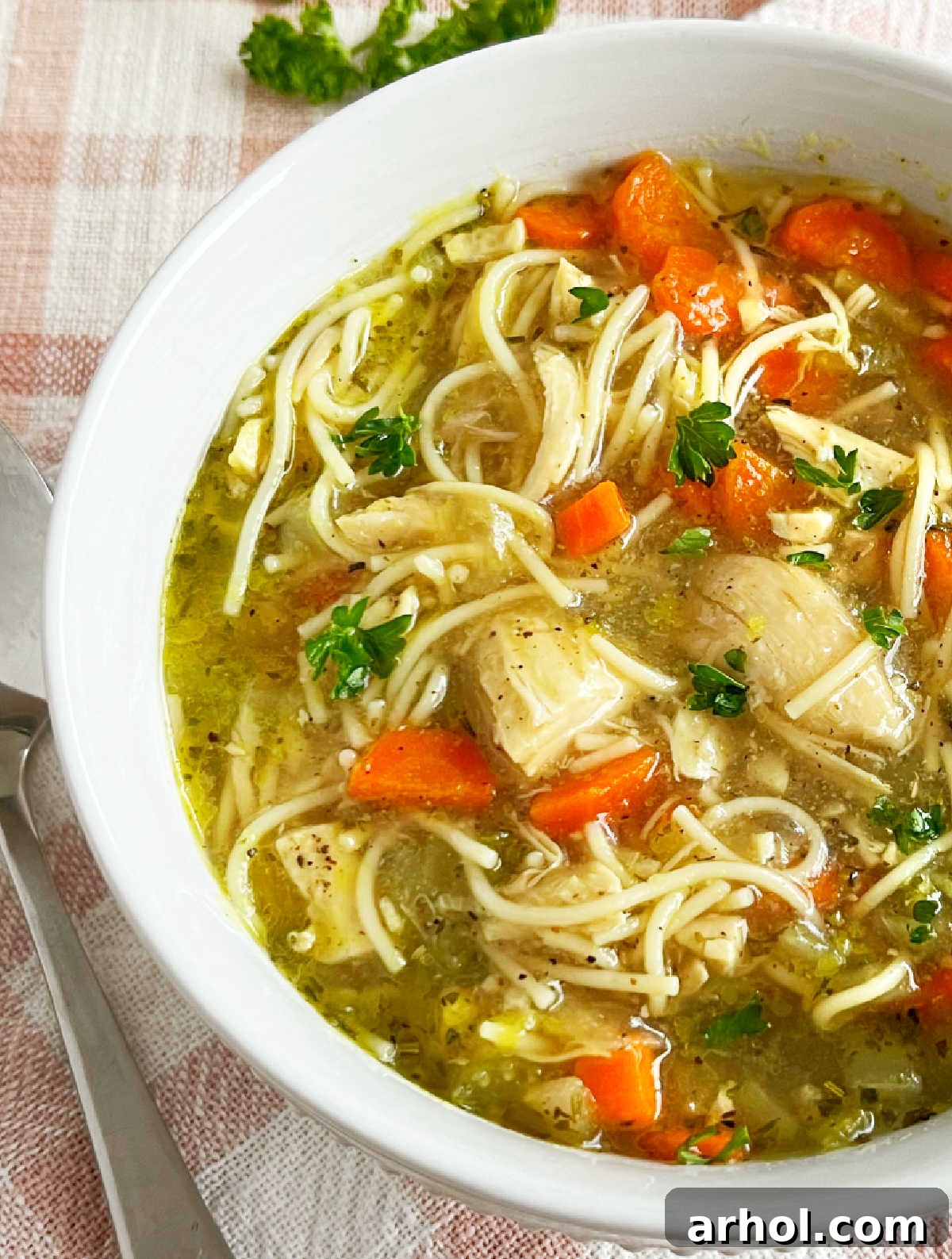
Enhancing Flavor in Chicken Noodle Soup: Beyond the Basics
While the core ingredients in this recipe provide a wonderfully comforting and delicious base, there are several simple yet effective tricks you can employ to elevate the flavor of your chicken noodle soup even further, transforming it into an unforgettable culinary experience.
- Celery Leaves: Often discarded, those delicate celery leaves are packed with flavor! Chopping and adding a few of them along with the celery stalks can significantly boost the fresh, herbaceous notes in your soup, adding a subtle layer of complexity.
- Umami Boosters: For an extra layer of savory depth, consider adding a small splash of Worcestershire sauce, a teaspoon of soy sauce, or even a dash of fish sauce (don’t worry, it won’t make your soup taste fishy!). These ingredients contribute a rich umami dimension without overtly altering the classic flavor profile. Another fantastic trick is to simmer a parmesan rind in the broth, removing it before serving, for an incredible savory infusion.
- Acidity: A squeeze of fresh lemon juice stirred in right before serving can work wonders. The bright acidity helps to cut through the richness, brighten all the flavors in the soup, and make it taste even fresher and more vibrant. A tablespoon of apple cider vinegar can offer a similar, subtle tang.
- Spice: For those who appreciate a little warmth and gentle heat, a small pinch of red pepper flakes or a dash of your favorite hot sauce can add a pleasant kick without overpowering the traditional flavors. Start small and add more to your preference.
- Enriched Broth: If you’re using store-bought broth and desire an even richer, more concentrated flavor, consider fortifying it with a high-quality bouillon cube, paste, or a scoop of bone broth powder. This can significantly deepen the foundational taste of your soup.
- Roasted Vegetables: For an additional layer of sweetness and depth, consider roasting your carrots and onions lightly before adding them to the pot. This caramelization process brings out their natural sugars and adds a smoky nuance.
The Best Herbs for Chicken Soup
Herbs are absolutely crucial for adding aromatic complexity, vibrant freshness, and depth of flavor to chicken soup. Both dried and fresh herbs have their distinct roles and optimal times for addition, depending on the desired outcome.
- Dried Herbs: Dried herbs, such as classic dill, savory thyme, earthy oregano, or a convenient Italian seasoning blend, are best incorporated at the beginning of the cooking process, alongside the broth. This extended simmering time allows them ample opportunity to rehydrate, fully release their essential oils, and deeply infuse the broth with their concentrated flavors. Adding one or two bay leaves at this stage is also highly recommended for a deeper, more complex aroma; just remember to remove them before serving.
- Herbes de Provence: This exquisitely aromatic French blend is a personal favorite for chicken soup. Its unique combination of bright, slightly floral, and distinctly savory notes (often including rosemary, thyme, savory, marjoram, and lavender) complements the delicate flavor of chicken beautifully, adding an elegant twist to the classic soup. I also find Herbes de Provence to be an exceptionally versatile and flavorful rub for other chicken dishes, such as my Instant Pot whole chicken and my popular roast chicken recipe.
- Fresh Herbs: For maximum impact, a burst of fresh flavor, and a vibrant finish, delicate fresh herbs like flat-leaf parsley, fresh dill, or chopped chives should be stirred in just before serving. The gentle heat of the soup will subtly warm them, releasing their fresh aromas without cooking away their delicate flavors and vibrant color. A generous sprinkle of fresh parsley is not merely for garnish; it contributes a wonderful, clean, and herbaceous finish that elevates the entire dish.
Storage and Reheating Tips for Leftovers
One of the many delightful advantages of homemade chicken noodle soup is that it often tastes even better on the second day, as the flavors have more time to meld and deepen. Proper storage is key to ensuring you can enjoy your delicious leftovers safely and conveniently.
- Refrigeration: Always allow your chicken noodle soup to cool completely to room temperature before transferring it to an airtight container. Once cooled, it can be safely stored in the refrigerator for a period of 3-4 days. For optimal freshness, ensure the container is sealed tightly to prevent air exposure.
- Freezing: Chicken noodle soup freezes exceptionally well, making it perfect for meal prepping or having a comforting meal ready for a rainy day. For the best quality and flavor retention, store cooled soup in freezer-safe bags (pressing out as much air as possible to prevent freezer burn) or sturdy freezer-safe containers for up to 3 months. When preparing soup specifically for freezing, it’s often best to either omit the noodles entirely or cook them separately to add upon reheating. This is because noodles, especially wide egg noodles, can absorb excessive liquid, become mushy, and break down upon thawing and reheating. If you do freeze the soup with noodles, be prepared to add a considerable amount of extra broth or water when reheating to restore the desired consistency.
-
Reheating:
- Stovetop Method: For larger portions of leftover soup, gently reheat it in a pot over medium-low heat. Stir occasionally to ensure even heating and prevent sticking to the bottom, until the soup is simmering gently and heated thoroughly. If the soup has thickened too much during storage (which frequently happens if noodles were stored within it), simply add a splash of extra chicken broth or water, a quarter cup at a time, until it reaches your preferred consistency.
- Microwave Method: For quick, individual servings, transfer the soup to a microwave-safe bowl. Heat in 1 to 2-minute intervals, stirring well in between each interval, until it is steaming hot throughout. Similar to stovetop reheating, you might find it beneficial to add a little extra liquid to achieve your desired consistency.
Expert Tips for the Perfect Chicken Noodle Soup
Achieving a truly perfect bowl of homemade chicken noodle soup is easy with these insider tips. Incorporating these strategies will not only save you time but also ensure your soup is consistently flavorful and satisfying.
- Streamline Prep Time with Frozen Staples: To significantly cut down on the initial preparation time, make it a habit to keep bags of pre-chopped carrots, celery, and onions readily available in your freezer. These are perfectly suited for tossing directly into the pot, eliminating chopping on busy days. Similarly, having extra cooked, chopped chicken frozen and portioned will make soup assembly a breeze, especially during the colder months when soup cravings are at their peak.
- Strategic Noodle Management for Leftovers: If you’re preparing a large batch of soup or know with certainty that you’ll have leftovers, it’s highly advisable to cook thicker noodles, such as wide egg noodles, separately from the main pot of soup. Serve them by placing a portion of cooked noodles into individual bowls, then ladle the hot soup over them. This clever technique prevents the noodles from absorbing most of the delicious, flavorful broth and subsequently becoming mushy and swollen when stored, ensuring your soup maintains its ideal consistency. If you prefer, thinner noodles (like German-style) tend to hold their texture better within the soup itself if stored together.
- Layering Herbs for Maximum Flavor: For dried herbs such as thyme, oregano, or Italian seasoning blends, add them early in the cooking process when you introduce the broth. This allows ample time for their flavors to fully rehydrate and develop deeply into the soup. In contrast, for fresh, delicate herbs like parsley, dill, or chives, stir them in just before serving. This preserves their vibrant taste, aromatic freshness, and bright color, providing a delightful finish to each bowl.
- Always Adjust Seasoning to Taste: The flavor of chicken broth can vary significantly between homemade batches and different store-bought brands, as can the saltiness of your cooked chicken. Therefore, always taste your soup thoroughly before serving and make final adjustments to the salt, pepper, or other seasonings as needed. Your personal preference for seasoning is key to a truly satisfying soup.
- Consistency Control is Key: If, after cooking, your soup turns out thicker than your desired consistency, don’t fret! Simply add more chicken broth or water, a quarter cup at a time, stirring well after each addition, until it reaches your perfect, comforting texture.
More Comforting Chicken Soup Recipes
If you’ve enjoyed the warmth and ease of this homemade chicken noodle soup, you’ll be delighted to discover more delicious and comforting soup ideas to add to your culinary repertoire. Here are a few other hearty chicken soup recipes from our kitchen designed to warm you up from the inside out:
- Indulge in my Creamy Chicken Potato Soup: It’s an incredibly hearty, rich, and wonderfully creamy concoction that makes for a satisfying and complete meal on its own, perfect for chilly evenings.
- You may also fall in love with my Crock Pot Chicken Tortellini Soup: This slow-cooker recipe is a dream come true for busy days, allowing you to set it and forget it, yielding a tender, flavorful soup brimming with cheesy tortellini.
- And don’t miss out on my Instant Pot Chicken Enchilada Soup: A rapid and intensely flavorful take on a beloved Mexican-inspired classic, this soup is packed with bold spices, tender chicken, and vibrant flavors that come together effortlessly in your Instant Pot.
Homemade Chicken Noodle Soup Recipe Card
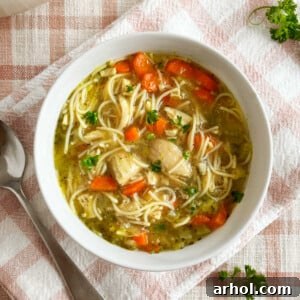
Homemade Chicken Noodle Soup
By: Dee
This Homemade Chicken Noodle Soup recipe is easy to make with leftover
chicken meat and a few simple ingredients. Enjoy homemade soup in
minutes, a perfect comfort food for any season!
Prep Time: 10 minutes
Cook Time: 20 minutes
Total Time: 30 minutes
Servings: 8
Ingredients
- 2 tablespoons butter
- 2 medium carrots, chopped
- 2 medium celery stalks, chopped
- 1 small onion, diced
- 3 cloves garlic, minced
- 6 cups chicken stock (homemade or low sodium store-bought)
- 1.5 teaspoons sea salt
- 1 teaspoon Herbes de Provence
- ½ teaspoon ground black pepper
- 2 cups diced cooked chicken (from rotisserie chicken, roast chicken, or leftover chicken breasts/thighs)
- 2 cups noodles (wide egg noodles or small thin noodles; refer to notes for best results with leftovers)
- Fresh parsley (optional, for garnish and added freshness)
Instructions
- In a large Dutch oven or heavy-bottomed pot, melt the butter over medium heat. Add the chopped carrots, celery, and onion along with a pinch of salt. Cook, stirring occasionally, until the vegetables are slightly soft and translucent, typically about 5-7 minutes.
- Add the minced garlic to the pot and cook for another minute until it becomes fragrant, ensuring it does not burn.
- Pour in the chicken stock, add the remaining sea salt, Herbes de Provence, and black pepper. Stir all ingredients to combine thoroughly. Cover the pot and bring the mixture to a full boil over medium-high heat.
- Once boiling, add the noodles and cook according to package directions until they are al dente. Keep in mind that noodles absorb liquid; if the soup becomes too thick, you may need to add more stock or water to reach your desired consistency.
- Reduce the heat to low, then stir in the diced cooked chicken. Allow the soup to simmer gently for a few minutes, just until the chicken is heated through.
- Taste the soup and adjust the seasoning with additional salt and pepper if needed. Serve immediately, garnished with fresh parsley for an extra touch of flavor and color, if desired.
Notes
- This recipe is highly versatile; you can use any homemade chicken stock you have or a good quality, low-sodium chicken broth purchased from the store.
- If at any point the soup appears too thick for your preference, simply add a bit more broth or water, a quarter cup at a time, until it reaches your desired consistency.
- For managing leftovers, I particularly like thin German-style noodles (often available at international markets like World Market) because they don’t absorb as much liquid as they sit. Alternatively, to ensure egg noodles remain firm and the broth stays clear, cook them separately and add them to individual bowls just before serving.
- Feel free to customize the herb profile: substitute dried parsley or Italian seasoning for Herbes de Provence if you prefer. For an optional subtle warmth and beautiful golden color, a little ground turmeric can also be added.
Nutrition Information
(Approximate values per serving, calculated automatically)
- Serving Size: 1 cup
- Calories: 233 kcal
- Carbohydrates: 28 g
- Protein: 11 g
- Fat: 8 g
- Saturated Fat: 3 g
- Cholesterol: 47 mg
- Sodium: 710 mg
- Potassium: 402 mg
- Fiber: 2 g
- Sugar: 3 g
- Vitamin A: 2055 IU
- Vitamin C: 5.1 mg
- Calcium: 47 mg
- Iron: 1.4 mg
Please note: Nutrition information is automatically calculated and should only be used as an approximation. Actual values may vary based on ingredients used and preparation methods.
Additional Info
- Course: Main Dish, Soup
- Cuisine: American
Video: How to Make Homemade Chicken Noodle Soup
Watch our comprehensive step-by-step video guide to see just how easy and enjoyable it is to create this comforting Homemade Chicken Noodle Soup in your own kitchen!
Video Title: Chicken Noodle Soup.mov
Video Description: This Homemade Chicken Noodle Soup recipe is easy to make with leftover chicken meat and a few simple ingredients. Enjoy homemade soup in minutes!
Enjoyed this wholesome and comforting recipe? We’d absolutely love to hear your thoughts and experiences! Please feel free to
leave a comment below and share how this delicious soup brought warmth and joy to your kitchen. Your feedback truly brightens our day!
For even more effortless and delicious recipes delivered straight to your inbox, be sure to sign up for our exclusive weekly newsletter. You can also connect with us and follow along on your favorite social media channels for daily cooking inspiration, exciting updates, and a vibrant community of food lovers!