
Experiencing Phoenix’s Record-Breaking Monsoon: A Desert Transformed
Hello everyone!
Living in the desert, we’re accustomed to unique weather patterns, but nothing quite prepares you for a record-shattering monsoon. Recently, Phoenix experienced its wettest day ever, shattering previous rainfall records and unleashing an unprecedented storm across the valley. This wasn’t just another desert downpour; it was an event that transformed our arid landscape into a temporary aquatic wonderland, bringing with it widespread flooding, significant road closures, and a rare phenomenon almost unheard of in our region: school closures! For children across the city, the unexpected day off was a delightful surprise, turning a challenging weather event into an impromptu holiday.
In a place where sunshine is a daily guarantee, the sheer volume of water was a spectacle to behold. I’ve previously shared glimpses of our desert monsoons, showcasing the dramatic beauty they bring. However, this recent event took things to an entirely new level. The desert, often perceived as a dry and unyielding environment, revealed its hidden capacity for transformation. I wanted to capture and share some of the incredible sights from this historic day, offering a unique perspective on how a desert city copes with, and even embraces, an abundance of water.
Our Backyard Oasis: A Temporary Lake Emerges
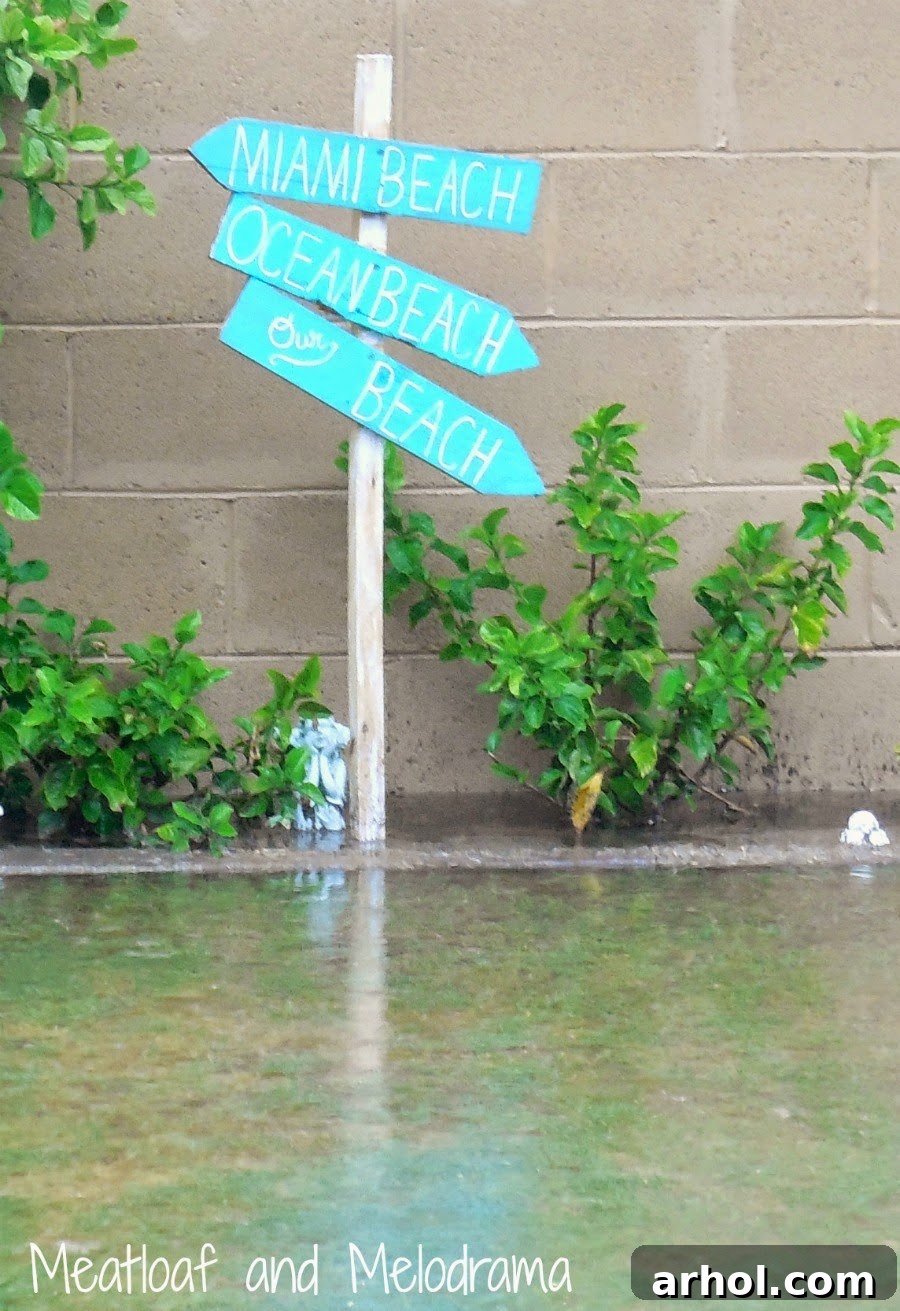
Our own backyard became an immediate testament to the storm’s intensity. What was typically a sun-drenched patio and pool area quickly morphed into a sprawling, shimmering “backyard lake.” It was an incredible sight, especially for those of us who rarely see such vast expanses of water outside of a swimming pool. Interestingly, I had previously crafted a charming “beach sign” for our pool area, an ironic touch given our desert location. Little did I know how perfectly appropriate that sign would become during the monsoon. Standing amidst the rising waters, it felt as though our desert home had momentarily relocated to a coastal paradise.
The water level rose so significantly that a small bird statue, usually a quaint garden ornament, found itself almost entirely submerged, its head barely peeking above the impromptu floodwaters. This visual was a powerful indicator of the storm’s impact right at home. The sheer volume of rainwater rushing through the property was astounding, a vivid reminder of nature’s power and its ability to reshape our immediate surroundings. This unexpected transformation sparked a sense of wonder and curiosity, making us all appreciate the unique dynamics of desert weather.
Even once the torrential downpour finally subsided, the lingering effects of the storm were evident everywhere. The water, after pooling in various parts of our yard, took an astonishingly long time to recede. Our swimming pool, usually a refreshing escape, was perilously close to overflowing its banks. My husband had to intervene, carefully releasing some of the excess water to prevent it from spilling over and causing further issues. Throughout the entire evening, our “backyard lake” remained, a tranquil yet powerful reminder of the day’s record-breaking rainfall. The sight of our yard still holding vast amounts of water hours after the rain had ceased truly underscored the sheer volume that had fallen.
Desert Washes Transformed into Raging Rivers
One of the most fascinating aspects of desert ecology, especially after significant rainfall, is the transformation of what are locally known as “washes” or “arroyos.” These are typically dry riverbeds, carved out over millennia by sporadic, yet powerful, water flows. For most of the year, they appear as dusty depressions or gravel paths, completely devoid of water. Children, especially, often express their bewilderment, asking why there are “river signs” proudly displayed along roadsides when there’s no visible river in sight.
This monsoon provided the perfect, real-time geography lesson. We made sure to drive by one of these normally parched riverbeds, and the sight was absolutely breathtaking. What was usually a bone-dry channel was now a powerful, fast-flowing river, its brown waters churning with sediment and debris. It was a stark and dramatic illustration of the desert’s hidden hydrology, proving to the kids that these “dry beds” aren’t just empty spaces but truly are the arteries of the desert, waiting for the rare occasions to spring to life. Observing these ephemeral rivers in full flow offers a profound understanding of how water shapes and sustains life, even in the most arid environments.
Urban Resilience: Retention Basins as Temporary Lakes
Beyond the natural washes, urban planning in desert cities like Phoenix incorporates ingenious solutions for managing substantial rainfall. One such example is the network of water retention areas found within various housing developments. These basins, usually expansive grassy fields or designated play areas during dry spells, are engineered to collect and slowly release stormwater, preventing widespread urban flooding. On this particular day, however, one such basin had transformed into a picturesque, albeit temporary, lake.
The scene there was truly delightful and showcased the community’s spirit in adapting to the unique circumstances. As we drove past, we observed families gathered around the edges of this newfound body of water, several people even sailing model boats across its surface. It was a heartwarming display of how residents found joy and an unexpected recreational opportunity amidst the aftermath of the storm. The vast expanse of water reflecting the evening sky, framed by the iconic silhouette of a saguaro cactus, presented a mesmerizing vista. The saguaro, standing tall and resilient against the dramatic backdrop of the post-storm sky, served as a poignant symbol of the desert’s enduring beauty and its ability to thrive despite, or perhaps because of, these powerful meteorological events.
A Glimpse of Desert Wildlife: The Return of Hopkins
Monsoons also play a crucial role in awakening the desert’s hidden wildlife. After a previous rain event, our children were thrilled to discover a small toad in our yard, whom they affectionately named Hopkins. They spent hours observing their temporary amphibian friend, a creature rarely seen in the dry conditions. This time, after the record-breaking deluge, they harbored high hopes that Hopkins, or perhaps one of his kin, would make another appearance. Unfortunately, despite their eager searches and patient waiting, Hopkins the toad did not return this time. It serves as a gentle reminder of the fleeting nature of these rain-induced wildlife encounters, making each sighting even more special.
However, the heavy rains often bring out a variety of other creatures, from vibrant insects and beetles to various amphibians and reptiles, all drawn out by the sudden abundance of water and the opportunities it presents for feeding and breeding. These moments offer invaluable lessons about the delicate balance of the desert ecosystem and how integral every drop of rain is to its intricate web of life.
Reflecting on the Desert’s Resilience and Beauty
This record-breaking monsoon was more than just a weather event; it was a profound experience that showcased the unique resilience and surprising beauty of the Phoenix desert. From our flooded backyard to the raging washes and the community’s joyous use of temporary urban lakes, every scene told a story of adaptation and wonder. It’s a powerful reminder that even in the most arid regions, water, when it arrives, can create moments of extraordinary transformation and unexpected joy. While we appreciate the return to our characteristic dry, sunny days, the memory of this unforgettable monsoon and the temporary desert lakes will linger, reminding us of nature’s incredible power and the dynamic spirit of our desert home.
Thank you for joining me on this journey through our water-filled desert adventure. Have a truly dry, and delightful, day!
Dee 🙂