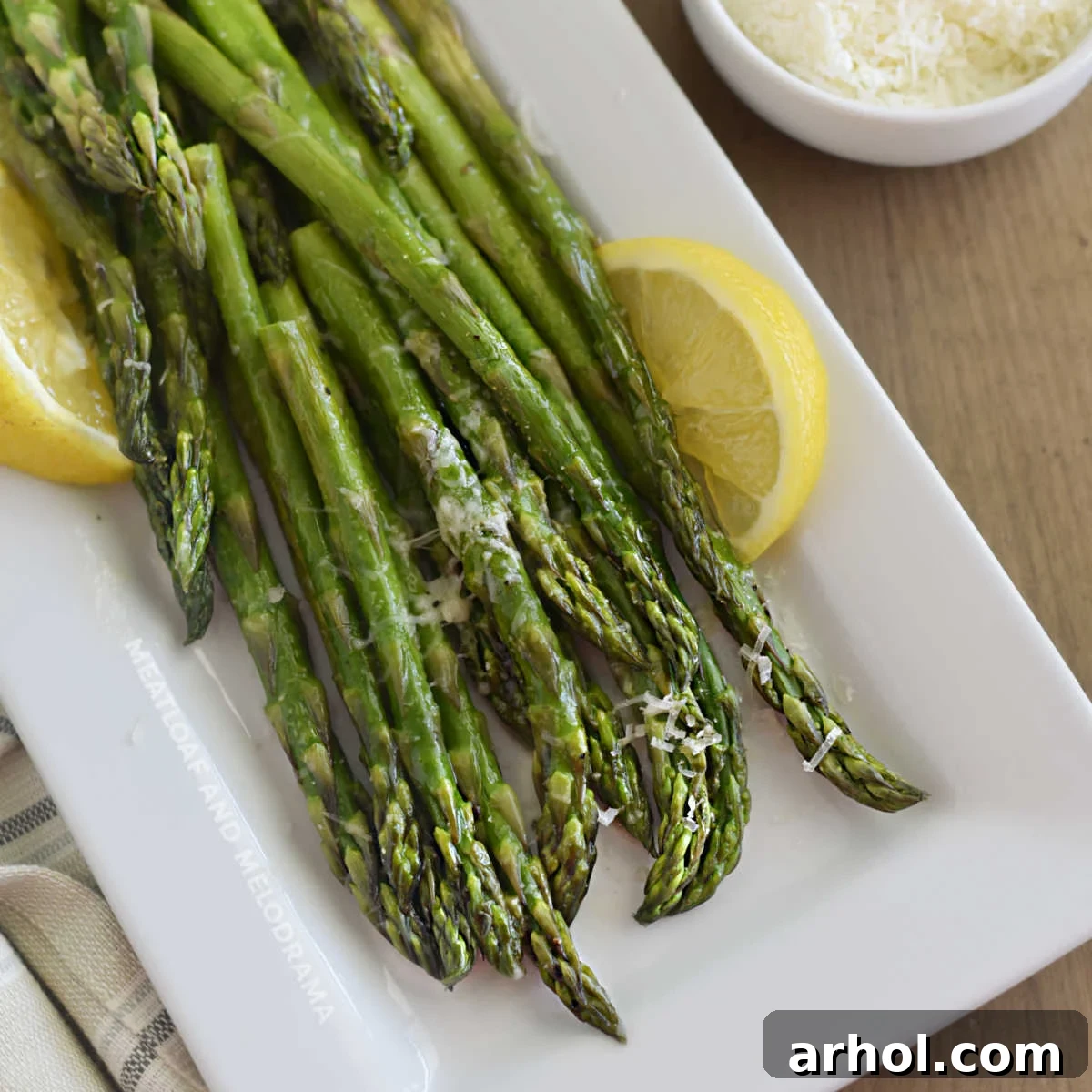
The Ultimate Guide to Perfectly Microwaved Asparagus: Quick, Healthy & Delicious!
Discover the simplest and fastest way to enjoy tender-crisp asparagus with this easy microwave recipe. Ready in just 3 minutes, steamed asparagus makes for a quick, healthy, and incredibly flavorful side dish, perfect for complementing any meal. Say goodbye to complicated cooking methods and hello to a vibrant spring vegetable that’s both nutritious and delicious!
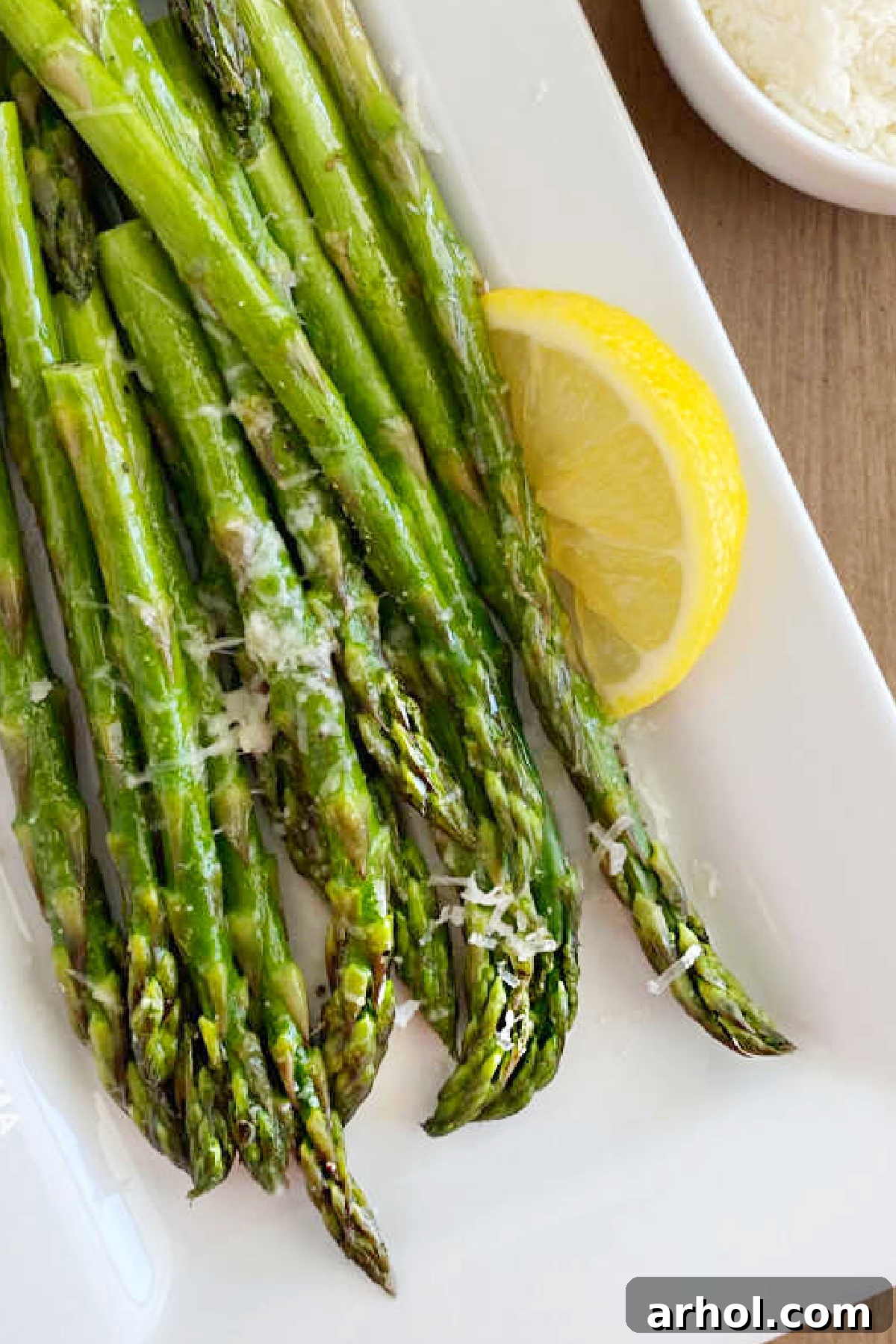
For years, microwaving asparagus has been our go-to method for preparing this delightful spring vegetable. It’s undeniably the best way to achieve perfectly cooked fresh asparagus as a simple side dish, and it has become our favorite technique for many other fresh vegetables too. While we adore making more elaborate versions like Sautéed Asparagus with Bacon or Prosciutto Wrapped Asparagus for special occasions such as Easter, this microwave method offers unparalleled ease and speed, delivering tender spears in mere minutes.
The microwave isn’t just for reheating leftovers! It’s a powerful tool for quick and healthy cooking. Beyond asparagus, we frequently use it for other simple vegetable preparations, including Baked Potatoes, Sweet Potatoes, Broccoli, Corn on the Cob, Green Beans, Carrots, and even Cauliflower.
Why Microwave Asparagus?
Choosing the microwave for your asparagus isn’t just about speed; it’s about optimizing convenience, nutrition, and flavor. Here’s why this method stands out:
- Unbeatable Speed: Fresh asparagus goes from raw to tender-crisp in as little as 3 minutes. This makes it an ideal last-minute side dish for busy weeknights.
- Nutrient Retention: Unlike boiling, which can leach out water-soluble vitamins, microwaving uses minimal water and a short cooking time, helping the asparagus retain more of its beneficial vitamins (like K, A, C, and folate) and minerals.
- Effortless Preparation: With just a microwave-safe dish and a few simple steps, cleanup is a breeze. No need for multiple pots and pans!
- Consistent Results: When done correctly, microwaving yields uniformly cooked asparagus spears that are perfectly tender without being mushy.
- Versatility: Microwaved asparagus pairs beautifully with almost any main course, from grilled meats to pasta, eggs, and salads.
Selecting and Preparing Your Asparagus
The foundation of a delicious dish begins with quality ingredients and proper preparation.
How to Choose the Freshest Asparagus
When you’re at the grocery store or farmer’s market, look for bunches of asparagus that signal freshness and quality:
- Firm Stalks: The spears should be firm and stand upright. Avoid any that appear limp or rubbery.
- Bright Green Color: The stalks should be a vibrant green, possibly with some purple tint at the tips. Yellowing indicates older asparagus.
- Tightly Closed Tips: The tips, or “buds,” should be tightly closed and compact. If they are splayed open, the asparagus is likely past its prime.
- Fresh Smell: It should have a fresh, earthy aroma. An unpleasant or strong sulfurous smell is a sign of old asparagus.
- Medium Thickness: While thick spears can be microwaved, medium to thin stalks tend to cook more evenly and offer a better texture.
The Art of Trimming Asparagus
Trimming is essential to remove the woody, fibrous ends of the asparagus, ensuring every bite is tender and enjoyable.
There are two common methods:
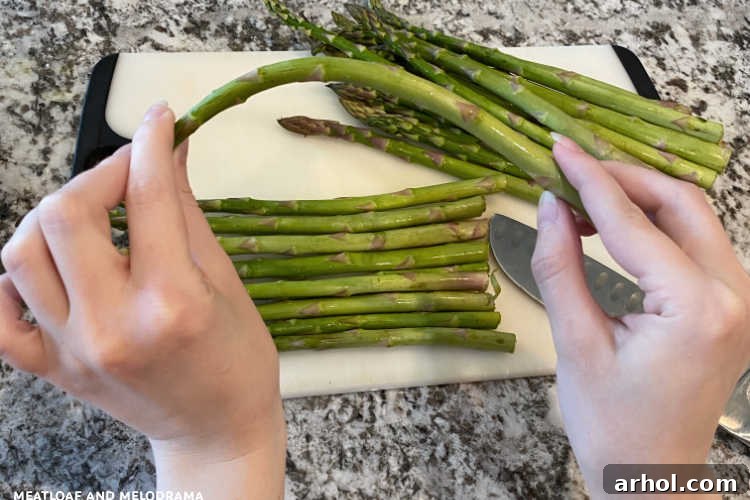
- The Snap Method: Hold an asparagus spear with both hands, one near the bottom and one further up. Bend the stalk gently until it naturally snaps. The asparagus will typically break at the point where the tough, woody end meets the tender part of the spear. This is a great indicator, but sometimes it can snap off more tender stalk than necessary.
- The Cutting Method: For a more uniform look, gather your asparagus spears into a bunch. Line them up and cut about 1.5 to 2 inches off the bottom of the stalks. You can use the snap method on one spear first to find the natural breaking point, then use that as a guide for cutting the rest of the bunch.
Rinsing for Success
Before cooking, give your asparagus a quick rinse under cold running water. There’s no need to pat them dry; the residual water droplets on the stalks are actually beneficial. As the asparagus heats in the microwave, these water droplets will contribute to the steaming process, helping to cook the vegetable perfectly.
Ingredients You’ll Need
This incredibly easy recipe requires just a handful of simple ingredients, all readily available at your local grocery store or farmer’s market. Exact measurements can be found in the printable recipe card below.
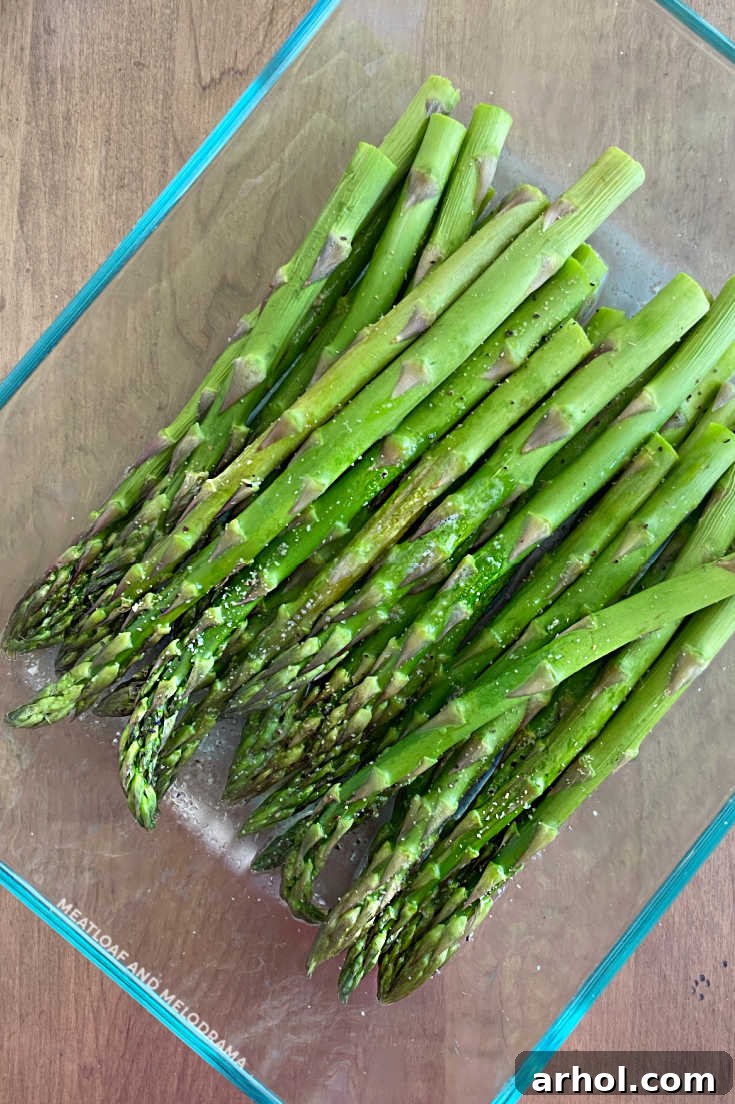
- Fresh Asparagus: One to two bunches, depending on how many servings you need. Choose firm stalks with tightly closed heads for the best results.
- Butter (Optional): A tablespoon of butter adds rich flavor. For a dairy-free option or lighter taste, you can substitute with olive oil.
- Seasonings: A simple combination of sea salt, freshly ground black pepper, and garlic powder enhances the natural sweetness of the asparagus.
- Water: Just a teaspoon of cold water helps create steam, ensuring the asparagus cooks thoroughly and evenly.
How to Cook Asparagus in the Microwave: Step-by-Step
This method is incredibly straightforward and scalable. Whether you’re cooking one bunch for yourself or two for the whole family, the process remains largely the same. Always opt for medium to thin stalks for the most even cooking.
- Prepare the Asparagus: Begin by rinsing the fresh asparagus under cold running water. As mentioned, there’s no need to pat it dry; the excess moisture will aid in the steaming process. Next, trim off the woody ends using either the snap method or by cutting approximately 1.5 to 2 inches from the bottom of each spear.
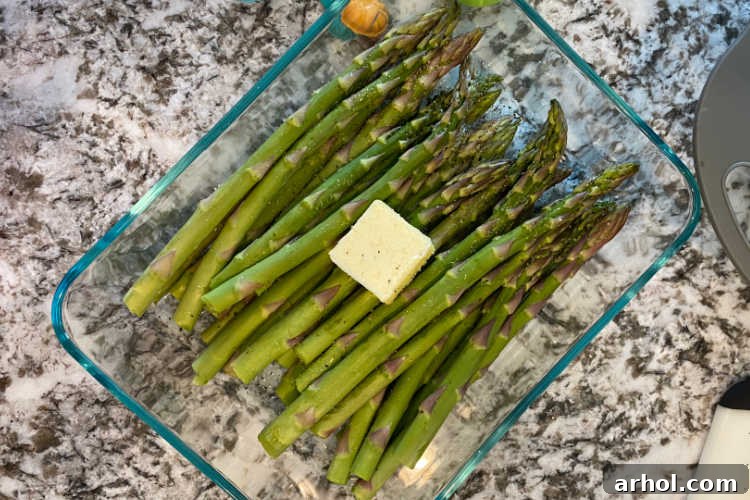
- Arrange in Dish: Place the trimmed asparagus into a microwave-safe baking dish or a large microwave-safe bowl. While a single layer is ideal for perfectly even cooking, you can certainly stack two layers. If you do, you might need to toss the asparagus halfway through the cooking process to ensure all spears cook uniformly.
- Season and Hydrate: Add a tablespoon of butter (if using) over the asparagus. Sprinkle generously with a pinch of sea salt, garlic powder, and freshly ground black pepper. Then, add 1 teaspoon of cold water to the dish. This small amount of liquid is crucial for generating the steam that will cook your asparagus to perfection.
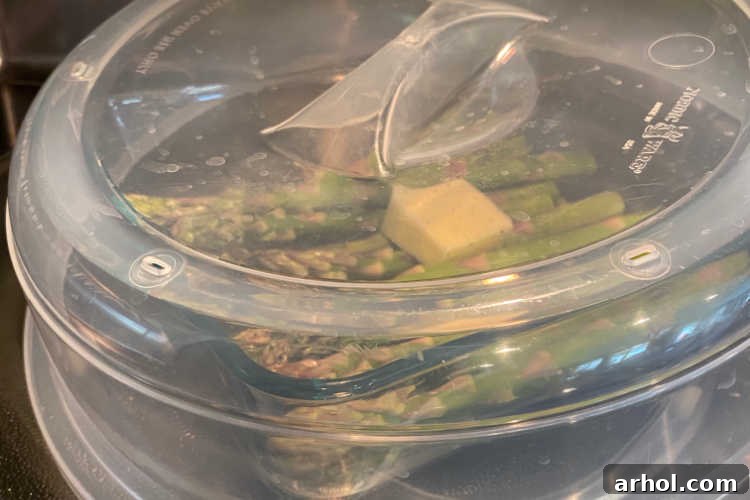
- Cover and Cook: Cover the dish with a microwave-safe lid, a plastic microwave cover, or even a sheet of damp paper towel or microwave-safe plastic wrap. Ensure there’s a small vent to allow some steam to escape during cooking, preventing excessive pressure buildup.
- Microwave: Cook on high power according to the timing guidelines below.
Achieving Perfect Asparagus: Timing is Everything
The exact cooking time for microwave asparagus can vary slightly based on a few factors:
- Microwave Wattage: Higher wattage microwaves cook faster. Adjust accordingly.
- Asparagus Thickness: Thinner spears will cook more quickly than thicker ones.
- Desired Doneness: Do you prefer tender-crisp or softer asparagus?
Here’s a general guideline:
- For 1 bunch of asparagus: Microwave for 3-4 minutes on high power.
- 3 minutes: Typically yields perfectly tender-crisp asparagus, with a slight bite.
- 4 minutes: Results in a softer, more tender texture.
- For 2 bunches of asparagus: Increase the cooking time to 4-5 minutes. Start with 4 minutes and check for doneness.
Important Tip: Food continues to cook for a short period after it’s removed from the microwave. It’s always better to undercook slightly and add an extra minute (or even 30 seconds) if needed, rather than overcooking and ending up with soggy asparagus. Once done, carefully remove the dish and let it rest for a minute before serving.
Elevate Your Microwaved Asparagus: Creative Seasoning Ideas
While the basic butter, salt, pepper, and garlic powder combination is fantastic, don’t hesitate to get creative with your seasonings to match your meal or personal preference.
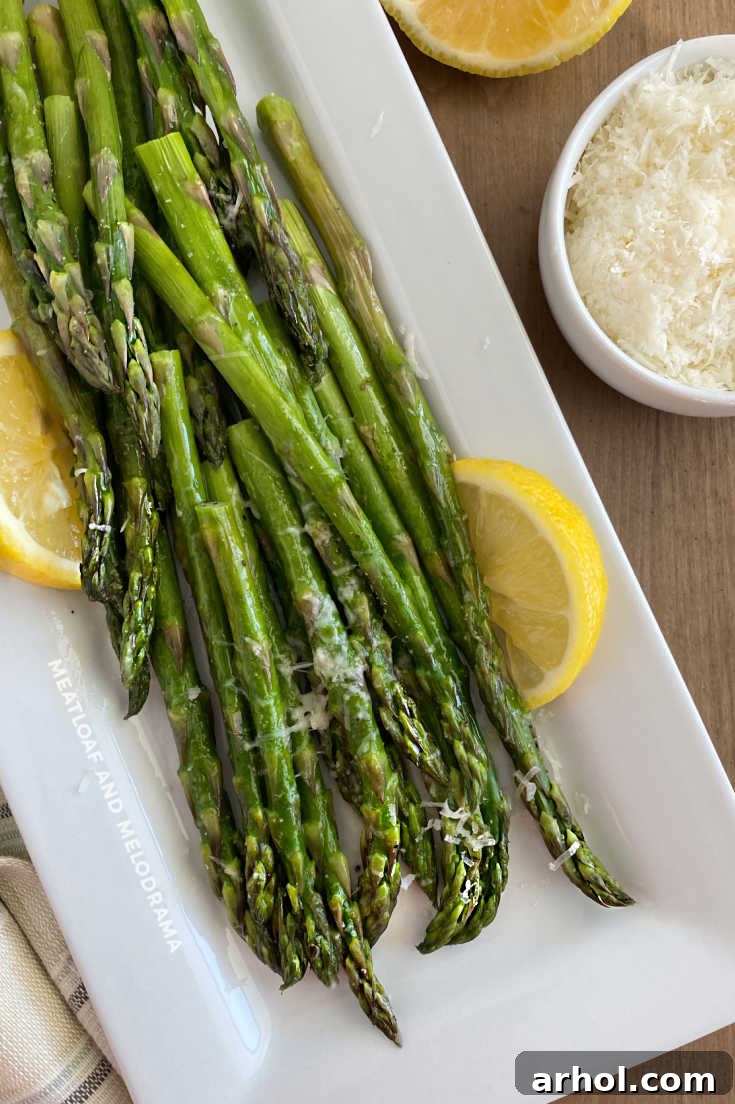
- Citrus Brightness: A squeeze of fresh lemon juice immediately after cooking adds a wonderful zing. Lemon zest can also be incorporated before cooking.
- Cheesy Goodness: Sprinkle freshly grated Parmesan cheese over the hot asparagus. The residual heat will melt it slightly, creating a delicious, savory coating. Other cheeses like crumbled feta or goat cheese also work well.
- Herbal Infusion: Add fresh or dried herbs before microwaving. Dill, thyme, rosemary, or parsley chopped finely can bring a new dimension of flavor.
- Spicy Kick: A pinch of red pepper flakes offers a subtle or pronounced heat, depending on your preference.
- Umami Boost: A dash of onion powder or a drizzle of balsamic glaze (after cooking) can deepen the flavor profile.
- Nutty Crunch: For added texture and flavor, toast a few slivered almonds or pine nuts and sprinkle them over the cooked asparagus.
- Mediterranean Twist: Combine olive oil, dried oregano, a hint of lemon juice, and chopped Kalamata olives for a vibrant side.
- Asian Flair: Drizzle with sesame oil and a touch of soy sauce, then sprinkle with sesame seeds after cooking.
Perfect Pairings for Your Asparagus
Microwaved asparagus is incredibly versatile and pairs well with a wide variety of main dishes, making it a go-to side for any meal:
- Classic Dinner Combinations: Serve alongside grilled salmon, baked chicken, pan-seared steak, or roasted pork tenderloin. Its fresh, slightly earthy flavor complements rich proteins perfectly.
- Breakfast & Brunch: Elevate your morning meal by adding asparagus to scrambled eggs, frittatas, or quiches. It’s also delicious simply alongside a fried egg and toast.
- Light Lunches: Incorporate into salads for extra crunch and nutrients, or serve with a hearty quinoa bowl and your favorite protein.
- Pasta Dishes: Lightly sautéed microwaved asparagus can be tossed into pasta dishes with lemon, garlic, and a touch of olive oil for a fresh, spring-inspired meal.
- Holiday Feasts: While easy, it’s elegant enough to grace your holiday table, providing a healthy green counterpoint to heavier dishes.
Its vibrant color and fresh taste make it an excellent addition to almost any plate.
Keeping Asparagus Fresh & Reheating Leftovers
Proper storage ensures your asparagus stays fresh longer, and reheating is just as simple as the initial cooking.
Storage:
If you have any leftover cooked asparagus, allow it to cool completely before transferring it to an airtight container. Store it in the refrigerator for up to 3-4 days. For uncooked asparagus, trim the woody ends and stand the spears upright in a jar with about an inch of water at the bottom. Cover the tips loosely with a plastic bag and refrigerate for up to a week.
Reheating:
Reheating microwaved asparagus is quick and easy:
- Microwave: Place the desired amount of asparagus in a microwave-safe dish. Add a tiny splash of water (about a teaspoon) to help re-steam. Cover loosely and microwave on high for 30-60 seconds, or until heated through. Be careful not to overcook, as it can quickly become soggy.
- Stovetop (for crispness): For slightly crisper leftovers, you can quickly sauté them in a pan with a little olive oil or butter over medium heat for 1-2 minutes until warmed.
Top Recipe Tips for Success
Follow these tips to ensure your microwaved asparagus turns out perfectly every time:
- Choose Wisely: Always select medium to thin asparagus stalks. They cook more evenly and are generally less fibrous than very thick spears.
- Microwave-Safe Only: Ensure you use a microwave-safe dish made of glass, ceramic, or specific microwave-safe plastics.
- Start Short: Microwaves vary greatly in wattage. Begin with the shortest recommended cooking time (e.g., 3 minutes for one bunch) and add additional 30-second increments if you prefer a softer texture. It’s easy to add more cooking time, but impossible to reverse overcooking!
- Don’t Forget to Vent: Always cover your dish, but make sure there’s a small opening for steam to escape. This prevents the asparagus from becoming waterlogged and ensures proper steaming.
- Adjust to Taste: Taste your asparagus after cooking and adjust seasonings as needed. A final squeeze of lemon juice or a sprinkle of fresh herbs can make a big difference.
Common Questions (FAQ)
Is it safe to cook vegetables in the microwave?
Yes, it’s perfectly safe and often beneficial to cook vegetables in the microwave. Due to the short cooking time and minimal water used, microwaving helps vegetables retain more of their nutrients compared to other methods like boiling.
What’s the best seasoning for microwave asparagus?
For a classic taste, keep it simple with a pinch of sea salt, black pepper, and garlic powder. To elevate the flavor, add a tablespoon of butter (or olive oil), a squeeze of fresh lemon juice, and a sprinkle of freshly grated Parmesan cheese. Experiment with different herbs and spices to find your favorite combination!
How do I prevent my asparagus from getting soggy?
To avoid soggy asparagus, ensure you don’t overcook it. Start with the shortest cooking time and check for desired doneness. Also, make sure your microwave-safe cover is vented to allow excess steam to escape, preventing the asparagus from sitting in condensed moisture.
Can I cook frozen asparagus in the microwave?
Yes, you can cook frozen asparagus in the microwave. Place frozen spears in a microwave-safe dish, add a tablespoon or two of water, cover, and microwave for 4-6 minutes, stirring halfway through. The cooking time might vary slightly, so check for tenderness.
How to Microwave Asparagus
By: Dee
Learn How to Microwave Asparagus in just 3 minutes with this easy recipe. Steamed asparagus is a quick, healthy side dish perfect for spring. It pairs beautifully with your favorite main dish and tastes absolutely delicious.
Print Recipe
Rating: 5 out of 5 stars (from 8 votes)
Equipment
- Microwave
- Microwave-safe dish
Ingredients
- 1 bunch fresh asparagus
- 1 teaspoon cold water
- 1 tablespoon butter (optional)
- Pinch sea salt, pepper, garlic powder (optional)
Instructions
- Rinse asparagus under cold water, and trim off woody ends.
- Place in a microwave-safe dish. Optional – add 1 teaspoon water, 1 tablespoon butter, and a pinch of sea salt, garlic powder, and pepper.
- Place dish in the microwave, cover (making sure to vent for steam). Cook for 3 minutes for tender-crisp and 4 minutes for a softer texture.
Notes
- For 2 bunches of asparagus, cook for 4 to 5 minutes.
- All microwave ovens are different. Perfect texture and cook time vary with wattage, power, make, and model.
Nutrition
Nutrition information is automatically calculated, so should only be used as an approximation.
| Calories: | 48 kcal |
| Carbohydrates: | 4 g |
| Protein: | 3 g |
| Fat: | 3 g |
| Saturated Fat: | 2 g |
| Trans Fat: | 1 g |
| Cholesterol: | 8 mg |
| Sodium: | 27 mg |
| Potassium: | 228 mg |
| Fiber: | 2 g |
| Sugar: | 2 g |
| Vitamin A: | 938 IU |
| Vitamin C: | 6 mg |
| Calcium: | 28 mg |
| Iron: | 2 mg |
Additional Info
Final Thoughts on Your Quick & Healthy Asparagus Journey
We hope you enjoy this incredibly easy and delicious microwave asparagus recipe as much as we do. It has become a family favorite in our home for its simplicity, speed, and health benefits. This method not only saves time but also ensures you get the most out of this wonderful spring vegetable.
If you try this delightful side dish, we’d love to hear from you! Please consider leaving a star rating and/or a comment below to share your experience. Your feedback helps us and other home cooks discover new favorites.
For more easy, healthy, and family-friendly recipes that anyone can make, be sure to sign up for our weekly newsletter and follow us on our social media channels.