
Welcome to the enchanting world of miniature gardening! Creating your very own DIY fairy garden is an incredibly simple and rewarding project, perfect for anyone looking to add a touch of whimsy to their outdoor or even indoor space. This delightful craft offers a fun and imaginative escape for both adults and children, transforming a small planter into a magical landscape that can beautifully adorn your deck, patio, or even a sunny windowsill. It’s an accessible way to engage with nature, unleash your creativity, and bring a unique charm to your home without requiring a large yard or extensive gardening experience.
Fairy gardens have exploded in popularity, captivating hearts with their intricate details and adorable appeal. These miniature outdoor scenes, often featuring tiny houses, furniture, and whimsical figurines amidst living plants, have become a beloved trend. They offer a unique blend of gardening and imaginative play, appealing to our inner child and providing a creative outlet. I’ve noticed these charming little worlds popping up everywhere, and I knew immediately that my family, especially the kids, would adore crafting one of our own. In truth, I was probably more excited than anyone, but it’s one of those projects that genuinely brings everyone together, even those who might initially be a little skeptical!
My youngest, for instance, wasn’t entirely convinced by the “fairy” aspect of the garden. He’s always been keen on digging in the dirt and helping with traditional gardening tasks, but the idea of fairies didn’t quite resonate with him. To encourage his participation and make it more appealing, I suggested incorporating some of his beloved LEGO minifigures. While he wasn’t quite ready to part with them for permanent residence in the garden, the idea sparked his interest in the general concept of creating a miniature world. This experience highlights the beauty of fairy gardens: they don’t have to be strictly about fairies. They can be about gnomes, hobbits, woodland creatures, superheroes, or any tiny inhabitants that capture your imagination.
Thinking back, my daughters, when they were younger, were absolutely enchanted by fairies. Our home was filled with fairy books, movies, dolls, and anything else remotely related to the magical creatures. We even embarked on a memorable “fairy hunting” expedition one rainy summer during a cabin trip in the woods. While those adventures were fun, the concept of a stationary, creative fairy garden truly captivated me much more. It offers a lasting piece of magic, a mini-ecosystem that grows and evolves, right on our patio.
Crafting Your Own Enchanted World: How to Make an Easy DIY Fairy Garden
When my family decided to embark on our fairy garden project, the first decision was to keep it compact. Our yard isn’t expansive, and most of our existing plants are of the desert-friendly variety. However, our patio is home to several potted flowers, providing the perfect canvas for our miniature landscape. We envisioned a small, contained ecosystem that would be easy to manage and integrate seamlessly with our existing potted arrangements. This portability and small footprint make fairy gardens ideal for apartment dwellers, those with limited outdoor space, or anyone wanting to add a touch of greenery to an indoor corner.
Essential Materials for Your Miniature Oasis:
To bring our vision to life, we gathered a few key components. The beauty of DIY fairy gardens is the flexibility in material selection; you can often use items you already have around the house or find affordable options at your local garden center or craft store. Here’s what we used to create our charming setup:
- 1 round shallow terra cotta planter: An excellent choice for its classic look, good drainage, and breathable material. Its shallow depth is perfect for smaller plants and creating miniature scenes.
- 3 rosemary plants: Chosen for their fragrant foliage, upright growth, and ability to be pruned into miniature trees or hedges. They provide a wonderful sense of scale.
- Alyssum plants: These delicate, low-growing annuals create a beautiful ground cover with their tiny white flowers, adding softness and a carpet-like effect to the garden floor.
- Potting soil: Essential for providing the necessary nutrients and support for your plants. A good quality potting mix ensures healthy growth.
- Fairy figurines: The magical inhabitants that truly bring the garden to life, adding personality and a focal point to your miniature world.
Bringing Your Garden to Life: Planting and Landscaping
With our materials assembled, the next step was to begin the transformation. We carefully filled our chosen terra cotta bowl with fresh potting soil, ensuring it was evenly distributed to provide a stable base for our plants. Good drainage is crucial, so always ensure your planter has a hole at the bottom. Once the soil was in place, we began arranging our plants. The rosemary was strategically positioned to act as miniature trees, providing height and structure, while the alyssum was planted around the base, creating a soft, flowering ground cover. Consider the varying heights and textures of your plants to create visual interest and a sense of depth in your miniature landscape.
DIY Miniatures: Adding Personal Touches
While store-bought miniature furniture can be adorable, it often comes with a hefty price tag. We discovered that crafting our own tiny accessories not only saves money but also adds a deeply personal and creative touch to the garden. It’s an opportunity for kids and adults alike to engage in a bit of miniature carpentry and art!
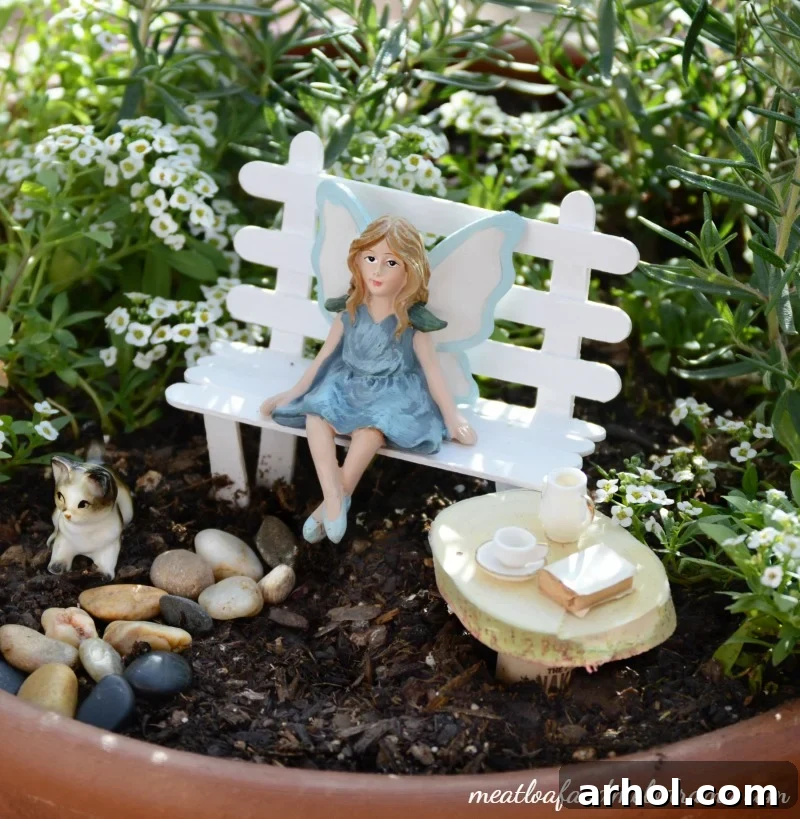
Our first project was a charming little bench. Using mini Popsicle sticks, the kids carefully glued them together to form a sturdy, miniature seat. A coat of white paint gave it a fresh, inviting look, making it the perfect size for any fairy or small figurine to rest upon. This simple craft demonstrates how everyday items can be repurposed into magical garden features.
To enhance the landscape, we decided to incorporate a path. I happened to have a collection of small river rocks, originally intended as vase filler, which proved to be ideal. The kids meticulously arranged these smooth stones to create a winding pathway leading to our newly crafted bench. These natural elements add texture and realism, making the miniature scene feel more authentic and inviting.
Another delightful addition was a tiny table, fashioned from a small wood slice and an old wine cork for its base. It’s remarkable how simple materials can be transformed into functional and aesthetically pleasing miniature furniture. This little table is just the right size for an imaginary cup of tea and a tiny book, inviting the fairies to pause for a moment of relaxation. With the figures in place, the scene truly came alive.
It brings such joy to see the fairy settled comfortably on her bench, perhaps enjoying a quiet moment with her beloved cat by the tiny table. These small details are what make a fairy garden truly special – they tell a story and invite onlookers to imagine the miniature lives unfolding within. The process of creating these elements together as a family was as enchanting as the finished garden itself.
Expanding Your Miniature Collection
The success and sheer enjoyment we experienced with our first easy DIY fairy garden were so immense that we were inspired to create another one! It truly doesn’t take much time or effort to put together these charming displays, and the rewards are immeasurable. For our second project, we decided to integrate a miniature scene into one of our existing planters. It was a bit of a tight squeeze, as the flowers were already thriving, but with a little creative rearranging, we found the perfect spot for a tiny fairy house and some additional greenery. This demonstrated the versatility of fairy gardens – they can be standalone features or blend seamlessly into larger potted arrangements.
Even with established plants, there’s always room to tuck in a small fairy dwelling or a miniature gnome. The key is to work with what you have and allow your imagination to lead the way. These tiny gardens are not just decorative items; they become living canvases for storytelling and creativity, constantly evolving as plants grow and you add new elements. They are a constant source of wonder and a gentle reminder of the magic that can be found in small spaces.
Maintaining Your Miniature Masterpiece
Once your fairy garden is complete, a little bit of care will ensure its longevity and beauty. Regular watering is essential, but be mindful not to overwater, especially in terra cotta pots that dry out faster. Check the soil moisture regularly. Provide adequate light – most miniature plants thrive in bright, indirect sunlight. You may need to prune your plants occasionally to maintain their miniature scale and shape. If you live in a region with cold winters, consider bringing your fairy garden indoors to protect delicate plants and figurines. With minimal effort, your miniature world will continue to flourish and bring joy for seasons to come.
Happy Gardening!
Sharing At
Wow Us Wednesday, Thoughts of Home, Link Party Palooza, The Scoop, Welcome Home Wednesdays, Met Monday