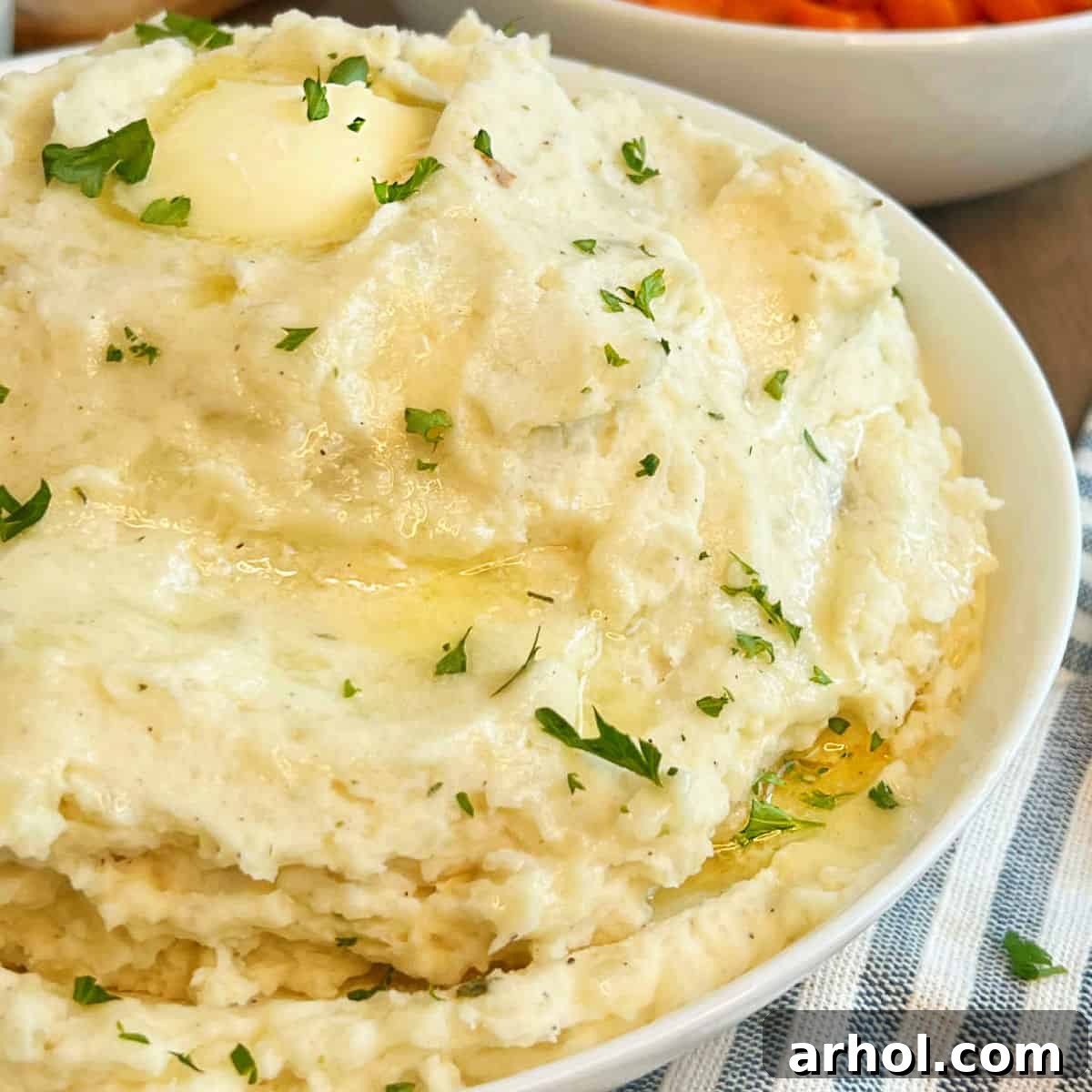
Cream Cheese Mashed Potatoes: The Ultimate Rich and Creamy Side Dish
Prepare to elevate your potato game with this incredible cream cheese mashed potatoes recipe! Forget bland, dry mashed potatoes – these spuds are luxuriously rich, incredibly creamy, and boast a delightful tangy twist that sets them apart. Perfect for casual family dinners, holiday feasts, or any occasion when you want to impress with a comforting and unforgettable side dish.
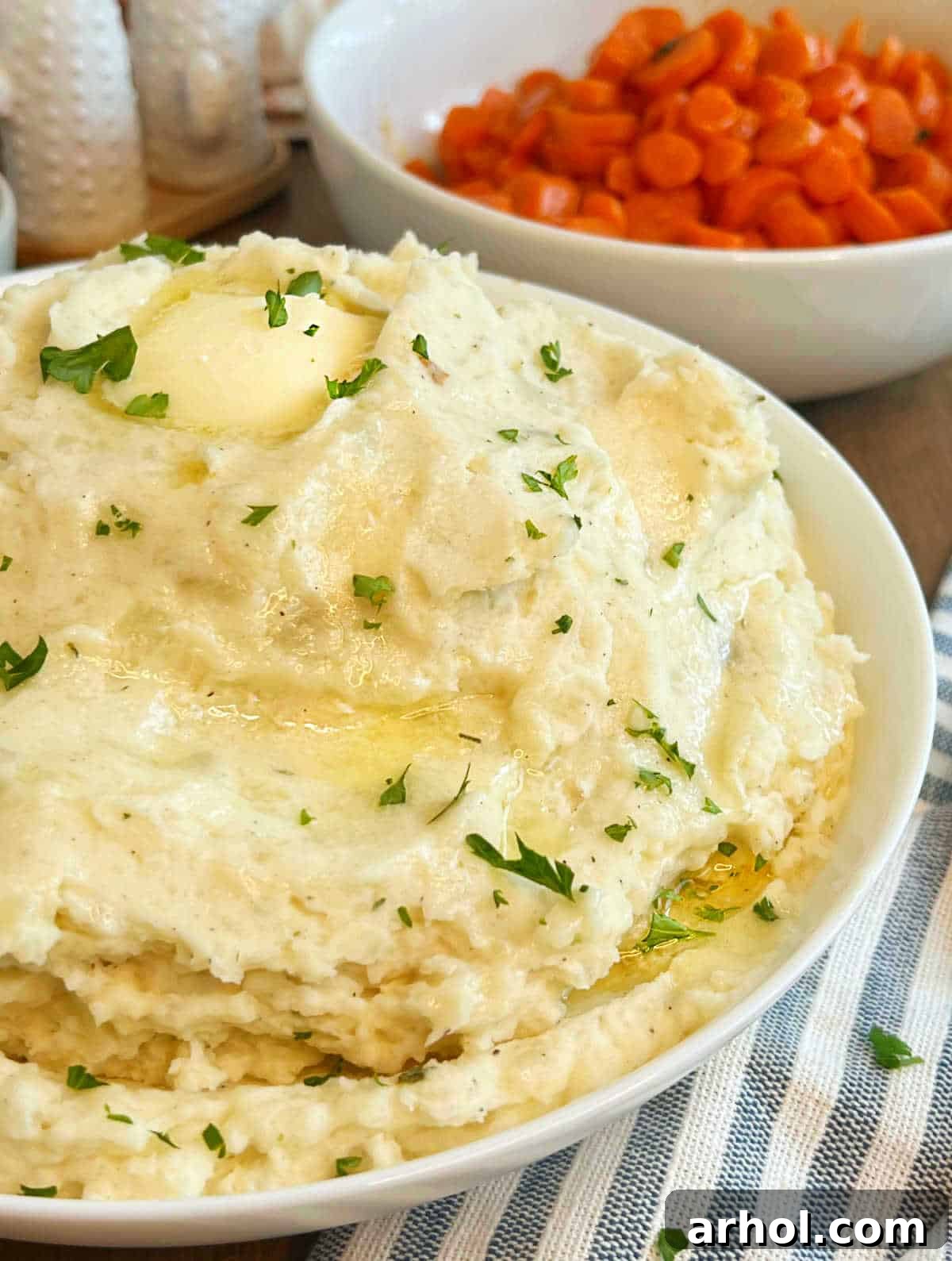
Why Cream Cheese Transforms Your Mashed Potatoes
If you’ve never considered adding cream cheese to your mashed potatoes, you’re in for a revelation. This simple addition is the secret ingredient that takes ordinary mashed potatoes from good to absolutely extraordinary. Cream cheese doesn’t just add an unparalleled creaminess; it also imparts a subtle, pleasant tanginess that cuts through the richness, balancing the flavors beautifully. It creates a velvety texture that’s incredibly smooth without being gluey, making every bite a decadent experience.
This recipe is a cherished family favorite, perfectly complementing hearty meals like meatloaf, tender pot roast, and even traditional dishes like Grandma’s Halupkis. Beyond everyday dinners, these creamy potatoes are an essential addition to your holiday table, shining brightly alongside your Thanksgiving turkey or Christmas ham. They’re guaranteed to be a crowd-pleaser, leaving everyone asking for the recipe.
Essential Ingredients for Flawless Cream Cheese Mashed Potatoes
Crafting the perfect cream cheese mashed potatoes begins with selecting quality ingredients. Each component plays a vital role in achieving that rich flavor and irresistible texture. Here’s a detailed look at what you’ll need:
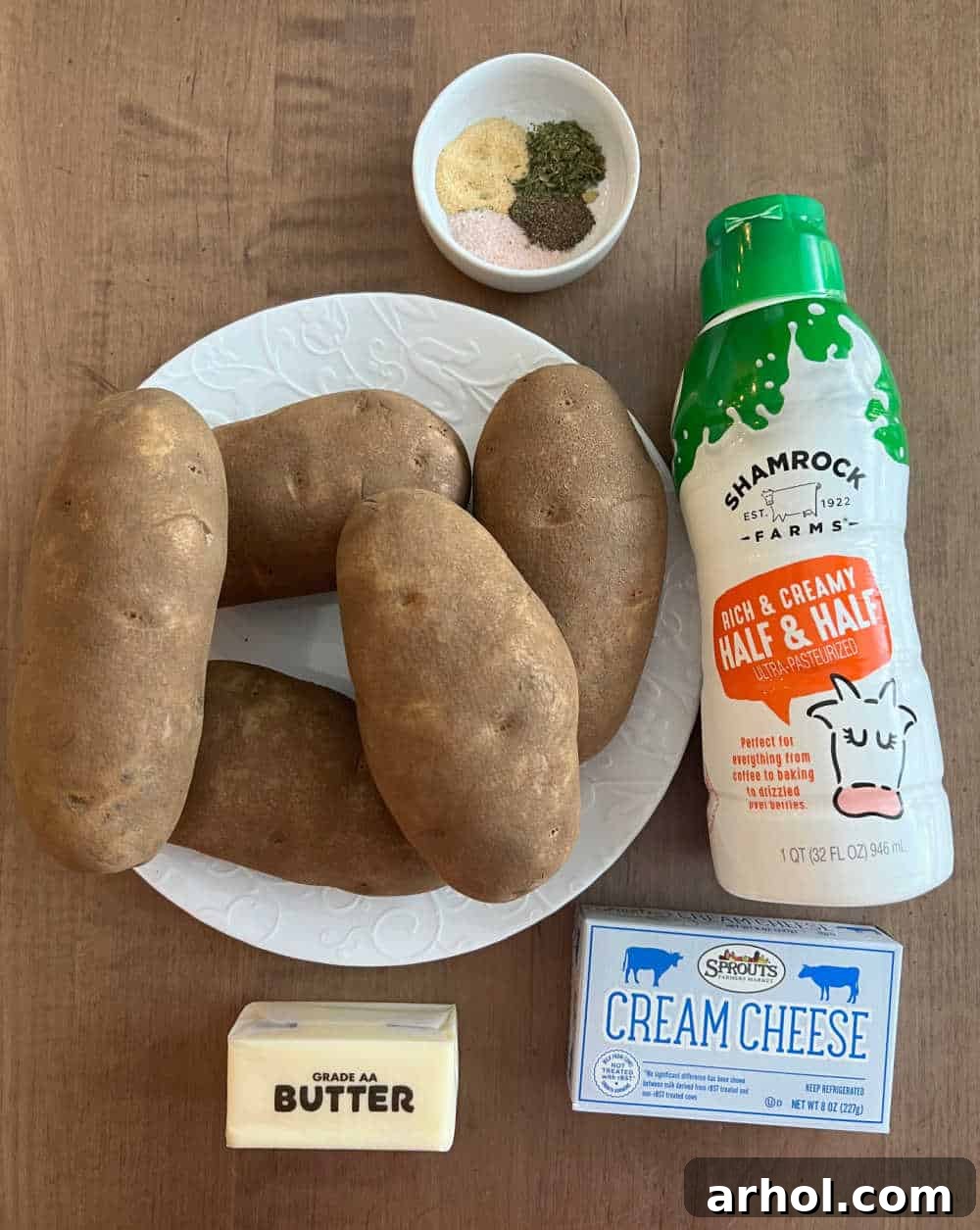
Choosing the Right Potatoes
- Russet Potatoes: Also widely known as Idaho potatoes (if sourced from Idaho) or baking potatoes, Russets are our top choice for mashed potatoes. Their high starch content and fluffy, airy texture make them ideal for mashing. When cooked, they break down beautifully, absorbing dairy and butter to create a light yet creamy consistency.
- Yukon Gold Potatoes: As an excellent alternative, Yukon Golds offer a slightly waxier texture and a naturally buttery flavor. They result in a denser, creamier mash compared to Russets, with a lovely golden hue. Both varieties work exceptionally well; your choice depends on your preferred mashed potato texture.
The Magic of Cream Cheese
- Full-Fat Cream Cheese: For the most indulgent flavor and richest texture, always opt for full-fat cream cheese. Low-fat versions tend to have more water content, which can affect the final consistency and dilute the flavor. Ensure your cream cheese is softened to room temperature before adding it to the potatoes. This is crucial for smooth blending, preventing lumps, and ensuring an even distribution of its delicious tang throughout the mash.
Dairy for Decadence
- Half and Half (or Whole Milk): Half and half contributes significantly to the luxurious creaminess of these potatoes without making them excessively heavy. If you prefer a slightly lighter mash or don’t have half and half on hand, whole milk is a perfectly acceptable substitute, offering a good balance of creaminess and liquid.
- Butter: Let’s be honest, butter makes everything better, and mashed potatoes are no exception! It adds incredible richness, flavor, and a silky smoothness. Like the cream cheese, using softened, room-temperature butter will help it incorporate seamlessly into the potatoes.
Mastering the Seasonings
- Sea Salt and Black Pepper: These fundamental seasonings are vital for enhancing the natural flavor of the potatoes and dairy. Adjust to your taste preferences.
- Garlic Powder: While optional, a touch of garlic powder introduces a warm, savory depth that beautifully complements the other ingredients. For a more intense garlic flavor, consider adding roasted garlic cloves.
- Dried Parsley: Also optional, dried parsley adds a subtle herby note and a hint of color. Fresh chopped parsley is an even better choice for garnish, providing a vibrant pop of freshness. If you prefer a more traditional, unadorned mashed potato flavor, feel free to omit both garlic and parsley.
Optional Additions for Enhanced Flavor
- Fresh Chives: Finely chopped fresh chives sprinkled in or on top add a delicate oniony flavor and beautiful green flecks.
- Sour Cream: For an extra layer of tang and creaminess, a dollop of sour cream can be added along with the cream cheese.
- Shredded Cheese: Mix in some shredded sharp cheddar, Parmesan, or Gruyere for cheesy mashed potatoes with an added layer of savory goodness.
- Bacon Bits: Crispy bacon bits folded into the potatoes or sprinkled on top offer a fantastic smoky, salty crunch.
Step-by-Step Guide: How to Make Cream Cheese Mashed Potatoes
Creating these rich and creamy mashed potatoes is surprisingly straightforward. Follow these simple steps for perfect results every time:
1. Prepare Your Potatoes
- Begin by thoroughly scrubbing your potatoes under cold running water to remove any dirt.
- Next, peel the potatoes completely. While some recipes suggest leaving the skin on for rustic mashed potatoes, peeling ensures the smoothest, creamiest texture we’re aiming for here.
- Cut the peeled potatoes into uniform 1-inch cubes. Uniform sizing is key to ensuring they cook evenly.
- Place the potato cubes into a large, heavy-bottomed pot. Add enough cold water to cover the potatoes by about an inch. Starting potatoes in cold water is essential; if you add them to boiling water, the outside will cook faster than the inside, leading to unevenly cooked spuds.
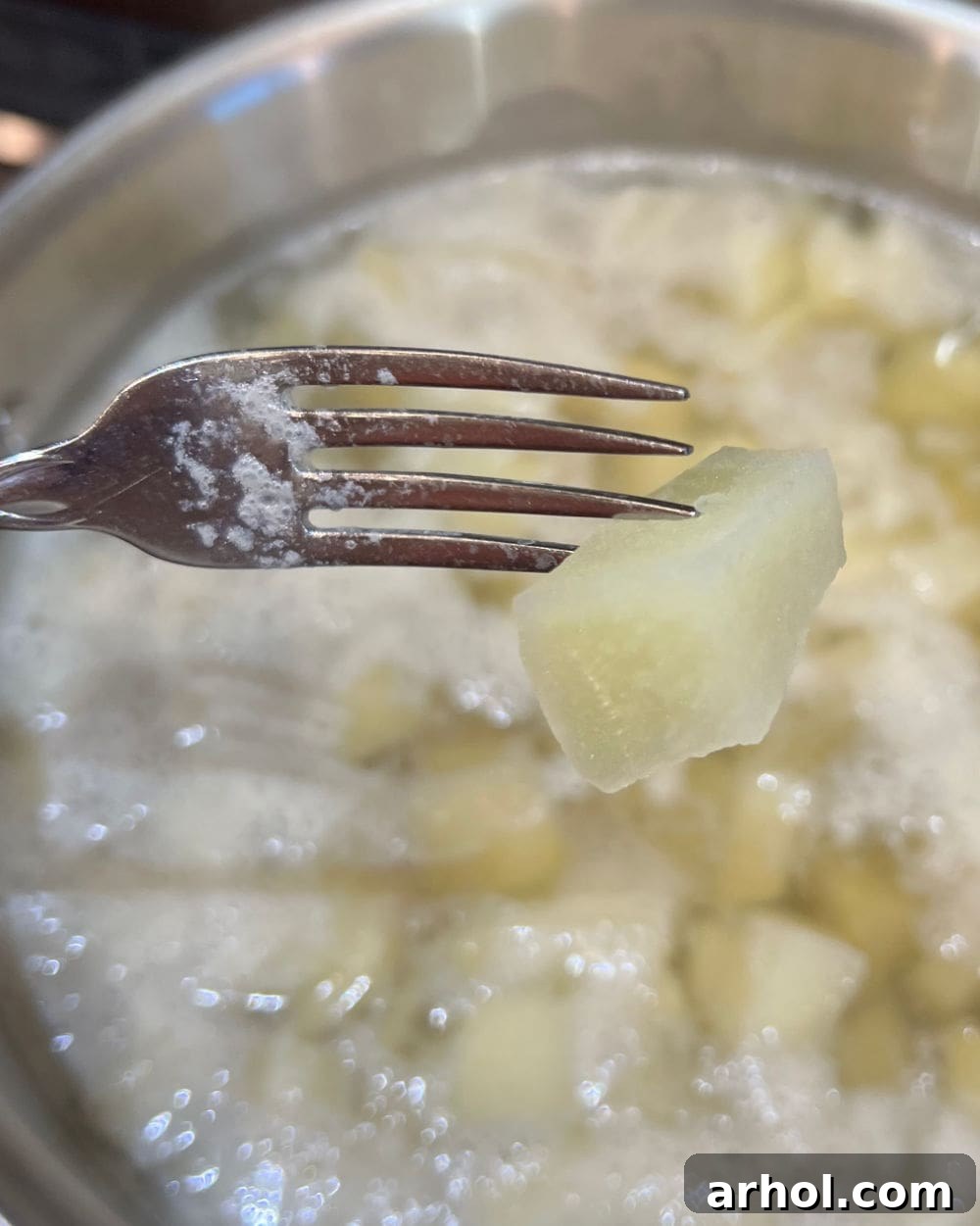
2. Cook to Perfection
- Bring the pot of potatoes and cold water to a boil over high heat. Once boiling, reduce the heat to a gentle simmer.
- Cook the potatoes for 15-20 minutes, or until they are easily pierced with a fork with absolutely no resistance. This indicates they are perfectly tender and ready for mashing. Overcooked potatoes can become waterlogged and mushy, while undercooked potatoes will result in a lumpy mash.
3. Warm the Dairy
- Carefully drain the cooked potatoes into a large colander, allowing all excess water to steam off.
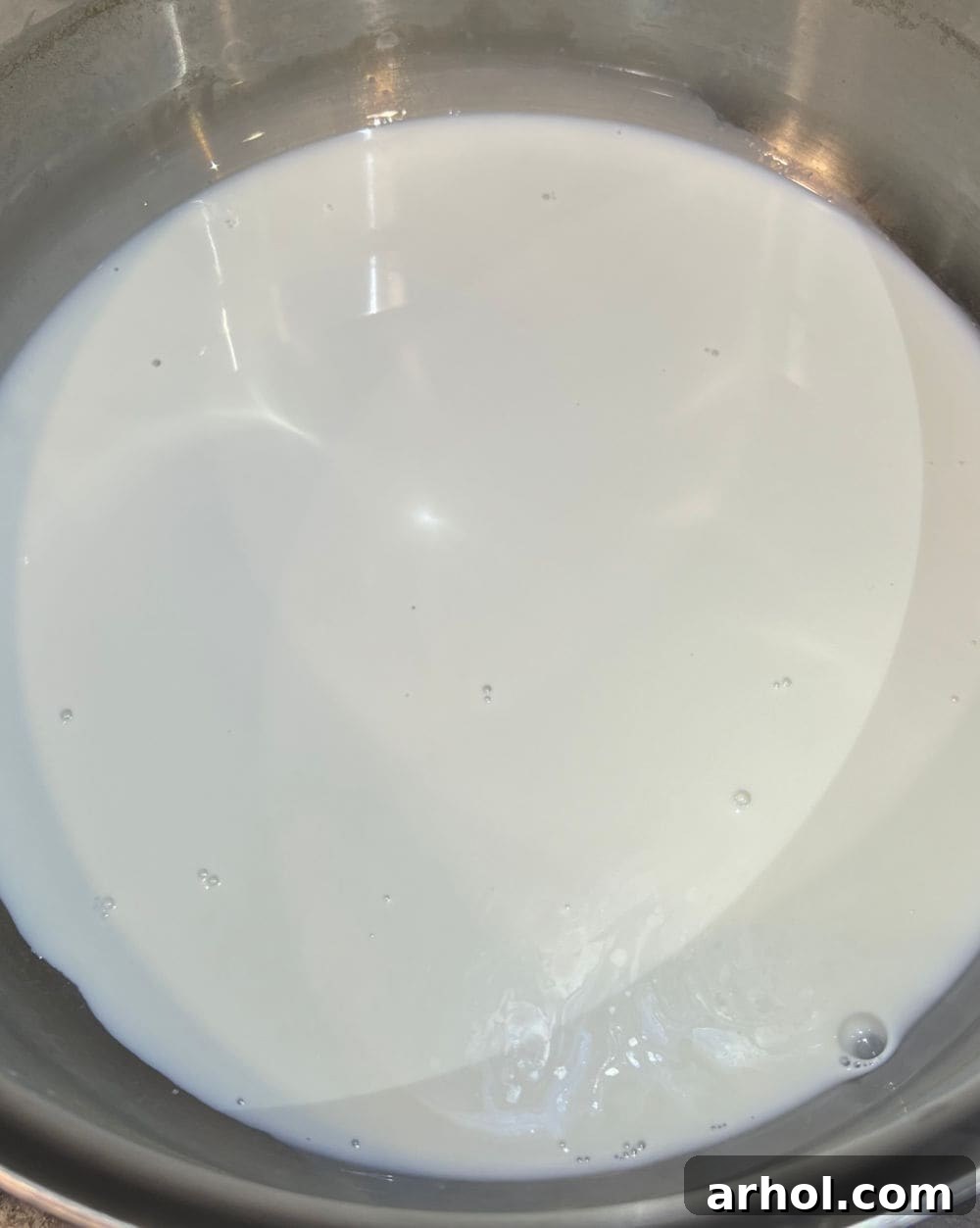
- Return the now-empty pot to the stove. Add the half and half (or whole milk) to the warm pot. The residual heat from the pot should be sufficient to gently warm the cream, preventing it from cooling down your potatoes too much when added. If your pot has cooled significantly, you can briefly turn the stove on low for a minute or two to warm the half and half, but be careful not to boil it.
4. The Mashing Process
- Return the drained, cooked potatoes to the pot with the warmed half and half.
- Immediately add the room temperature cream cheese, cubed butter, sea salt, garlic powder, and black pepper.
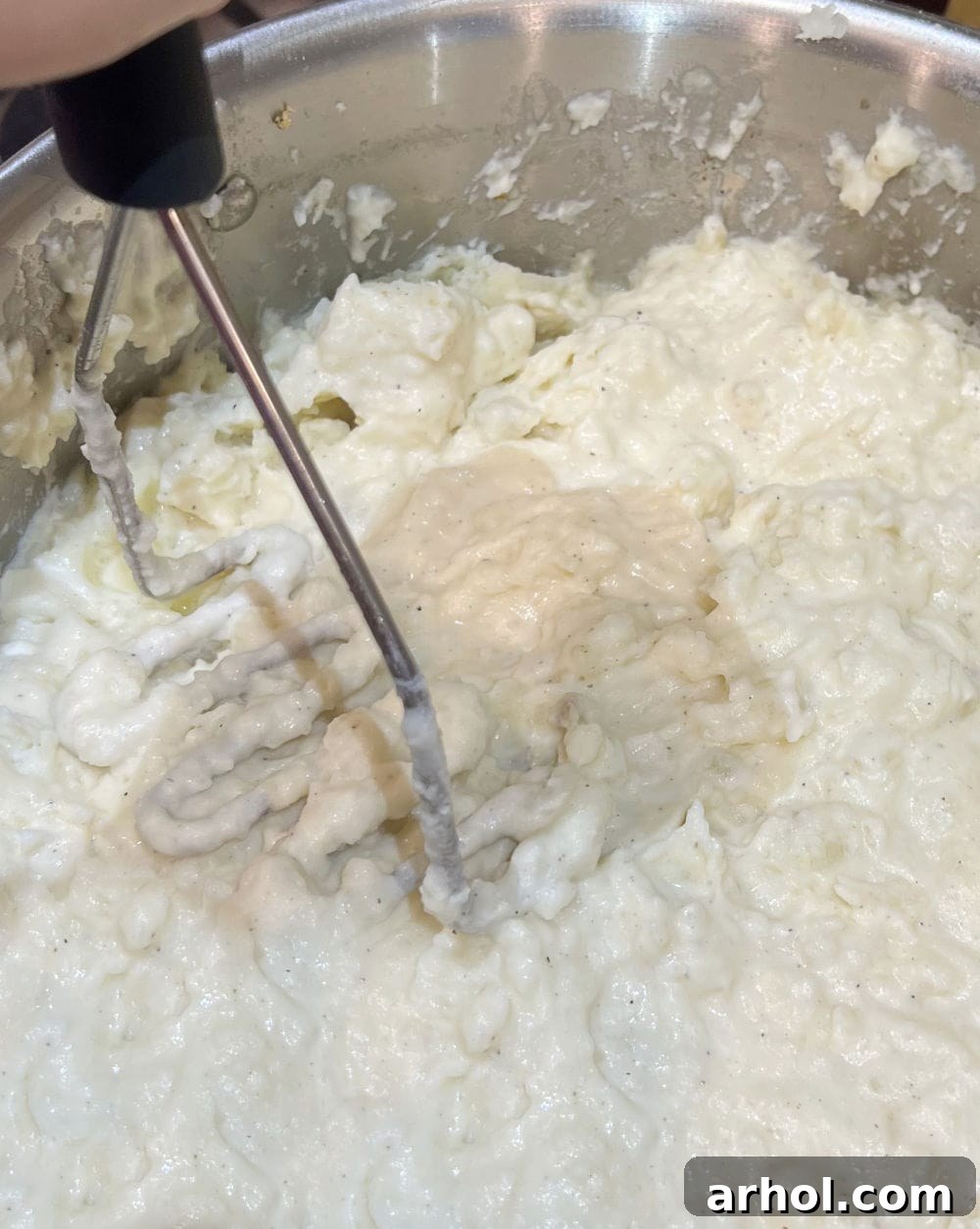
- Using a sturdy potato masher, begin mashing the potatoes. Mash until all ingredients are well blended and the potatoes reach your desired creamy consistency. A few small lumps are completely natural and often desirable in homemade mashed potatoes, contributing to their rustic charm.
- For an exceptionally smooth, lump-free mash, consider using a potato ricer. While it takes a little more effort, it yields a consistently smooth result. Avoid using an electric mixer, as overworking potatoes can release too much starch, leading to a gluey, unappetizing texture.
5. Serving Your Creamy Creation
- Spoon the finished mashed potatoes into a beautiful serving bowl.
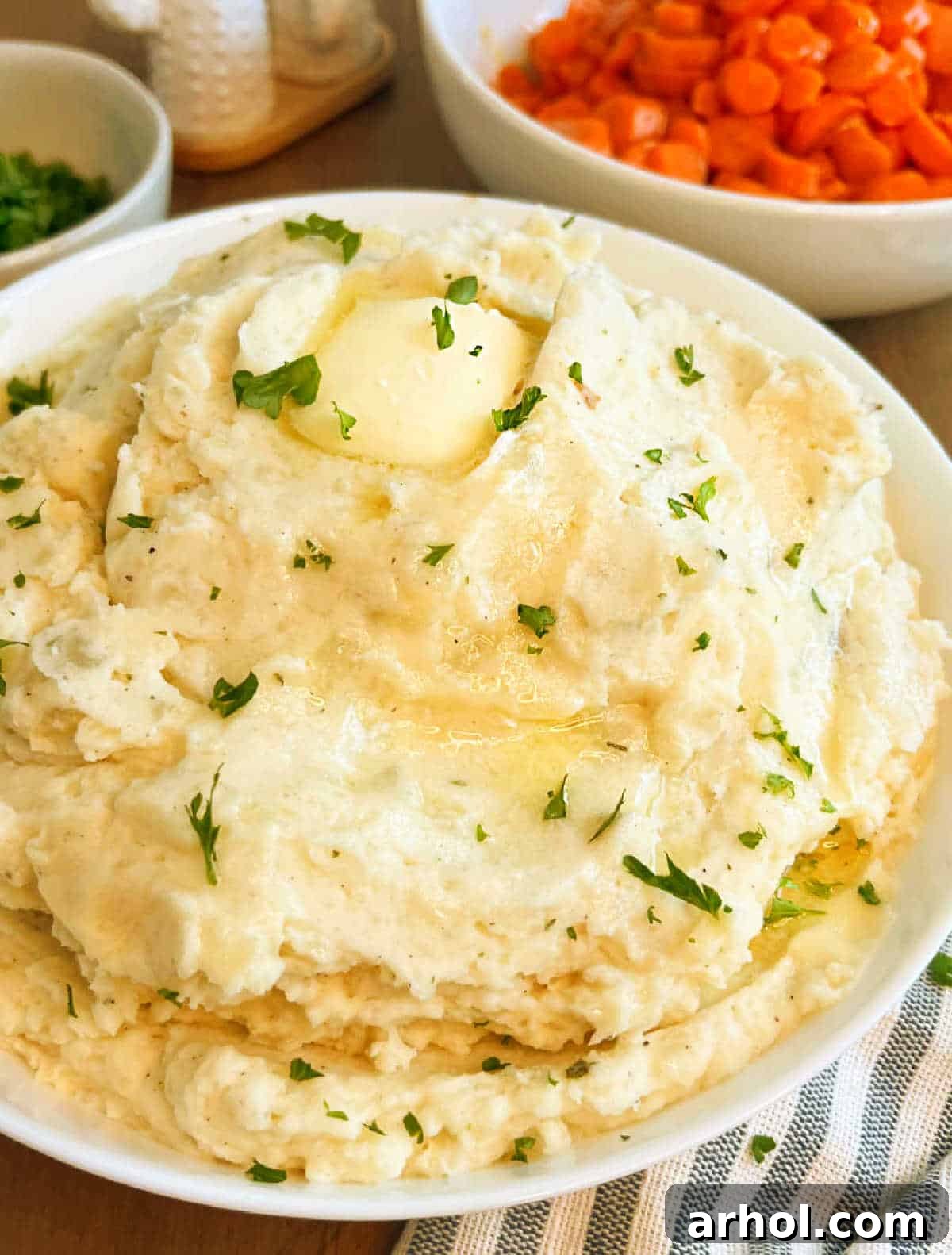
- For an extra touch of indulgence and visual appeal, top with a pat or two of extra butter, allowing it to melt into the warm potatoes. Garnish with a sprinkle of fresh chopped parsley or chives for a pop of color and freshness. Serve immediately and enjoy!
Expert Tips for the Best Cream Cheese Mashed Potatoes
Achieving perfectly creamy and flavorful mashed potatoes is easy with these simple tips:
- Room Temperature Ingredients are Key: Always ensure your cream cheese and butter are at room temperature. This makes them much easier to blend into the hot potatoes, preventing lumps and ensuring a consistently smooth and creamy texture.
- Start Potatoes in Cold Water: This is a non-negotiable step for evenly cooked potatoes. Adding potatoes to already boiling water causes the outsides to cook and break down before the insides are tender, leading to uneven texture and potential waterlogging.
- Gentle Simmer, Not a Rolling Boil: Once the water comes to a boil, reduce the heat to a gentle simmer. This allows the potatoes to cook through without becoming waterlogged or falling apart excessively, which can make them gummy.
- Avoid the Electric Mixer: While tempting for speed, an electric mixer is the enemy of fluffy mashed potatoes. It can overwork the potato starches, turning your delicious mash into a gluey, unappetizing consistency. Stick to a sturdy potato masher or a ricer for the best results.
- Don’t Overcook: Cook potatoes just until fork-tender. Overcooked potatoes absorb too much water and can become watery or mushy, making it difficult to achieve a light and fluffy texture.
- Keep Them Warm in a Slow Cooker: If you’re preparing for a holiday meal or need to make your mashed potatoes ahead of time, a slow cooker is your best friend. After mashing, transfer the potatoes to a slow cooker set to the “warm” setting. Stir occasionally and add a splash more warm milk or half and half if they thicken too much.
- Taste and Adjust: Always taste your mashed potatoes before serving and adjust seasonings as needed. Potatoes are notorious for needing a good amount of salt to bring out their flavor.
Storage, Reheating, and Creative Leftover Ideas
These cream cheese mashed potatoes are so good, you might not have any leftovers! But if you do, they store and reheat beautifully, and can even be transformed into new delicious dishes.
- Storage: Store leftover mashed potatoes in an airtight container in your refrigerator for 3-5 days.
- Reheating Individual Portions: For small amounts, microwave individual portions on medium heat, stirring every minute or so, until heated through. A splash of milk or half and half can help restore their creamy texture.
- Reheating Larger Batches: For larger amounts, gently reheat on the stovetop over low heat, stirring frequently. Again, add a little milk or half and half to loosen them up and bring back their original consistency. You can also reheat them covered in a baking dish in a preheated oven (350°F / 175°C) until warmed through, stirring halfway.
- Freezing Mashed Potatoes: Yes, you can freeze mashed potatoes! If you have a significant amount of leftovers, spread them evenly in a freezer-safe bag or airtight container, removing as much air as possible. They can be frozen for up to 3 months. Thaw overnight in the refrigerator before reheating.
- Creative Leftover Ideas:
- Mashed Potato Cakes: Form cold mashed potatoes into patties and pan-fry them until golden brown and crispy for a quick lunch or dinner.
- Twice-Baked Potato Casserole: Layer your leftover mashed potatoes into a casserole dish, top with cheese, bacon, and chives, then bake until bubbly and golden for a comforting side or light meal.
- Shepherd’s Pie Topping: Use the creamy mash as a delightful topping for a hearty shepherd’s pie.
- Potato Croquettes: Mix in some cheese and herbs, shape into logs or balls, bread, and deep fry or bake for a gourmet appetizer.
Frequently Asked Questions (FAQ)
Can I make these mashed potatoes ahead of time?
Absolutely! Cream cheese mashed potatoes are excellent for making ahead, which is perfect for holidays. Prepare them completely, then store them in an airtight container in the refrigerator for up to 2-3 days. When ready to serve, reheat gently on the stovetop or in a slow cooker set to “warm,” adding a splash of milk or half and half to restore their creamy texture.
What’s the best way to reheat mashed potatoes without them drying out?
To prevent drying, reheat mashed potatoes over low heat on the stovetop, stirring frequently, or in a slow cooker on the “warm” setting. Always add a small amount of warm milk, half and half, or even chicken broth while reheating to bring back their moisture and creamy consistency. Covering them loosely also helps trap steam.
Why do you recommend not using an electric mixer?
Electric mixers, especially at high speeds, can overwork the starch in potatoes, causing them to break down too much and release excess starch. This results in a gluey, gummy, or pasty texture, which is generally undesirable for mashed potatoes. A hand masher or a potato ricer preserves the delicate texture and keeps them fluffy yet creamy.
What can I serve with cream cheese mashed potatoes?
These versatile mashed potatoes pair wonderfully with a wide array of dishes. They are a classic accompaniment to roasted chicken, turkey, prime rib, steak, pork chops, and of course, meatloaf and pot roast. They also make a fantastic side for hearty stews, gravies, and any holiday centerpiece.
More Delicious Side Dishes for Any Occasion
Looking for more fantastic sides to complete your meal? Try some of these other favorites:
- My oven roasted potatoes with basil and Parmesan are wonderfully crispy and flavorful.
- If you’re an Instant Pot fan, learn how to make mashed potatoes in the Instant Pot for a quicker cooking time.
- Add a vibrant touch with my sweet and savory orange ginger glazed carrots.
- No holiday meal is complete without a comforting green bean casserole.
- For a sweet and savory option, my sweet potato casserole with canned yams is always a hit.
The Full Recipe: Cream Cheese Mashed Potatoes
Here’s the complete, printable recipe card for these sensational cream cheese mashed potatoes. Follow these precise measurements and steps for a consistently perfect batch.
Cream Cheese Mashed Potatoes
By: Dee
This easy cream cheese mashed potatoes recipe makes rich and creamy mashed potatoes that are absolutely delicious. The perfect side dish for family dinners and holidays!
Prep Time: 15 minutes
Cook Time: 20 minutes
Total Time: 35 minutes
Yields: 12 servings
Pin Recipe
Print Recipe
Equipment
- Large pot
- Colander
- Potato masher (or potato ricer)
Ingredients
For 12 servings:
- 4-5 pounds russet potatoes, washed, peeled, and cubed
- 1 cup half and half (or whole milk)
- 8 oz cream cheese, cubed and at room temperature
- ½ cup butter (1 stick), cubed and at room temperature
- 1½ teaspoons sea salt
- 1 teaspoon garlic powder
- ½ teaspoon black pepper
- 1 teaspoon dried parsley (optional, for garnish or flavor)
Instructions
- Cut the washed and peeled potatoes into 1-inch cubes and place them in a large pot.
- Add enough cold water to cover the potatoes by about an inch, then bring to a boil over high heat.
- Once boiling, reduce the heat to a simmer and cook for 15-20 minutes, or until the potatoes are easily pierced with a fork (they should offer no resistance).
- Drain the cooked potatoes thoroughly in a large colander, allowing them to steam dry for a minute or two.
- Return the empty pot to the stove. Add the half and half to the warm pot and allow it to warm up gently using the residual heat (or very low stove heat).
- Add the drained potatoes back to the pot, along with the softened cream cheese, butter, sea salt, garlic powder, and black pepper.
- Mash the ingredients with a potato masher until they are well blended and reach your desired creamy consistency.
- Serve immediately, optionally garnished with a pat of butter and fresh parsley.
Recipe Notes
- Always use room temperature cream cheese and butter for easier, lump-free blending.
- Start cooking potatoes in cold water to ensure even cooking throughout.
- Reduce heat to a simmer once boiling to prevent overcooking and waterlogged potatoes.
- Use a potato masher or ricer instead of an electric mixer to avoid overworking the potatoes, which can make them gluey.
- If preparing ahead, keep mashed potatoes warm in a slow cooker on the “warm” setting until ready to serve.
Nutrition (Approximate per serving)
Calories: 281kcal, Carbohydrates: 29g, Protein: 5g, Fat: 17g, Saturated Fat: 10g, Polyunsaturated Fat: 1g, Monounsaturated Fat: 4g, Trans Fat: 0.3g, Cholesterol: 46mg, Sodium: 431mg, Potassium: 689mg, Fiber: 2g, Sugar: 2g, Vitamin A: 564IU, Vitamin C: 9mg, Calcium: 63mg, Iron: 1mg
Nutrition information is automatically calculated and should be used only as an approximation.
Additional Info
Course: Side Dish
Cuisine: American
If you loved this recipe, please leave a comment below to share your experience!
Sign up for my weekly newsletter to get more easy and delicious recipes delivered straight to your inbox!