
The Ultimate Guide to DIY Homemade Cleaning Products: Save Money & Clean Green
As the seasons shift and warmer weather graces us, particularly here in Arizona where spring feels like it’s already in full swing, there’s a natural urge to refresh our living spaces. The thought of spring cleaning often brings to mind a house sparkling from top to bottom. But what if you could achieve that pristine clean without breaking the bank or exposing your family to harsh chemicals? I’ve been in full cleaning and purging mode lately, and I’m thrilled to share my secrets for creating effective, budget-friendly, and natural cleaning solutions using simple ingredients you likely already have at home. These homemade cleaning products not only deliver exceptional results but also help you significantly cut down on your household expenses.
My Journey to Natural Cleaning: Ditching Harsh Chemicals for a Healthier Home
Growing up, my mom was meticulously clean – a true “clean freak” in the best sense of the word. Our house was always spotless. However, her arsenal of brand-name cleaning products, while effective, often left behind a strong, artificial scent that I found overwhelming. I’ve always been sensitive to powerful odors, and this early experience might be why I eventually grew to dislike the chore of cleaning my own home. The idea of scrubbing with products that made me feel uncomfortable just didn’t sit right.
A few years ago, I decided to make a change. I started experimenting with homemade cleaning solutions, primarily using ingredients readily available in my pantry. Initially, my husband was quite skeptical. With five kids, our household relied heavily on the convenience of Lysol wipes and other strong disinfectants. He wondered if these natural alternatives could truly stand up to the demands of a busy family home. But after witnessing the impressive results – sparkling surfaces, fresh scents, and a noticeable reduction in our grocery bill – he became a full convert to my “little experiment.” And yes, he’s even embraced helping with the cleaning!
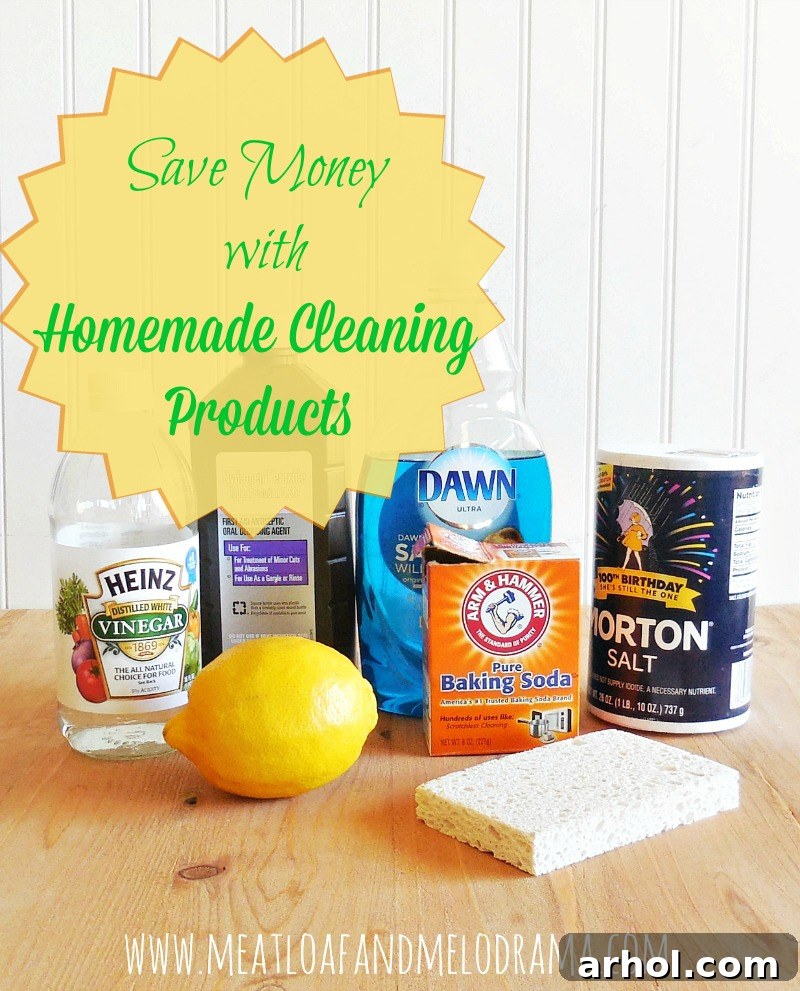
Many people have already discovered the wonders of DIY household cleaners, but for those new to the concept, I’m excited to share my go-to ingredients and techniques. We primarily rely on a powerful yet simple combination: white vinegar, hydrogen peroxide, a trusted dish soap like Dawn, humble baking soda, a dash of salt, and the refreshing zest of lemon. Trust me, you’ll fall in love with the fresh, clean aroma of lemon!
Why Choose Homemade Cleaning Products?
Beyond the personal anecdote, there are compelling reasons to make the switch to DIY cleaning solutions:
- Cost Savings: Commercial cleaners can be surprisingly expensive. By utilizing everyday pantry staples, you drastically reduce your household cleaning budget.
- Reduced Chemical Exposure: Many conventional cleaners contain harsh chemicals, synthetic fragrances, and volatile organic compounds (VOCs) that can irritate skin, eyes, and respiratory systems. Natural alternatives offer a safer environment for your family and pets.
- Eco-Friendly: Using biodegradable ingredients and refilling reusable bottles minimizes plastic waste and reduces your environmental footprint.
- No Overpowering Scents: Say goodbye to artificial, chemical smells. Homemade cleaners often leave behind a subtle, natural fragrance or no scent at all, which is perfect for those with sensitivities.
- Empowerment & Simplicity: Knowing exactly what goes into your cleaning products and how to make them offers a sense of control and self-sufficiency. Plus, they are incredibly easy to prepare!
The Powerhouse Ingredients for a Naturally Clean Home
Vinegar: The Versatile Acidic Cleaner
White distilled vinegar is a cleaning superstar due to its acidity. It effectively cuts through grease, dissolves mineral deposits, and acts as a natural disinfectant against many bacteria and viruses. I find it indispensable for tackling stubborn grime in window tracks and sliding glass door grooves. A simple cotton swab dipped in vinegar works wonders to dislodge even the most ‘icky’ buildup – you won’t believe how much dirt comes off! Beyond that, vinegar shines as a streak-free cleaner for windows and mirrors (diluted), a polisher for faucets, and an excellent way to deep-clean coffee and tea cups. For coffee makers, I use it to decalcify, but always refer to your appliance’s manufacturer instructions for best practices.
More Vinegar Uses:
- Floor Cleaner: Mix equal parts water and vinegar for a natural, all-purpose floor cleaner (avoid on unsealed stone).
- Laundry Freshener: Add half a cup to your rinse cycle as a natural fabric softener and odor eliminator.
- Showerhead Descaler: Soak a plastic bag filled with vinegar around your showerhead overnight to remove mineral buildup.
- All-Purpose Spray: Mix 1:1 vinegar and water with a few drops of essential oil (like lemon or tea tree) for a general surface cleaner.
Baking Soda and Lemon: The Dynamic Duo for Scrubbing and Freshening
Baking soda (sodium bicarbonate) is a mild abrasive, a natural deodorizer, and a fantastic gentle scrubber. Lemon, with its natural acidity and refreshing scent, complements baking soda perfectly. Together, they form an unbeatable cleaning team.
I create a simple paste of baking soda and lemon juice to gently scrub sinks, showers, and bathtubs. This paste lifts grime without scratching surfaces and leaves behind a wonderfully fresh scent. For clogged or stale-smelling drains, a sprinkle of baking soda followed by a cup of vinegar can create a fizzy reaction that helps clear minor blockages and eliminates odors. I’m also a big fan of drinking lemon water throughout the day; once I’ve enjoyed my drink, I simply toss the used lemon slice into the kitchen sink and run the garbage disposal. This instantly refreshes the entire area, neutralizing any lingering stale odors.
More Baking Soda & Lemon Uses:
- Refrigerator Deodorizer: An open box of baking soda in the fridge absorbs odors.
- Oven Cleaner: Apply a baking soda paste to oven surfaces, let it sit overnight, then scrub and wipe clean.
- Carpet Freshener: Sprinkle baking soda on carpets, let it sit for 15-30 minutes, then vacuum.
- Cutting Board Sanitizer: Rub half a lemon over a cutting board, sprinkle with salt, let sit, then rinse.
Salt: The Natural Abrasive
While not an everyday cleaner for me, common table salt is an incredibly effective natural abrasive. It’s perfect for tackling baked-on stains, especially those stubborn residues left on glass baking pans. Simply sprinkle a generous amount of salt into the pan, let it sit for a while to work its magic, and then gently scrub. The salt helps lift the cooked-on food without the need for harsh chemicals or excessive elbow grease. This method is also excellent for cleaning cast iron pans, as it helps remove debris and can even assist in seasoning the pan.
More Salt Uses:
- Stain Remover: Sprinkle salt on fresh spills (like red wine) to absorb moisture before cleaning.
- Copper Cleaner: Mix salt with vinegar and flour to create a paste for polishing copper.
- Grease Fire Extinguisher: Keep a box of salt near the stove – it can smother small grease fires.
Hydrogen Peroxide: The Gentle Disinfectant and Brightener
Hydrogen peroxide is a remarkable and affordable disinfectant that should be a staple in every natural cleaning kit. Its powerful oxidizing action effectively kills germs, bacteria, and viruses, making it an excellent alternative to harsher chemical disinfectants. It’s so effective that it allowed us to completely eliminate Lysol wipes from our shopping list!
I use hydrogen peroxide to clean and disinfect almost everything in my home. Simply spray it directly onto surfaces like countertops, sinks, and toilet bowls, let it sit for a few minutes to sanitize, then wipe clean with a damp paper towel or cloth. It also works wonders on faucets and even helps remove stubborn laundry stains. The best part? A 32-ounce bottle often costs less than a dollar, offering incredible value and peace of mind. Remember to store hydrogen peroxide in its original, dark container, as exposure to light can degrade its effectiveness over time.
More Hydrogen Peroxide Uses:
- Grout Whitener: Spray directly onto discolored grout, let sit, then scrub with a brush.
- Mold and Mildew Treatment: Spray on affected areas and allow it to sit for an hour before wiping.
- Cutting Board Sanitizer: Spray after washing to disinfect.
- Fruit and Vegetable Wash: A quick spray (then rinse) can help remove pesticides and bacteria.
Dawn Dish Soap: The Ultimate Degreaser and Stain Fighter
While not a “natural” ingredient in the same vein as vinegar or baking soda, a good quality dish soap like Dawn is a powerful and versatile cleaning agent that plays a crucial role in my homemade cleaning arsenal. Its incredible degreasing properties make it essential for washing dishes and wiping down greasy kitchen surfaces.
However, its utility extends far beyond the kitchen sink. Dawn is phenomenal for tackling tough stains on clothes. I’ve found it to be an unparalleled pre-treatment for laundry stains; a small dab rubbed directly onto the stain before washing can lift grease, food, and dirt effectively. Since incorporating Dawn into my laundry routine, I haven’t needed to purchase commercial laundry stain removers. As mentioned earlier, hydrogen peroxide is also excellent for laundry stains, and sometimes a combination of both can be a true lifesaver for really stubborn marks.
More Dawn Uses:
- All-Purpose Cleaner: Mix a few drops with warm water and vinegar for an effective all-purpose spray.
- Window Cleaner: A tiny drop in a spray bottle with water and vinegar can yield streak-free windows.
- Pest Control (Plants): A very dilute solution can be used to treat plant pests like aphids.
DIY All-Purpose Cleaner Recipe
Here’s a simple recipe for a versatile spray that can tackle most surfaces:
Ingredients:
- 1 cup white vinegar
- 1 cup distilled water
- 1 teaspoon Dawn dish soap
- 10-15 drops of essential oil (optional, e.g., lemon, tea tree, lavender for scent and added antibacterial properties)
Instructions: Combine all ingredients in a spray bottle. Shake gently before each use. Test on an inconspicuous area first.
Tips for a Sustainable and Efficient Cleaning Routine
- Embrace Reusables: Ditch paper towels for microfiber cloths or old cotton rags. They are more effective and reduce waste.
- Label Your Bottles: Clearly label all your homemade cleaning solutions to avoid confusion.
- Store Properly: Keep your DIY cleaners in cool, dark places, especially hydrogen peroxide, to maintain their efficacy.
- Clean Regularly: A little bit of cleaning often prevents major grime buildup, making the overall task easier.
- Ventilate: Even with natural cleaners, ensure good ventilation when cleaning.
Start Your Journey to a Naturally Clean Home Today!
Wow – that was quite a comprehensive list, but these methods genuinely work wonders for me and my family. Not only have we seen significant savings on household cleaning products, but I also feel incredibly good about using these natural ingredients to keep our home clean and healthy. It’s a conscious choice that benefits our budget, our well-being, and the environment.
While these natural solutions are generally safe, it’s always wise to exercise caution with any cleaning product. I encourage you to do your own research to fully understand how these ingredients work and to ensure they are suitable for your specific needs and surfaces. Always test new solutions on an inconspicuous area first, especially on delicate materials.
Do you have any fantastic homemade cleaning tips or recipes to share? What natural products do you swear by for cleaning your home? I’d love to hear your insights in the comments below!
Thanks a bunch for visiting me and diving into the world of natural cleaning. Enjoy your day and happy cleaning!