
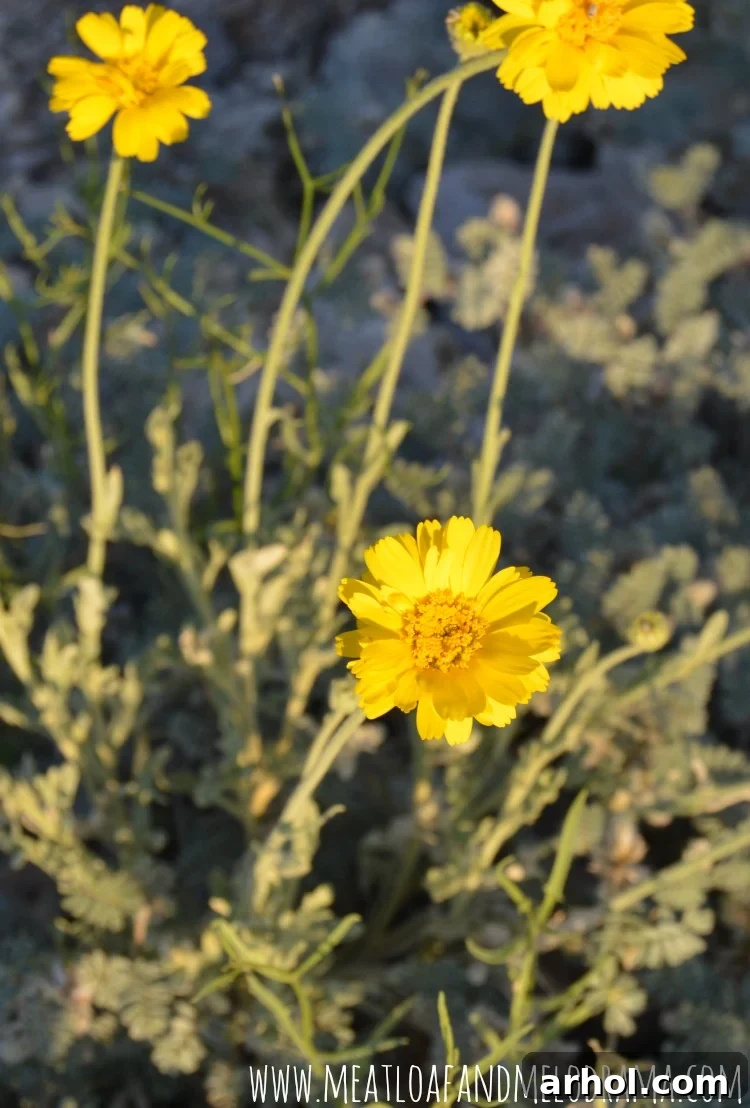
Hello, fellow nature enthusiasts! I hope you’re all making the most of your weekend. I’m currently enjoying a rare stretch of free time, which has inspired me to share some captivating images and reflections from one of our recent strolls through the magnificent Arizona desert. It’s truly a special time of year, as the desert is currently awash in the vibrant hues of its annual wildflower season. What is typically a landscape of subtle earth tones is now bursting with an extraordinary spectrum of color, a truly breathtaking transformation. Of course, this beauty comes hand-in-hand with allergy season for some, but that’s an adventure for another day!
As we ventured deeper into this blossoming wonderland, brilliant pops of yellow seemed to dance everywhere we looked. Among them were these delightful little blossoms, affectionately known as Desert Sunflowers. Their cheerful presence is an undeniable sign of spring’s arrival, scattering sunshine across the arid terrain.
Discovering the Brittlebush: The Desert Sunflower’s Secret Identity
I must confess, I’m certainly no botanical expert. My initial thought upon seeing these radiant yellow flowers was that they might be some variant of Black-Eyed Susans, a familiar sight in other parts of the country. However, a quick dive into some local plant guides revealed their true identity: these stunning “Desert Sunflowers” actually emerge from a hardy shrub known as brittlebush. The plant’s scientific designation, Encelia farinosa, has a rather enchanting ring to it – almost like a mystical incantation plucked straight from the pages of a Harry Potter spellbook!
Brittlebush is a fascinating plant, perfectly adapted to the harsh desert environment. Its name derives from its brittle stems, which break easily, yet it thrives in rocky, well-drained soils, often covering vast expanses of the Sonoran and Mojave deserts. During the spring bloom, its silvery-gray foliage provides a beautiful contrast to the explosion of golden-yellow flowers, making it one of the most iconic and recognizable plants of the Arizona landscape. These blooms are not just a feast for the eyes; they also serve as a vital food source for numerous desert insects and pollinators, playing a crucial role in the delicate desert ecosystem. Witnessing their resilience and beauty up close is a powerful reminder of nature’s ingenuity and adaptability.
Feathered Friends: A Glimpse of Desert Avians
Beyond the captivating flora, the desert also teems with an incredible array of avian life, especially during the milder spring months. Our walk was graced by the presence of several charming birds, each adding its own unique melody and splash of color to the desert’s symphony.
The Vibrant Finch in the Palo Verde
Perched majestically atop a Palo Verde tree, a brightly colored finch caught our eye. Its vivid plumage stood out brilliantly against the tree’s distinctive green bark and delicate yellow blossoms. While the picture I managed to capture might not be the sharpest masterpiece ever taken – a common challenge when trying to photograph fast-moving wildlife, especially with energetic kids in tow – I was thrilled just to have documented his momentary pause. The finch’s brief stillness was a precious gift, allowing me just enough time to frame the shot.
Palo Verde trees, with their unique green trunks and branches, are iconic residents of the Sonoran Desert. They are remarkable for their ability to photosynthesize through their bark, an adaptation that helps them conserve water during dry periods. These trees provide essential shade, shelter, and nesting sites for countless desert creatures, including these charming finches. Observing such a vibrant creature in its natural habitat truly underscored the lively biodiversity thriving within this seemingly harsh environment.
The Majestic Desert Hawk
Then, as if on cue, the desert’s natural order took a dramatic turn with the silent, commanding appearance of Mr. Hawk. The moment his shadow swept across the landscape, an immediate hush fell over everything. Smaller birds ceased their chirping, and the bustling desert floor seemed to hold its breath. There’s an undeniable majesty, a quiet power, in the way a hawk effortlessly glides across the expansive desert sky.
Hawks are magnificent birds of prey, and species like the Red-tailed Hawk or Harris’s Hawk are common sights in Arizona. With their keen eyesight and impressive wingspan, they are perfectly adapted for hunting across the open desert, playing a crucial role in maintaining the ecological balance. Watching such a powerful predator move with such grace and precision is a truly humbling experience. It evokes a sense of ancient wilderness and untamed beauty, reminding us of the raw, primal essence of nature. Their presence is a stark reminder of the intricate food web that sustains life in this incredible ecosystem.
Our Backyard Neighbor: The Cactus Wren
Closer to home, in a tree right in our own yard, lives a very special little bird: the Cactus Wren. This charming and resilient avian is, in fact, our cherished state bird, and for good reason. It’s a true icon of the Arizona desert, known for its distinctive appearance and bold personality. For the longest time, I’ve been trying to capture a decent photograph of her, and this particular shot is probably the closest I’ve ever managed to get. These birds are notoriously quick and a bit shy, making them challenging subjects for even the most patient photographers.
An Architectural Marvel: The Cactus Wren’s Nest
The nest itself is an architectural marvel. Isn’t it remarkably huge for such a relatively small bird? Cactus Wrens are renowned for constructing these elaborate, football-shaped nests, often strategically placed in thorny cacti or dense, spiny trees for maximum protection against predators. It appears that Mama Bird even attempted to incorporate some kind of mesh-like material around its exterior, perhaps to reinforce the structure or provide additional camouflage.
These nests are built with incredible precision and care, often featuring a side entrance that leads to a cozy, insulated chamber within. The sheer volume of material and effort that goes into creating such a robust home is truly impressive, a testament to the wren’s dedication to its offspring.
It seems the eggs have recently hatched, because I’ve been catching glimpses of the mother wren diligently carrying various tidbits with dangling legs back to the nest. Her dedication to feeding her hungry brood is inspiring to watch. However, she’s an incredibly wary mother. If anyone is nearby, she absolutely refuses to land at the nest. Instead, she’ll circle around and around, a persistent guardian, until she’s certain that the coast is clear and you’ve finally retreated. Of course, understanding her protective instincts, we always make sure to keep our distance and observe the unfolding drama from a respectful and unobtrusive vantage point.
I often wonder if our neighbors have started to believe we’re that slightly eccentric family who spends an inordinate amount of time staring intently at trees. But, oh well – c’est la vie! The joy and wonder we derive from these simple observations far outweigh any perceived quirks. It’s a privilege to witness such intimate moments of nature right in our own backyard, a constant reminder of the vibrant life that surrounds us, even in the most familiar settings.
Thank you so much for joining me on this virtual journey through the desert’s enchanting birds and blooms. May your day be filled with your own moments of discovery and wonder!