
Transforming your living space with lush greenery doesn’t always mean frequent trips to the nursery. Imagine effortlessly expanding your indoor plant collection without spending an extra dime, simply by creating new life from existing plants. This guide will walk you through the incredibly rewarding and simple process of propagating houseplants from cuttings, focusing particularly on the ever-popular and resilient Pothos.
Unlock the Secret to Endless Greenery: The Joy of Houseplant Propagation
There’s a unique satisfaction that comes from watching a tiny cutting transform into a vibrant, independent plant. Propagating houseplants is not just a cost-effective way to expand your indoor garden; it’s an engaging and educational experience that deepens your connection with nature. Whether you’re a seasoned plant enthusiast or just beginning your green journey, learning how to grow new plants from cuttings is a fundamental skill that opens up a world of possibilities.
One of the easiest and most forgiving plants for propagation is the Pothos, also known by its scientific name, Epipremnum aureum. Its vigorous growth and adaptability make it an ideal candidate for beginners eager to try their hand at plant multiplication. With just a few simple tools and a bit of patience, you can turn one flourishing Pothos into many, perfect for decorating various rooms, gifting to friends, or simply enjoying the abundance of nature indoors.
A Personal Tale of Plant Parenthood: Meeting Audrey the Pothos
Allow me to introduce you to Audrey, a magnificent Pothos plant that holds a special place in our home. Unlike other plants that remain unnamed, Audrey earned her moniker from her remarkably long, trailing stems, which, to my imaginative mind, resembled outstretched arms, reminiscent of the famous plant from Little Shop of Horrors. As Audrey continued to thrive and grow, her “arms” seemed to reach further and further, indicating it was time for a change.
It was my husband, the true “plant whisperer” of our household, who suggested a brilliant solution: instead of letting Audrey’s growth become unruly, we could use her healthy stems to propagate more plants—creating a whole family of “little Audreys”! While I pride myself on nurturing our children, he possesses an unparalleled knack for keeping our houseplants not just alive, but flourishing. This division of labor works perfectly for us, ensuring both our human and botanical offspring thrive under expert care.
He’s successfully propagated various plants before, a testament to his green thumb. This time, our mission was to give Audrey a stylish trim while simultaneously expanding our green collection. It’s a fantastic way to revitalize an existing plant, encourage bushier growth, and, of course, acquire new plants for free.
The Essential Guide to Propagating Pothos from Cuttings
Propagating Pothos is remarkably straightforward, making it an excellent project for anyone looking to try their hand at creating new plants. Here’s everything you’ll need and a step-by-step guide to ensure your success:
What You’ll Need: Simple Tools for Great Results
- Sharp Scissors or Pruners: Clean, sharp tools are crucial for making precise cuts that heal quickly and minimize stress on the plant. Sterilizing your scissors with rubbing alcohol before use is a good practice to prevent the spread of diseases.
- Clear Glass Jars or Vases: Transparency allows you to easily monitor root development and water levels. Any clean glass container will do—old jam jars, drinking glasses, or decorative vases are all suitable.
- Fresh Water: Tap water is usually fine for Pothos, but allowing it to sit out for 24 hours can help dissipate chlorine, which some plants are sensitive to.
Step-by-Step Propagation Process: From Cutting to Rooting
Step 1: Selecting and Cutting Your Pothos Stem
The first crucial step is selecting a healthy stem for your cutting. Look for a vibrant, mature stem that has at least 3-4 leaves. Locate the “root nodes” on the stem. These are small, brown bumps or rings typically found just below where a leaf attaches to the stem. These nodes are where new roots will emerge, so they are essential for successful propagation.
Carefully make a clean cut just below a root node. Aim for a cutting that is about 4-6 inches long. Making the cut with sharp scissors prevents crushing the stem, which can hinder root development. My child, who shares her father’s love for plants, took great care in making these initial cuts, demonstrating how simple and enjoyable this step can be for anyone.
Step 2: Preparing Your Cuttings for Water
Once you have your stem cutting, it’s important to prepare it properly before placing it in water. Gently snip off the lowest two leaves from the stem. The reason for this is twofold: firstly, any leaves submerged in water will rot, contaminating the water and potentially harming the cutting. Secondly, removing these leaves exposes more root nodes to the water, encouraging more robust root growth.
The energy that would have gone into sustaining these lower leaves will now be redirected towards developing new roots, ensuring your cutting gets the best start possible. This simple preparation significantly boosts your chances of success.
Step 3: Placing Cuttings in Water and Waiting for Roots
Now, fill your chosen glass jar or vase with fresh water, ensuring that at least one root node on each cutting is submerged. I’m a collector of glass jars, so we always have an assortment readily available. However, any clean vessel will work perfectly—a large drinking glass or a stylish vase can be just as effective and aesthetically pleasing.
Place your jar in a location that receives bright, indirect sunlight. Avoid direct sunlight, which can overheat the water and stress the cuttings. It’s important to change the water every few days, or at least once a week, to keep it fresh and oxygenated. This prevents bacterial growth and provides a healthy environment for root development.
Patience is key during this stage. For our Pothos cuttings, we observed the first signs of root growth within about a week. Initially, you’ll see small white bumps emerging from the nodes, which will gradually elongate into distinct roots. The roots will continue to grow, becoming longer and more fibrous over the next few weeks.
When Are Your Cuttings Ready for Soil?
You might wonder how long to keep your cuttings in water. While some enthusiasts prefer to let Pothos cuttings thrive indefinitely in water, for optimal long-term growth and nutrient absorption, it’s best to eventually transfer them to soil. The ideal time to transplant is when the roots are about 1-2 inches long and have developed a good network, typically after 3-6 weeks.
At this stage, the roots are robust enough to transition to a soil environment without too much shock. Use a well-draining potting mix, ideally one formulated for houseplants. Create a small hole in the soil, gently place the rooted cutting, and lightly firm the soil around it. Water thoroughly after planting to help settle the soil and reduce transplant stress.
For a touch of charm, I often place my propagating jars into decorative pails or buckets. This not only adds to the aesthetic appeal but also provides a stable base for the jars. For instance, the original Audrey looks fantastic with her new, refreshed look, occupying a bright spot by the window where she continues to thrive and inspire new growth.
Interestingly, some of our Pothos cuttings are still happily growing in plain water, demonstrating the remarkable resilience of these plants. However, transferring them to soil will provide them with a more complete nutrient profile, encouraging even more vigorous growth and a healthier overall plant.
Embracing the Beauty of Recycled Planters
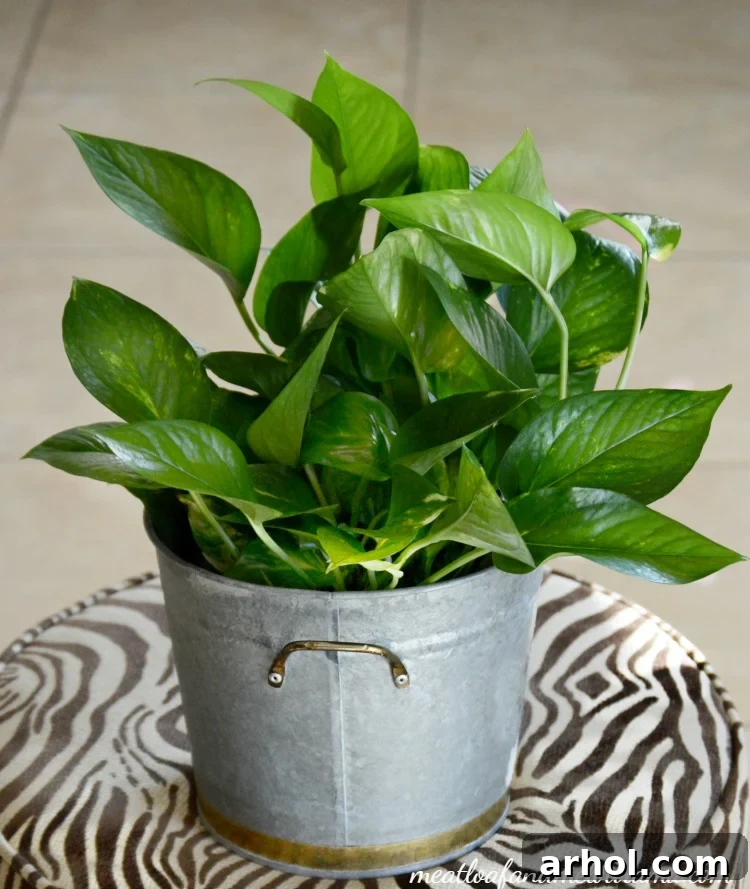
Finding unique planters is another joyful aspect of indoor gardening. This old galvanized bucket, discovered at a local thrift store, has been repurposed into an awesome planter for one of our propagated Pothos. It adds a rustic charm and proves that beautiful plant displays don’t have to break the bank. Repurposing items not only saves money but also contributes to sustainable living.
The Rewards of Propagating Your Own Houseplants
Beyond Pothos, many other popular houseplants, such as Philodendron, Spider Plants, and even some types of Begonias, can be easily propagated from cuttings. The principles remain largely the same, making this skill transferable across a wide range of indoor flora. The journey of propagation is not just about growing new plants; it’s about fostering patience, observing nature’s wonders up close, and creating a more vibrant, living environment in your home.
Whether you’re looking to multiply your favorite plants, fill your home with greenery on a budget, or share the joy of gardening with others, propagating houseplants from cuttings is an incredibly fulfilling endeavor. It empowers you to take an active role in the life cycle of your plants, transforming simple stems into thriving specimens. So, why not give it a try? The satisfaction of seeing your tiny cuttings flourish into magnificent plants is truly unmatched.
Have you ever experienced the magic of growing your own plants from cuttings? Share your stories and tips!
Have a Super Day!
Sharing At
Met Monday, Wow Us Wednesday, TT&J