
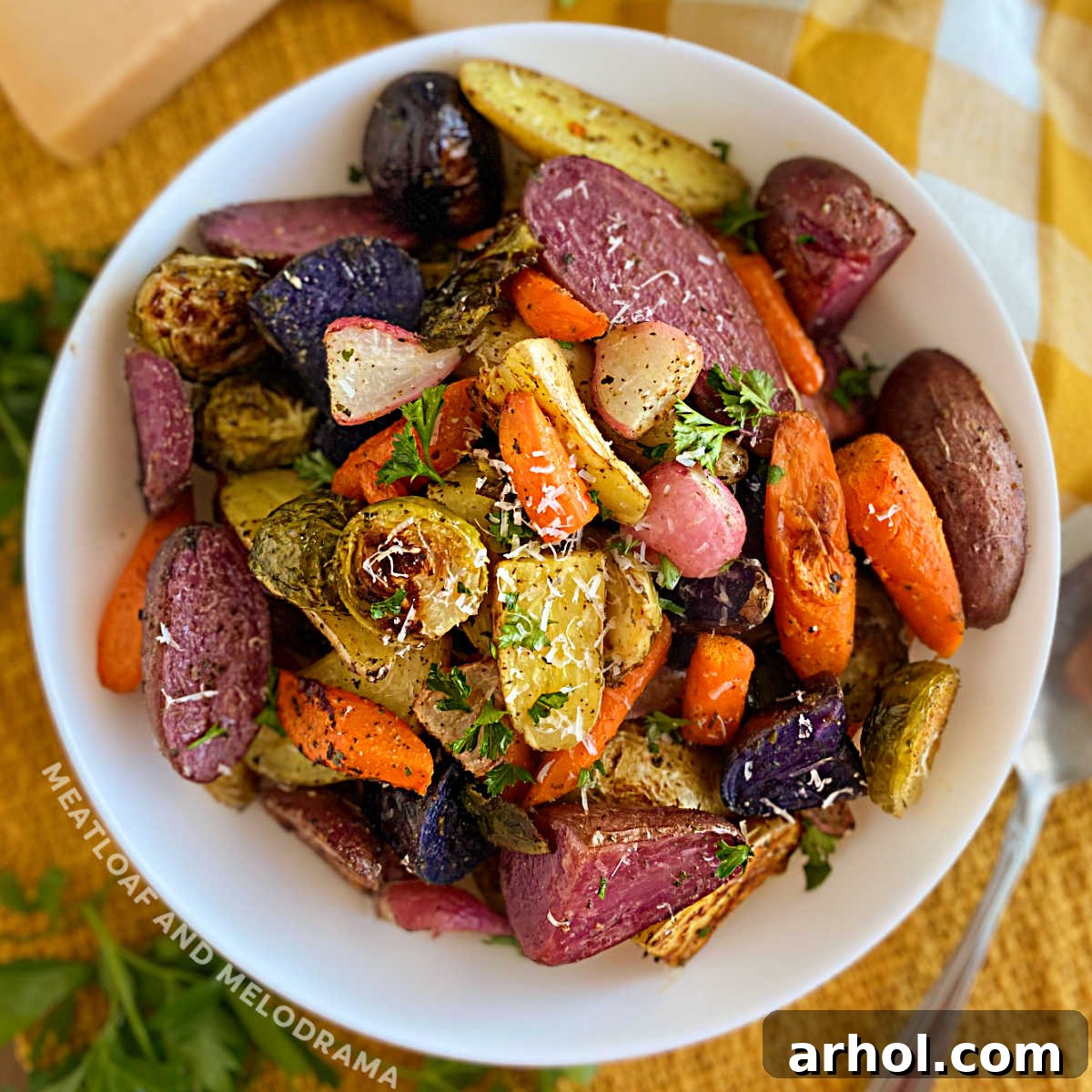
Transform your holiday spread with these **Easy Roasted Vegetables**, the ultimate healthy and flavorful side dish for Thanksgiving, Christmas, or any weeknight meal. This straightforward recipe features a medley of wholesome root vegetables, perfectly roasted to bring out their natural sweetness and delightful textures. With minimal prep and just 30-40 minutes in the oven, you can create a vibrant, delicious, and nutrient-packed addition to your table that everyone will adore. Say goodbye to complicated cooking and hello to effortless elegance!
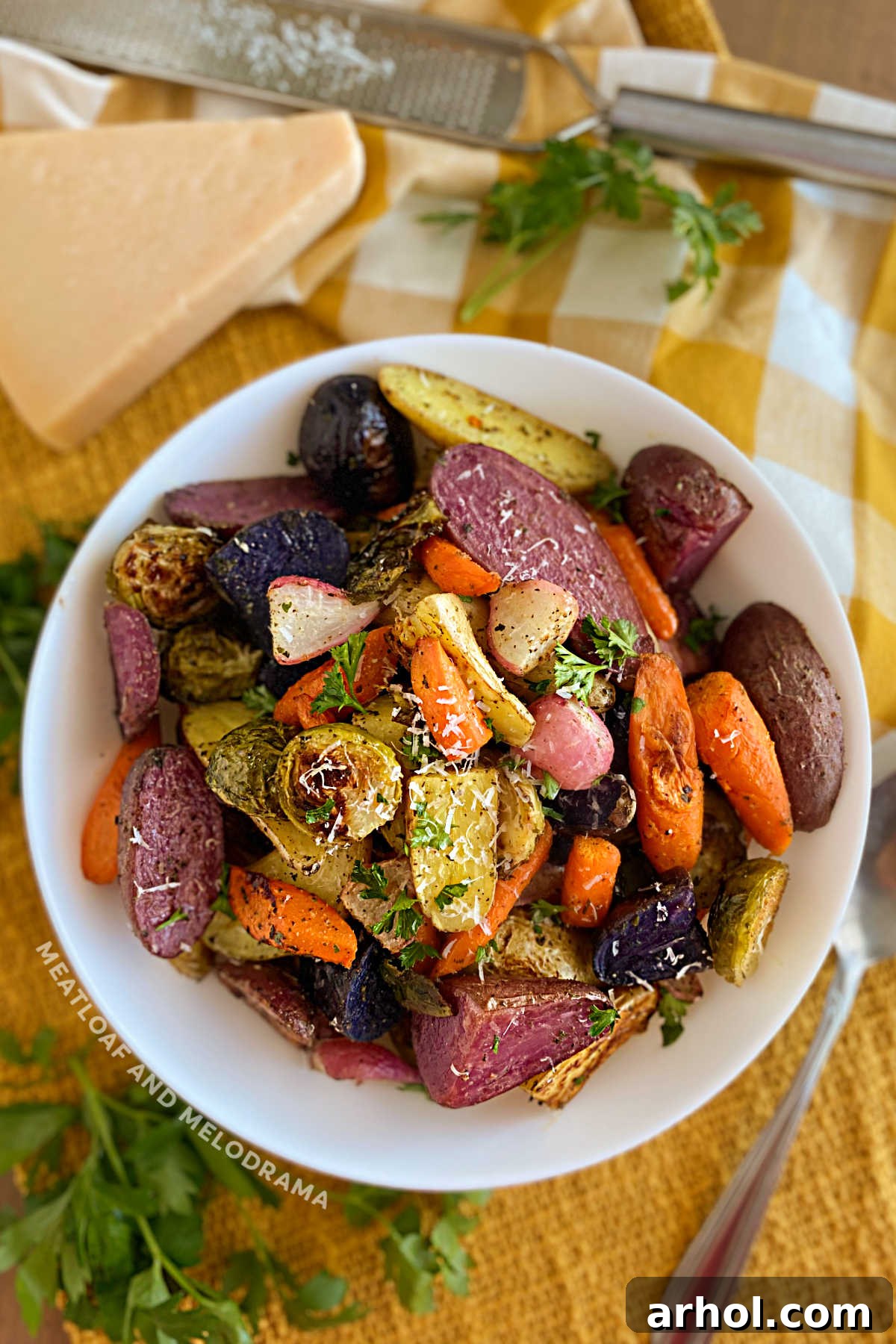
Table of Contents
- Elevate Your Holiday Table with Simple Roasted Vegetables
- Why These Root Vegetables? A Perfect Medley for Roasting
- Essential Ingredients for Your Easy Roasted Vegetables
- Step-by-Step Guide: How to Make Roasted Vegetables for Thanksgiving
- Achieving Perfection: Optimal Roasting Time and Temperature
- Creative Ways to Serve Your Delicious Roasted Vegetables
- Customizing Your Dish: Endless Variations and Substitutions
- The Nutritional Powerhouse: Health Benefits of Root Vegetables
- Expert Tips for Perfectly Roasted Vegetables Every Time
- Storing and Reheating: Keeping Your Leftovers Fresh
- Frequently Asked Questions About Roasted Vegetables
- Easy Roasted Vegetables for Thanksgiving Recipe
Elevate Your Holiday Table with Simple Roasted Vegetables
Are you searching for a healthy, vibrant, and incredibly flavorful side dish to complement your Thanksgiving feast? Look no further than these perfectly roasted fall vegetables! This recipe is a cherished family favorite, bringing a burst of seasonal goodness to every plate. Even if you’re not specifically seeking healthy Thanksgiving recipes, these seasonal root vegetables offer an easy and delicious solution for any fall or winter dinner, proving that nutritious can also be incredibly satisfying.
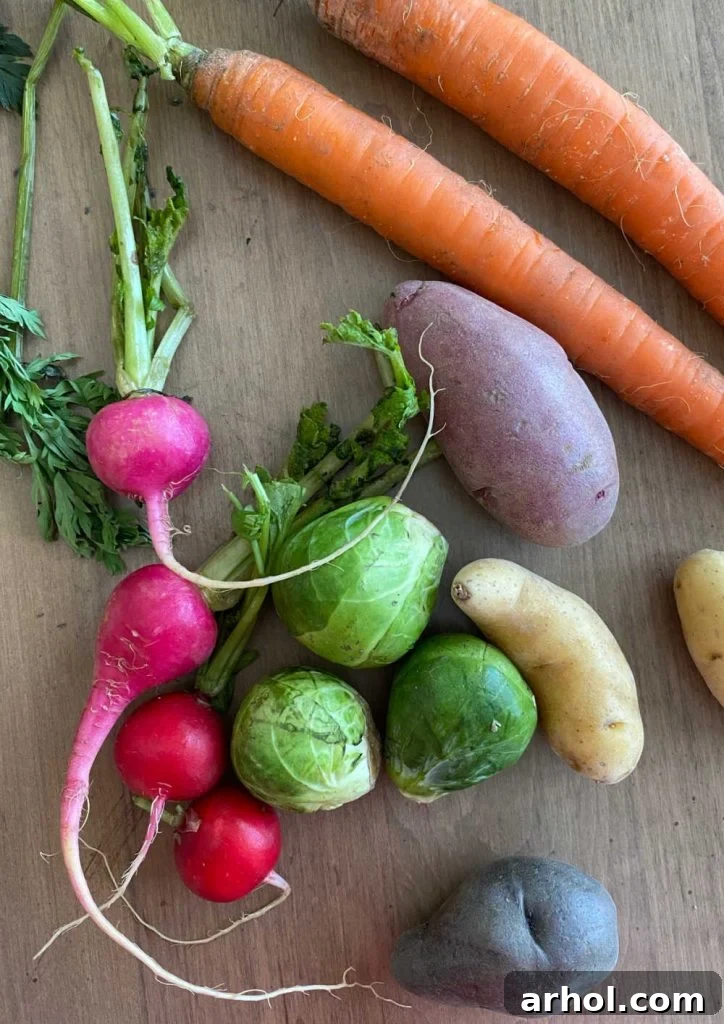
The beauty of sheet pan roasted vegetables lies in their simplicity and versatility. You can transform almost any vegetable into a caramelized, tender delight with minimal effort. For this particular medley, we’ve carefully selected carrots, Brussels sprouts, radishes, and fingerling potatoes. This combination isn’t just visually appealing with its bright, diverse colors; these specific vegetables are chosen because they cook harmoniously at similar temperatures and times, ensuring every bite is perfectly done. Plus, with the exception of carrots, most require no peeling, making prep even quicker!
These savory roasted vegetables provide a wonderful counterpoint to richer, more decadent holiday sides. Imagine pairing them with classics like a creamy Sweet Potato Casserole with Marshmallows, a luxurious Air Fryer Potatoes au Gratin, a hearty Cranberry Apple Sausage Stuffing, or a comforting Twice Baked Potato Casserole. This easy sheet pan roasted vegetable recipe effortlessly elevates your holiday meal while keeping things healthy and delicious.
Why These Root Vegetables? A Perfect Medley for Roasting
Choosing the right combination of vegetables is key to a successful roasted medley, and our selection of carrots, Brussels sprouts, radishes, and fingerling potatoes hits all the right notes for flavor, texture, and cooking compatibility. Each vegetable brings its unique qualities to the dish, creating a balanced and exciting culinary experience.
- **Carrots:** These vibrant orange roots offer a natural sweetness that intensifies beautifully when roasted. They become tender, slightly caramelized, and provide a lovely earthy base for the dish. Their firm texture ensures they hold up well to roasting.
- **Brussels Sprouts:** Often misunderstood, roasted Brussels sprouts are a revelation. They transform from slightly bitter to wonderfully nutty and sweet, with beautifully crispy outer leaves and a tender interior. They add a delightful depth of flavor and a pleasing textural contrast.
- **Radishes:** If you’ve never roasted radishes, you’re in for a truly pleasant surprise! Raw radishes are known for their peppery, spicy bite, but roasting them mellows their flavor dramatically. They become subtly sweet, juicy, and lose all their sharpness, adding a unique, mild flavor and soft texture to the medley. This unexpected addition often becomes a favorite.
- **Fingerling Potatoes:** These slender, small potatoes boast a creamy interior and thin skin that crisps up beautifully in the oven. They provide a satisfying starchiness without being too heavy, and their various colors add visual appeal. Baby red or Dutch potatoes can also be used for similar results.
The magic of this combination lies in how they complement each other. The sweetness of the carrots and potatoes balances the savory notes of the Brussels sprouts, while the mild radishes add an intriguing twist. Crucially, they all reach perfect doneness around the same time when cut appropriately, simplifying your cooking process and ensuring a harmonious blend of textures and tastes.
Essential Ingredients for Your Easy Roasted Vegetables
Crafting this delightful roasted vegetable dish requires only a handful of simple, wholesome ingredients, all readily available at your local grocery store or farmers market. Fresh, high-quality produce is always recommended for the best flavor and texture:
- Carrots: You can opt for either regular full-size carrots or convenient baby carrots. If using baby carrots, you’ll save time on peeling, making this already easy recipe even quicker! Look for firm, brightly colored carrots.
- Fingerling Potatoes: Choose a variety of colors for visual appeal, or stick with baby red potatoes or baby Dutch potatoes. Ensure they are firm and free of sprouts.
- Brussels Sprouts: These can be purchased on the stalk for freshness or pre-trimmed and bagged. Select firm, compact sprouts with bright green leaves.
- Radishes: Look for firm radishes with vibrant red skins. Don’t worry about their peppery raw taste; roasting completely transforms them into a mellow, sweet delight.
- Olive Oil: A good quality extra virgin olive oil is essential for coating the vegetables, promoting even browning, and imparting a rich flavor.
- Garlic Powder: For a quick and easy burst of savory garlic flavor. If you prefer, fresh minced garlic cloves can be used, but be mindful that fresh garlic can burn more easily if not tossed thoroughly.
- Onion Powder: Adds a subtle, sweet onion undertone without the texture of sliced onions. For a more pronounced onion flavor and additional texture, consider adding thinly sliced red or yellow onions to your medley.
- Sea Salt: Essential for enhancing the natural flavors of the vegetables. Adjust to your taste preference.
- Black Pepper: Freshly ground black pepper adds a fragrant, subtle heat.
- Parmesan Cheese (Optional): A sprinkle of freshly grated Parmesan cheese after roasting adds a salty, umami kick and a wonderful golden finish, making this healthy Thanksgiving side dish even more irresistible.
With these fresh ingredients and simple seasonings, you’re well on your way to creating a fantastic roasted vegetable dish that will impress both family and guests.
Step-by-Step Guide: How to Make Roasted Vegetables for Thanksgiving
Creating these perfect roasted fall vegetables for your Thanksgiving table is surprisingly simple. Follow these easy steps to ensure a delicious and beautifully caramelized result:
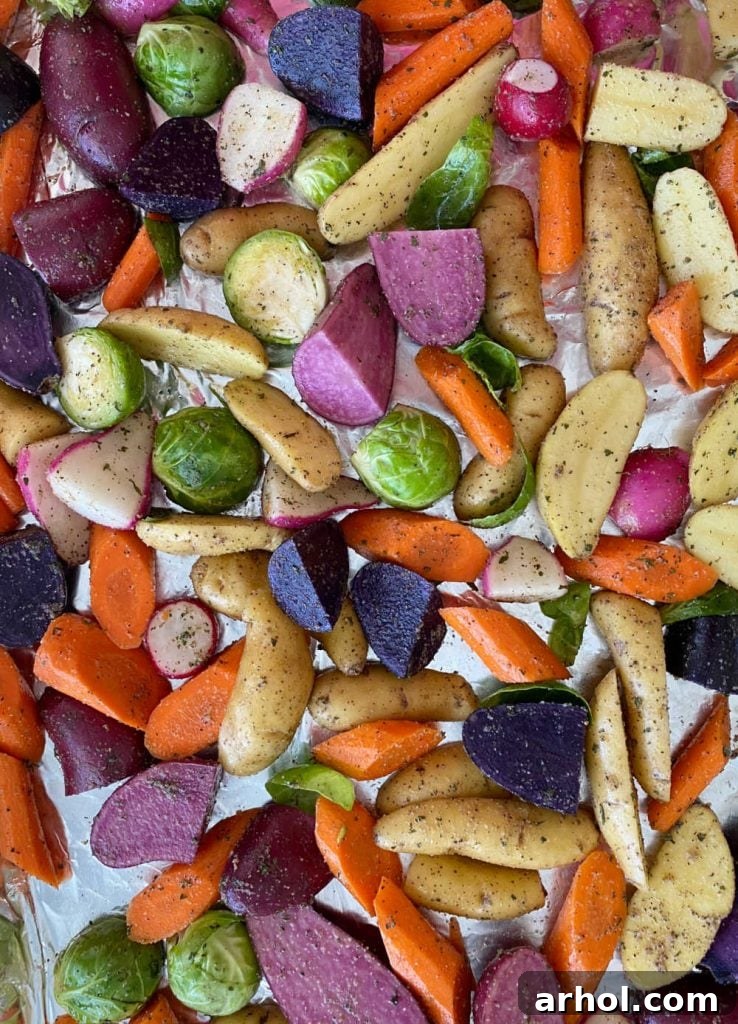
- **Prepare Your Oven and Baking Sheet:** First, preheat your oven to 425 degrees Fahrenheit (220 degrees Celsius). This high temperature is crucial for achieving that desirable crisp exterior and tender interior. While the oven heats, line a large, rimmed baking sheet with parchment paper or heavy-duty aluminum foil. This simple step makes for incredibly easy clean-up later, which you’ll appreciate during a busy holiday season.
- **Clean and Dry the Vegetables:** Thoroughly rinse all your vegetables under cold running water. For root vegetables like potatoes, you might want to use a vegetable brush to gently scrub away any dirt. Once rinsed, it’s vital to pat them completely dry using paper towels. Excess moisture can steam the vegetables instead of roasting them, preventing that desirable crispness.
- **Peel and Cut the Carrots:** If you’re using full-size carrots, peel them first. Baby carrots do not require peeling. After peeling (if necessary), slice the carrots into uniformly sized pieces, roughly 1/2 to 3/4 inch thick. Consistency in size is key here, as it ensures all vegetables cook evenly.
- **Prepare Remaining Vegetables:** Cut the fingerling potatoes in half lengthwise. If they are particularly thick, you can quarter them. For the Brussels sprouts, trim off the tough stem ends, then slice them in half lengthwise. Similarly, slice the radishes in half. Remember, the goal is for all your vegetables to be roughly the same thickness or size to promote even cooking.
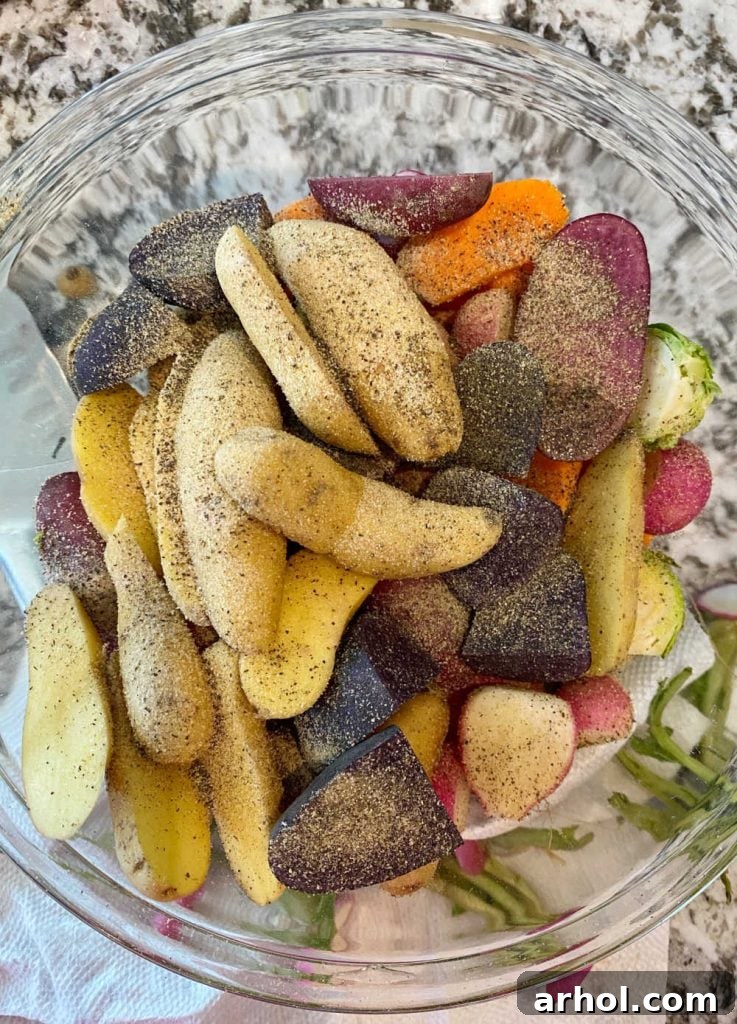
- **Season the Vegetables:** Transfer all the prepped vegetables into a large mixing bowl. Drizzle them generously with olive oil. Then, sprinkle with sea salt, ground black pepper, garlic powder, and onion powder.
- **Toss to Coat:** Using a large spoon or your clean hands, toss the vegetables thoroughly until they are all evenly coated with the olive oil and seasoning blend. Make sure every piece has a light, even layer of oil and spices.
- **Arrange on Baking Sheet:** Spread the seasoned vegetables in a single layer on your prepared baking sheet. Avoid overcrowding the pan; if the vegetables are too close together, they will steam instead of roast, leading to a softer, less caramelized result. If you’re making a large batch, it’s better to use two baking sheets or roast in batches.
- **Roast to Perfection:** Place the baking sheet into your preheated oven. Roast for approximately 30 to 40 minutes. Halfway through the cooking time (around the 15-20 minute mark), give the vegetables a good stir with a spatula. This helps them cook evenly and ensures all sides get beautifully browned and tender.
- **Check for Doneness:** The vegetables are perfectly roasted when they are fork-tender and have delightful caramelized edges. The exact cooking time may vary slightly depending on your oven and the precise size of your vegetable pieces.
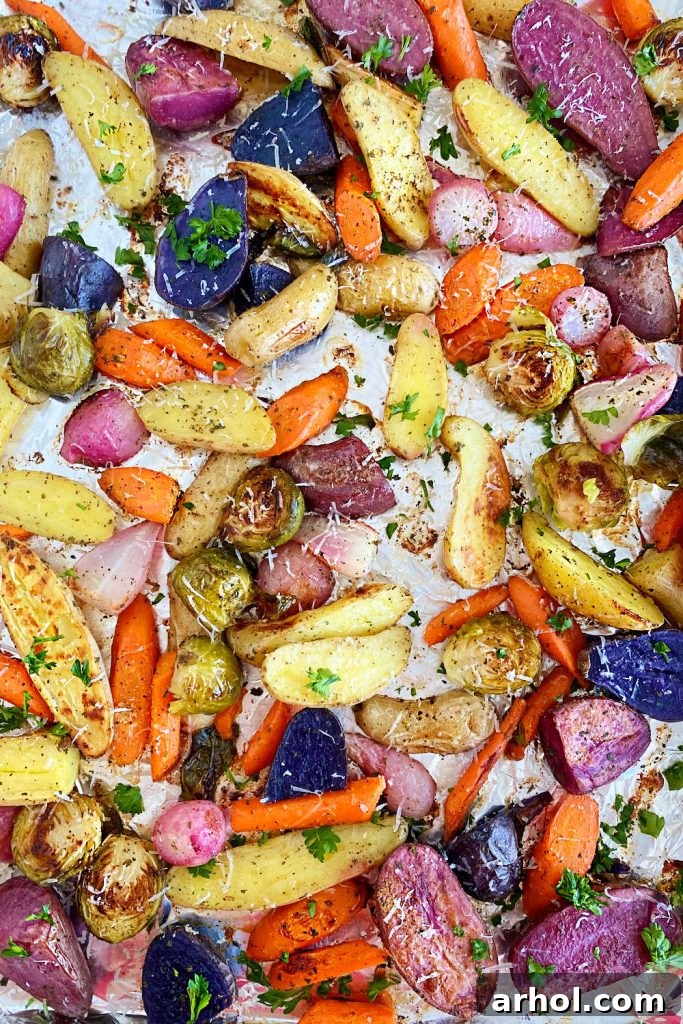
- **Garnish and Serve (Optional):** Once roasted, remove the sheet pan from the oven. For an extra layer of flavor and color, you can sprinkle a little freshly grated Parmesan cheese over the hot veggies. A garnish of fresh chopped parsley also adds a lovely pop of green and herbaceous note.
Achieving Perfection: Optimal Roasting Time and Temperature
The key to truly perfect roasted vegetables lies in the right temperature and watchful cooking. We recommend roasting these root vegetables at a high temperature of **425 degrees Fahrenheit (220 degrees Celsius)**. This intense heat is essential for achieving that coveted caramelization on the exterior of the vegetables while ensuring their interiors become wonderfully tender, not mushy.
Typically, this blend of vegetables will take approximately **30 to 40 minutes** to roast to perfection. However, it’s important to remember that exact cooking times can vary. Factors such as the specific calibration of your oven, the actual size and thickness of your vegetable pieces, and even their moisture content can influence how quickly they cook.
Here are some visual cues and tips for ensuring your vegetables are cooked just right:
- **Caramelized Edges:** Look for golden-brown, slightly crispy edges on the carrots, potatoes, and Brussels sprouts. This indicates the sugars have caramelized, intensifying their flavor.
- **Fork-Tender:** The best way to check for doneness is to pierce the largest piece of vegetable (usually a potato or thicker carrot slice) with a fork. It should slide in easily with minimal resistance.
- **Stirring is Key:** To ensure even cooking and browning on all sides, make sure to stir the vegetables at least once, ideally twice, during the roasting process. This usually happens around the 15 and 30-minute marks. Gently toss them with a spatula to expose different surfaces to the direct heat of the baking sheet and oven.
- **Don’t Overcrowd:** As mentioned in the prep steps, overcrowding your baking sheet will lower the effective temperature and cause your vegetables to steam rather than roast. If you have too many vegetables for a single layer, use two baking sheets or roast in separate batches.
After about 30 minutes, start checking your vegetables. If they are still firm, continue roasting and checking every 5 minutes until they reach your desired level of tenderness and caramelization. Once roasted to perfection, these flavorful vegetables are ready to be enjoyed straight from the pan or presented beautifully in a serving dish.
Creative Ways to Serve Your Delicious Roasted Vegetables
These easy roasted vegetables are so irresistibly good that it’s not uncommon for family members to sneak bites directly off the baking sheet! While that’s certainly a testament to their deliciousness, for a more formal presentation, especially during Thanksgiving or other holiday gatherings, here are some elegant ways to serve them:
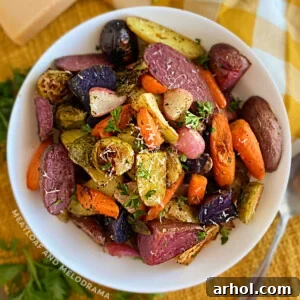
- **Classic Serving Bowl:** The simplest and most elegant way to present your roasted vegetables is to transfer them from the baking sheet into a large, attractive serving bowl. The vibrant colors of the carrots, radishes, Brussels sprouts, and potatoes will make a stunning display.
- **Garnish for Impact:** Elevate the presentation with a few simple garnishes.
- **Fresh Parmesan Cheese:** A final sprinkle of freshly grated Parmesan cheese over the warm vegetables not only adds a salty, nutty flavor but also a beautiful, snowy finish.
- **Fresh Herbs:** Chopped fresh parsley is a classic choice, providing a pop of bright green and a fresh, herbaceous aroma. Other fantastic options include fresh rosemary, thyme, or chives, which add complementary flavors and visual appeal.
- **Lemon Zest:** A light grating of fresh lemon zest can brighten the entire dish with a fragrant, citrusy note.
- **Buffet Style:** For a holiday buffet, arrange the roasted vegetables in a large, shallow platter to showcase their beautiful caramelization and varied textures. This makes it easy for guests to serve themselves.
- **Weeknight Meal Pairing:** Don’t reserve these amazing veggies just for holidays! They make an excellent side for simple weeknight meals. Pair them with:
- Roasted chicken or turkey breast
- Grilled salmon or cod
- Steak or pork chops
- Vegetarian mains like lentil loaf or quinoa burgers
These brightly colored, savory-sweet root vegetables are truly perfect for fall and winter meals. Their comforting warmth and satisfying flavor make them a versatile and beloved addition to any dinner table, from casual family dinners to grand holiday feasts.
Customizing Your Dish: Endless Variations and Substitutions
One of the best aspects of this sheet pan roasted vegetable recipe is its incredible adaptability. While the core medley of carrots, Brussels sprouts, radishes, and fingerling potatoes is fantastic, you can easily customize it to suit your taste, what’s in season, or what you have on hand. The general rule is to keep all vegetables roughly the same size to ensure even cooking.
Vegetable Swap Ideas:
- **Other Root Vegetables:** Virtually any root vegetable will roast beautifully. Consider:
- Rainbow Carrots: For an even more colorful display.
- Cubed Sweet Potatoes or Butternut Squash: Adds a lovely sweetness and vibrant orange hue.
- Parsnips: Similar to carrots but with a distinct, slightly spicy flavor.
- Turnips or Rutabaga: Earthy and robust, perfect for winter.
- Beets: Roasting brings out their sweetness and vibrant color. Roast separately if you want to avoid staining other veggies.
- **Other Seasonal Veggies:**
- Red Onion or Yellow Onions: Sliced and roasted, they become wonderfully sweet and tender.
- Bell Peppers: Any color adds sweetness and a pop of color.
- Broccoli or Cauliflower Florets: Roast until slightly crisp and tender.
- Asparagus or Green Beans: Add during the last 10-15 minutes of roasting as they cook faster.
- Mushrooms: Earthy and savory, they roast beautifully.
- Acorn Squash or Delicata Squash: Sliced into wedges or half-moons, they offer a delightful texture and flavor.
Flavor Enhancements and Toppings:
- **Sweet Drizzles:** A wonderful way to add a hint of extra flavor.
- Maple Syrup: Drizzle a tablespoon or two over the veggies before roasting for a subtly sweet glaze.
- Balsamic Vinegar Glaze: Drizzle balsamic vinegar over the roasted vegetables right before serving for a tangy, sweet finish. You can also reduce balsamic vinegar on the stovetop to create a thicker, syrupy glaze.
- **Savory Additions:**
- Cooked Crumbled Bacon: Sprinkle over the roasted vegetables for a smoky, salty crunch.
- Fresh Herbs: Beyond parsley, fresh rosemary, thyme, or oregano can be tossed with the vegetables before roasting, infusing them with aromatic flavors.
- Spices: Experiment with a pinch of smoked paprika for depth, a dash of cayenne pepper for a subtle kick, or a touch of cumin for an earthy warmth.
- **Holiday Flair:**
- Cranberries: To truly take this Thanksgiving crowd pleaser to the next level, top your roasted veggies with dried cranberries after baking. Their tartness provides a fantastic contrast to the sweet vegetables. Alternatively, serve the dish with a side of homemade or store-bought cranberry sauce.
- Toasted Nuts: A sprinkle of toasted pecans, walnuts, or slivered almonds adds a delightful crunch and nutty flavor, perfect for fall.
- **For a Low Carb or Keto-Friendly Dish:** Simply omit the fingerling potatoes from the recipe. The remaining vegetables are naturally low in carbohydrates and fit well into a keto diet. You can increase the amount of Brussels sprouts or add other keto-friendly vegetables like broccoli, cauliflower, or bell peppers.
Feel free to mix and match these ideas to create your signature roasted vegetable medley that perfectly complements any meal!
The Nutritional Powerhouse: Health Benefits of Root Vegetables
Beyond their delicious taste and incredible versatility, the root vegetables featured in this easy roasted vegetable recipe are packed with an impressive array of health benefits. Incorporating more root vegetables into your diet is a fantastic way to boost your nutritional intake, especially during the colder months when they are in peak season.
- **Rich in Vitamins and Minerals:** Root vegetables are a treasure trove of essential nutrients. Carrots, for instance, are famed for their high beta-carotene content, a precursor to Vitamin A, which is crucial for vision, immune function, and skin health. Brussels sprouts are excellent sources of Vitamin C and Vitamin K, supporting immunity, bone health, and blood clotting. Potatoes offer a good amount of Vitamin C, Vitamin B6, and potassium, vital for nerve function and blood pressure regulation.
- **High in Fiber:** All these vegetables are good sources of dietary fiber. Fiber is essential for digestive health, helping to regulate bowel movements and prevent constipation. It also contributes to feelings of fullness, which can aid in weight management, and helps to stabilize blood sugar levels.
- **Antioxidant Powerhouses:** Root vegetables contain various antioxidants, including carotenoids, flavonoids, and glucosinolates (in Brussels sprouts). Antioxidants help protect your body’s cells from damage caused by free radicals, which can reduce the risk of chronic diseases like heart disease and certain cancers.
- **Anti-Inflammatory Properties:** Many compounds found in these vegetables possess anti-inflammatory properties. For example, the sulfur-containing compounds in Brussels sprouts are known for their ability to combat inflammation in the body.
- **Supports Gut Health:** The fiber in root vegetables acts as a prebiotic, feeding the beneficial bacteria in your gut. A healthy gut microbiome is linked to improved digestion, enhanced immunity, and even better mood.
By enjoying a medley of roasted root vegetables, you’re not just savoring a delicious side dish; you’re also providing your body with a powerful dose of nutrients that support overall health and well-being. It’s a truly wholesome and satisfying choice for any meal.
Expert Tips for Perfectly Roasted Vegetables Every Time
Achieving perfectly tender, caramelized roasted vegetables isn’t difficult, but a few key tips can elevate your results from good to absolutely fantastic. Follow these expert recommendations for success every time you make this easy roasted vegetable recipe:
- **High Heat is Essential:** Don’t be afraid of a hot oven! Roasting at 400-425°F (200-220°C) is crucial. This high temperature promotes the Maillard reaction (browning and caramelization) on the outside of the vegetables, giving them incredible flavor and texture, while ensuring the insides cook through.
- **Dry Your Vegetables Thoroughly:** After washing, always pat your vegetables completely dry with paper towels. Any residual moisture will create steam in the hot oven, leading to soggy, steamed vegetables instead of crispy, roasted ones.
- **Cut Uniformly:** Slice your vegetables into pieces of roughly the same size and thickness. This ensures they cook evenly. If you have some thicker and some thinner pieces, the thinner ones will burn before the thicker ones are tender.
- **Don’t Overcrowd the Pan:** This is perhaps the most important tip! Vegetables need space on the baking sheet to roast properly. If they are too close together, they release moisture, which then steams the vegetables instead of allowing them to brown and caramelize. Use two baking sheets if necessary, or roast in batches. A single layer with a little space between each piece is ideal.
- **Use Enough Oil:** Olive oil (or your preferred cooking oil) is crucial for even heat distribution, browning, and preventing sticking. Drizzle generously, then toss well to ensure every piece is lightly coated.
- **Season Well:** Don’t skimp on the salt, pepper, and other seasonings. These enhance the natural flavors of the vegetables. Consider adding a pinch of garlic powder, onion powder, or even fresh herbs like rosemary or thyme for extra aroma.
- **Flip or Stir Halfway:** To encourage even browning and cooking on all sides, stir or flip the vegetables about halfway through the roasting time.
- **Consider Parchment Paper or Foil:** Lining your baking sheet with parchment paper or aluminum foil (especially heavy-duty) makes clean-up a breeze and helps prevent sticking, particularly with sticky glazes.
- **Listen and Look:** Pay attention to the sizzling sounds and watch for visual cues. You want golden-brown edges and a tender interior. Don’t be afraid to pull a piece out and test it for doneness.
By following these simple guidelines, you’ll be well on your way to making the best roasted vegetables you’ve ever tasted, perfect for any occasion!
Storing and Reheating: Keeping Your Leftovers Fresh
Leftover roasted vegetables are a delicious and convenient addition to future meals, whether tossed into salads, mixed with grains, or simply reheated as a side. Here’s how to store and reheat them effectively to maintain their quality and flavor:
Storing Roasted Vegetables:
- **Refrigeration:** Once your roasted vegetables have cooled completely to room temperature (this is crucial to prevent condensation and sogginess), transfer them to an airtight container. Store them in the refrigerator for **3 to 4 days**.
- **Freezing:** Yes, you can freeze roasted vegetables! This is a great option for meal prepping or extending their shelf life.
- **Preparation for Freezing:** Ensure the vegetables are completely cool. Spread them in a single layer on a baking sheet and flash-freeze for about 1-2 hours until solid. This prevents them from clumping together.
- **Packaging:** Once flash-frozen, transfer the solid vegetables to a freezer-safe bag or an airtight freezer-safe container. Remove as much air as possible to prevent freezer burn.
- **Shelf Life:** Roasted vegetables can be stored in the freezer for up to **6 months**.
Reheating Roasted Vegetables:
The method you choose for reheating can significantly impact the texture of your vegetables. The goal is often to revive some of that initial crispness.
- **Best Method: Oven:** Reheating in the oven is the optimal way to restore some of their original texture.
- **Instructions:** Preheat your oven to 400°F (200°C). Spread the cold roasted vegetables in a single layer on a baking sheet (lined with parchment paper for easy cleanup). Reheat for 10-15 minutes, or until heated through and slightly re-crisped. Stir halfway if desired.
- **Excellent Alternative: Air Fryer:** An air fryer is another fantastic choice for bringing back that desirable crispiness quickly.
- **Instructions:** Preheat your air fryer to 375°F (190°C). Place the vegetables in a single layer in the air fryer basket (you may need to do this in batches). Cook for 5-8 minutes, shaking the basket occasionally, until hot and crispy.
- **Quick Method: Microwave:** While convenient, the microwave is generally not recommended for reheating roasted vegetables if you want to preserve their texture. It tends to make them softer and sometimes a bit mushy, as it heats by steaming.
- **Instructions:** Place vegetables in a microwave-safe dish. Heat on high for 1-3 minutes, stirring halfway, until heated through. Expect softer vegetables with this method.
And on a side note, if you’ve never cooked radishes before, you’re in for a pleasant surprise! They taste completely different when cooked and are not spicy at all. While personally, I love the peppery and spicy kick of raw radishes, I equally adore the mellow, sweet flavor that roasting brings out in them.
Frequently Asked Questions About Roasted Vegetables
Here are some common questions about making delicious roasted vegetables:
- **Can I use frozen vegetables for roasting?**
Yes, you can, but the results might be slightly different. Frozen vegetables contain more moisture, which can lead to a softer texture rather than a crispy one. For best results, spread frozen vegetables in a single layer on a baking sheet and roast directly from frozen at a slightly higher temperature (e.g., 450°F / 230°C) for a longer time, often 40-50 minutes, to help evaporate the excess moisture and encourage browning. You can also lightly toss them with oil and seasonings while frozen.
- **What’s the best temperature for roasting vegetables?**
Generally, a high temperature between 400°F and 425°F (200°C and 220°C) is ideal for most vegetables. This heat promotes caramelization and browning (the Maillard reaction) on the outside, creating a flavorful crust while ensuring the inside becomes tender.
- **How do I prevent my roasted vegetables from becoming soggy?**
Several factors contribute to soggy vegetables. The most important are:
1. **Pat them dry:** Always pat fresh vegetables completely dry before oiling and seasoning.
2. **Don’t overcrowd the pan:** Give vegetables plenty of space on the baking sheet so moisture can evaporate instead of steaming them.
3. **Use high heat:** A hot oven prevents steaming.
4. **Avoid too much oil:** Just enough to coat, not drench. - **Can I mix different types of vegetables in one batch?**
Absolutely! The key is to select vegetables that have similar cooking times or to cut them into sizes that will cook evenly. For example, harder root vegetables (carrots, potatoes) need to be cut smaller than softer vegetables (bell peppers, zucchini) if you plan to roast them together.
- **What are some good seasoning combinations for roasted vegetables?**
Beyond salt, pepper, garlic powder, and onion powder, you can try:
– **Italian:** Dried oregano, basil, thyme, and a pinch of red pepper flakes.
– **Mediterranean:** Za’atar, sumac, and lemon zest.
– **Smoky/Spicy:** Smoked paprika, cumin, and a touch of chili powder.
– **Sweet & Savory:** A drizzle of maple syrup or honey, with rosemary or thyme. - **How do I make my roasted vegetables extra crispy?**
Aside from the tips above (dry veggies, high heat, single layer), a few tricks can help:
– **Cornstarch:** A light dusting of cornstarch (about 1 tsp per pound of veggies) before oiling can absorb surface moisture and promote crispiness.
– **Roast Longer:** Sometimes, just a few extra minutes in the oven can make all the difference for crispiness.
– **Broil Briefly:** For the last 1-2 minutes, you can briefly switch to the broiler setting (watch carefully!) to get extra crisp edges, especially on Brussels sprouts.
Easy Roasted Vegetables for Thanksgiving
By: Dee
Easy Roasted Vegetables are the perfect healthy side dish for Thanksgiving. Root vegetables are easy to prepare and take 30 minutes to bake. This healthy side dish is a delicious addition to your Thanksgiving table and simple enough for a weeknight meal.
Prep Time: 15 minutes
Cook Time: 30 minutes
Total Time: 45 minutes
Servings: 8
Ingredients
- ½ pound carrots
- ½ pound Brussels sprouts, washed, halved and trimmed
- ½ pound fingerling potatoes or baby potatoes
- 8 radishes
- 1 tablespoon olive oil
- 1 teaspoon sea salt
- 1 teaspoon onion powder
- 1 teaspoon garlic powder
- ½ teaspoon ground black pepper
Instructions
- Preheat oven to 425 degrees F (220 C).
- Line a baking sheet with parchment paper or heavy duty aluminum foil.
- Wash vegetables. Peel full-size carrots, trim off tops, and cut into smaller, uniform pieces. Cut stem end off of Brussels sprouts, and slice Brussels sprouts, potatoes and radishes in half lengthwise.
- Place vegetables in large bowl. Toss veggies in olive oil, and sprinkle with sea salt, onion powder, garlic powder and pepper. Mix thoroughly to coat.
- Spread the seasoned vegetables on the prepared baking sheet in a single layer, ensuring they are not overcrowded.
- Bake for about 30 to 40 minutes, or until fork tender and lightly caramelized. Stir once or twice during baking so they cook evenly.
- Sprinkle with freshly grated Parmesan cheese and chopped fresh parsley if desired before serving.
Notes
- Use baby carrots instead of whole carrots for easier prep and to save time on peeling.
- You can use your favorite fall vegetables for variations – see the main article above for more ideas and suggestions.
- This recipe can be easily adjusted to make larger or smaller amounts by scaling the ingredients proportionally.
Nutrition
Nutrition information is automatically calculated, so should only be used as an approximation.
- Calories: 64kcal
- Carbohydrates: 11g
- Protein: 2g
- Fat: 2g
- Saturated Fat: 1g
- Polyunsaturated Fat: 1g
- Monounsaturated Fat: 1g
- Sodium: 321mg
- Potassium: 338mg
- Fiber: 3g
- Sugar: 2g
- Vitamin A: 4951IU
- Vitamin C: 32mg
- Calcium: 28mg
- Iron: 1mg
Additional Info
- Course: Side Dish
- Cuisine: American
This recipe was first published in 2016 and updated with new information in 2021.
These easy sheet pan roasted veggies are truly perfect, not only for a healthy Thanksgiving side dish but also for festive Christmas dinners. Their vibrant colors and comforting flavors make them a standout addition to any holiday table. However, there’s no need to wait for a special occasion – these are, without a doubt, the best roasted vegetables you’ll make, and they are amazingly good anytime you crave a wholesome and satisfying side!
For more effortless recipes, delicious fall recipes, and inspiring holiday culinary ideas, be sure to sign up for our weekly newsletter. Don’t forget to follow us on your favorite social media platforms to stay updated with our latest creations!
If you’ve made these incredible roasted veggies and enjoyed them as much as we do, please consider sharing the recipe on social media or leaving a star rating and comment below. Your feedback and shares help our community grow and inspire others to try this delightful dish!