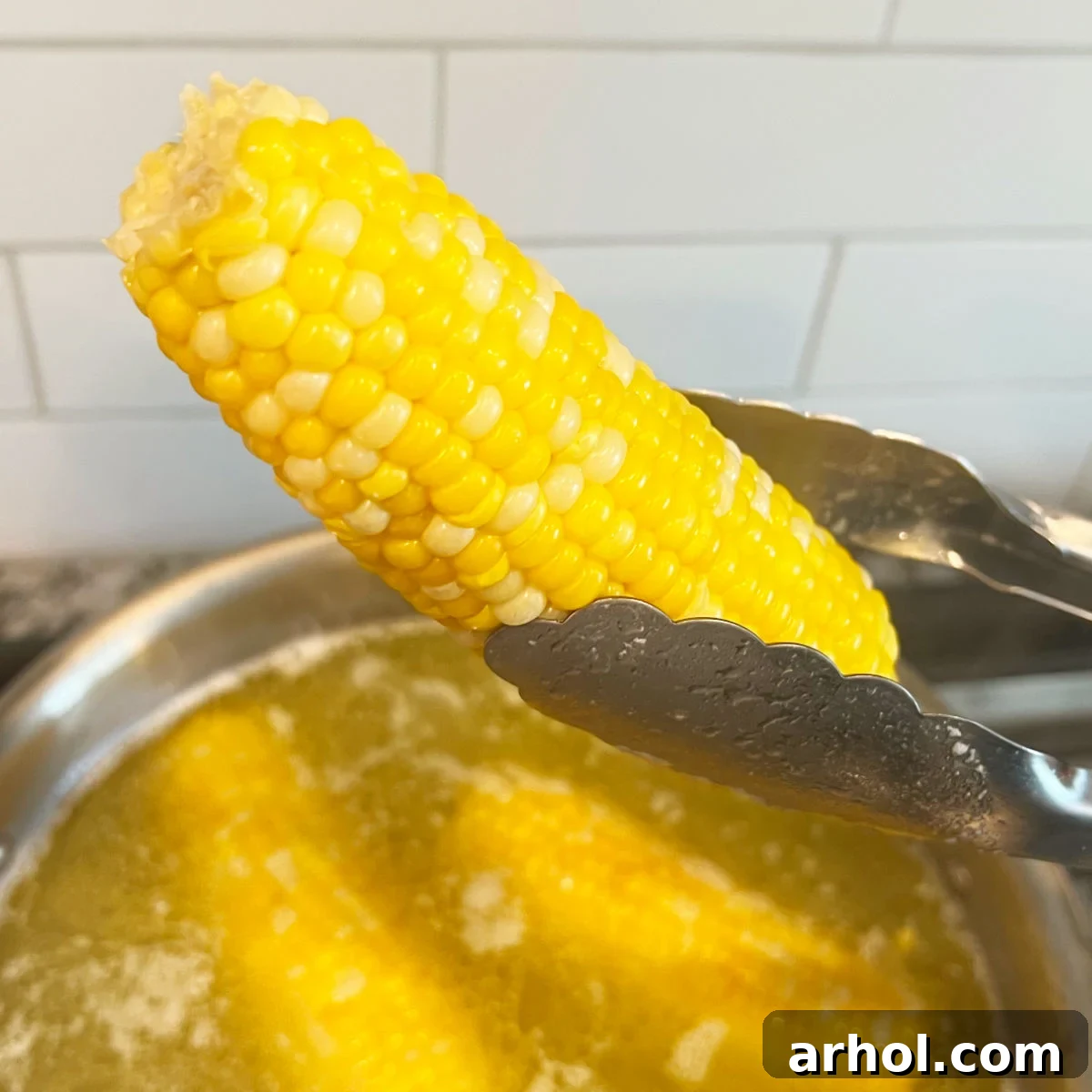
Discover the ultimate guide on how to boil corn on the cob in butter, transforming a simple summer staple into a luscious, unforgettable side dish. This easy, tried-and-true recipe guarantees perfectly tender, sweet corn infused with rich buttery flavor that your entire family will adore. Dive into the delightful world of sweet corn and elevate your next meal with this classic method!
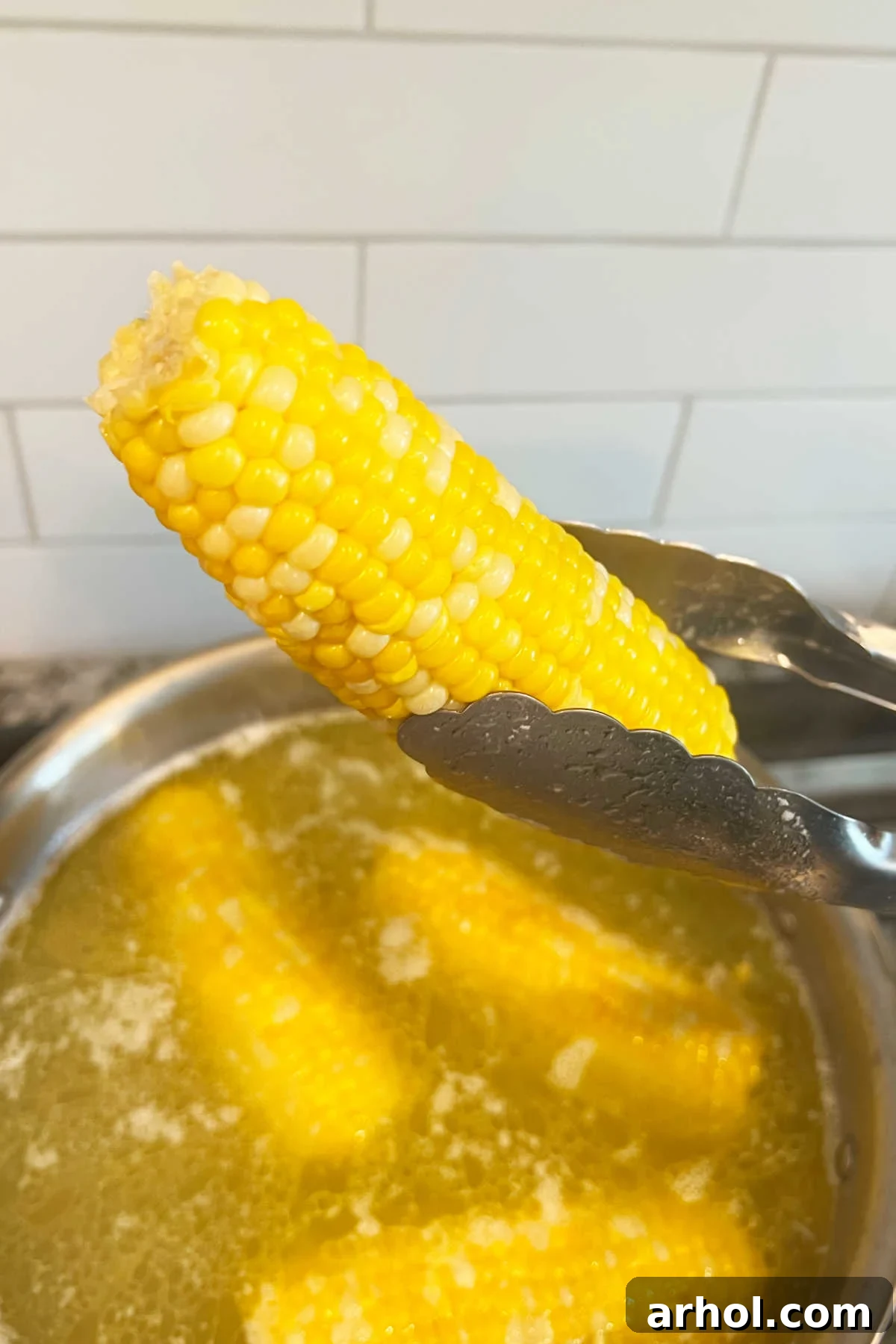
The Best Boiled Corn on the Cob: A Summer Classic
The arrival of summer joyfully heralds the sweet corn season, a time when fresh, plump ears are abundant and bursting with natural sweetness. While there are countless methods for cooking corn – from grilling and roasting to microwaving and pressure cooking – the simple act of boiling fresh corn on the stove remains a beloved tradition, especially when elevated with the magic of butter. This classic “butter bath” method isn’t just easy; it’s a time-honored technique that ensures every kernel is not only perfectly cooked but also deeply infused with a rich, savory flavor that truly enhances the corn’s inherent sweetness.
Many home cooks, including my own family for generations, have turned to boiling as their preferred method, recognizing its simplicity and the consistently delicious results it yields. The addition of butter directly to the boiling water is the secret ingredient here. As the corn cooks, it gently bathes in a fragrant, buttery liquid, allowing the corn to absorb that incredible richness from the inside out. This creates a more profound flavor profile compared to simply adding butter after cooking. The result is an incredibly tender, juicy ear of corn that melts in your mouth, requiring nothing more than a large pot and a stovetop. It’s a foolproof approach that makes this recipe accessible to anyone, regardless of their cooking experience.
Table of Contents
- The Best Boiled Corn on the Cob: A Summer Classic
- Selecting the Perfect Ingredients for Butter Bath Corn
- How to Boil Corn on the Cob in Butter: Step-by-Step Guide
- Storage and Reheating Leftover Boiled Corn
- Recipe Variations and Flavor Boosters
- Expert Tips for Perfect Boiled Corn
- More Sweet Corn Recipes to Try
- How to Boil Corn on the Cob in Butter Recipe Card
Selecting the Perfect Ingredients for Butter Bath Corn
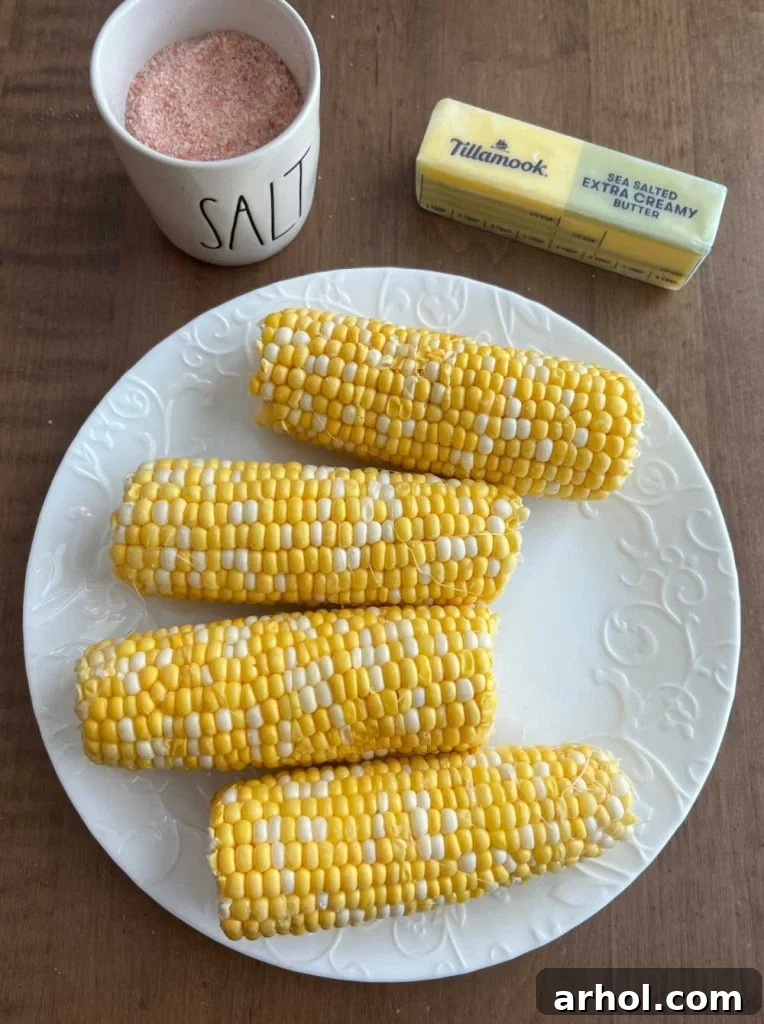
Achieving perfectly boiled corn starts with choosing the best ingredients. For this incredibly simple yet flavorful recipe, you only need two core components. You’ll find full ingredient amounts and detailed instructions in the printable recipe card further down this page.
- Fresh Corn on the Cob: The quality of your corn makes all the difference. Look for the freshest corn possible, ideally from a local farmers market, roadside stand, or a well-stocked grocery store that prioritizes fresh produce. When selecting corn, examine the husks: they should be bright green, tightly wrapped around the cob, and slightly damp. Avoid husks that are dry, yellowing, or have wormholes, as these are signs of older or damaged corn. Gently peel back a small section of the husk to check the kernels; they should be plump, milky, and uniformly colored. The corn silk should be light brown or golden, slightly sticky, and feel damp – not dry or brittle.
- Butter: This is the star that gives our “butter bath” its signature flavor. I typically use salted butter, as the salt naturally enhances the corn’s sweetness and adds a touch of seasoning during cooking. However, unsalted butter works perfectly fine, giving you more control over the final salt content. If using unsalted butter, you may wish to add a pinch of salt to the boiling water or sprinkle it generously on the cooked corn. Choose a good quality butter for the best flavor, as it will deeply permeate every kernel.
While only two ingredients are essential, consider these optional additions to further enhance your butter bath corn:
- Salt: While some believe adding salt to the boiling water can toughen corn, many enjoy its flavor-boosting properties. If you opt to add salt, do so in moderation or primarily at serving time.
- A Pinch of Sugar: A small amount of granulated sugar (about a teaspoon per pot) in the boiling water can help bring out and intensify the natural sweetness of the corn without making it overly sweet.
- Milk or Cream: For an extra rich and creamy texture, a splash of milk or even heavy cream can be added to the butter bath. This creates a luxurious cooking liquid that lightly coats the corn and adds another layer of indulgence.
How to Boil Corn on the Cob in Butter: Step-by-Step Guide
Cooking incredibly flavorful, butter-infused corn on the cob is a breeze with this method. Follow these simple steps for perfect results every time:
- Prepare the Corn (Shuck and Clean): Begin by shucking your fresh corn. This involves peeling back the green husks completely and snapping them off at the base. Next, meticulously remove as much of the corn silk as possible. The easiest way to do this is to rub the cobs firmly with a paper towel or a clean kitchen brush under cold running water. Rinse each ear thoroughly to ensure all remaining silks are washed away.
- Bring Water to a Rolling Boil: Select a large Dutch oven or a stockpot that is wide enough to accommodate the corn cobs without overcrowding them. Fill the pot with enough cold water to completely cover the corn when added. Place the pot on the stove over high heat and bring the water to a vigorous, rolling boil. Ensure you have adequate water; typically, about 4-6 quarts for 4-6 ears of corn is a good starting point.
- Introduce Butter and Corn: Once the water is boiling rapidly, carefully add the entire stick of butter to the hot water. Allow it to melt and disperse. Then, using kitchen tongs for safety, gently lower the shucked and cleaned ears of corn into the boiling butter bath. Be careful to avoid splashing the hot water.
- Cook to Perfection: Continue to cook the corn on the cob in the boiling butter water. The precise cooking time will depend on how tender you prefer your corn and the freshness of the ears. Generally, cook for 5-7 minutes for perfectly tender corn that still retains a slight bite. For tender-crisp corn, aim for 3-5 minutes. If you prefer your corn very soft, extend the cooking time to 8-10 minutes. The corn is done when the kernels appear bright yellow and can be easily pierced with the tip of a sharp knife or a fork.
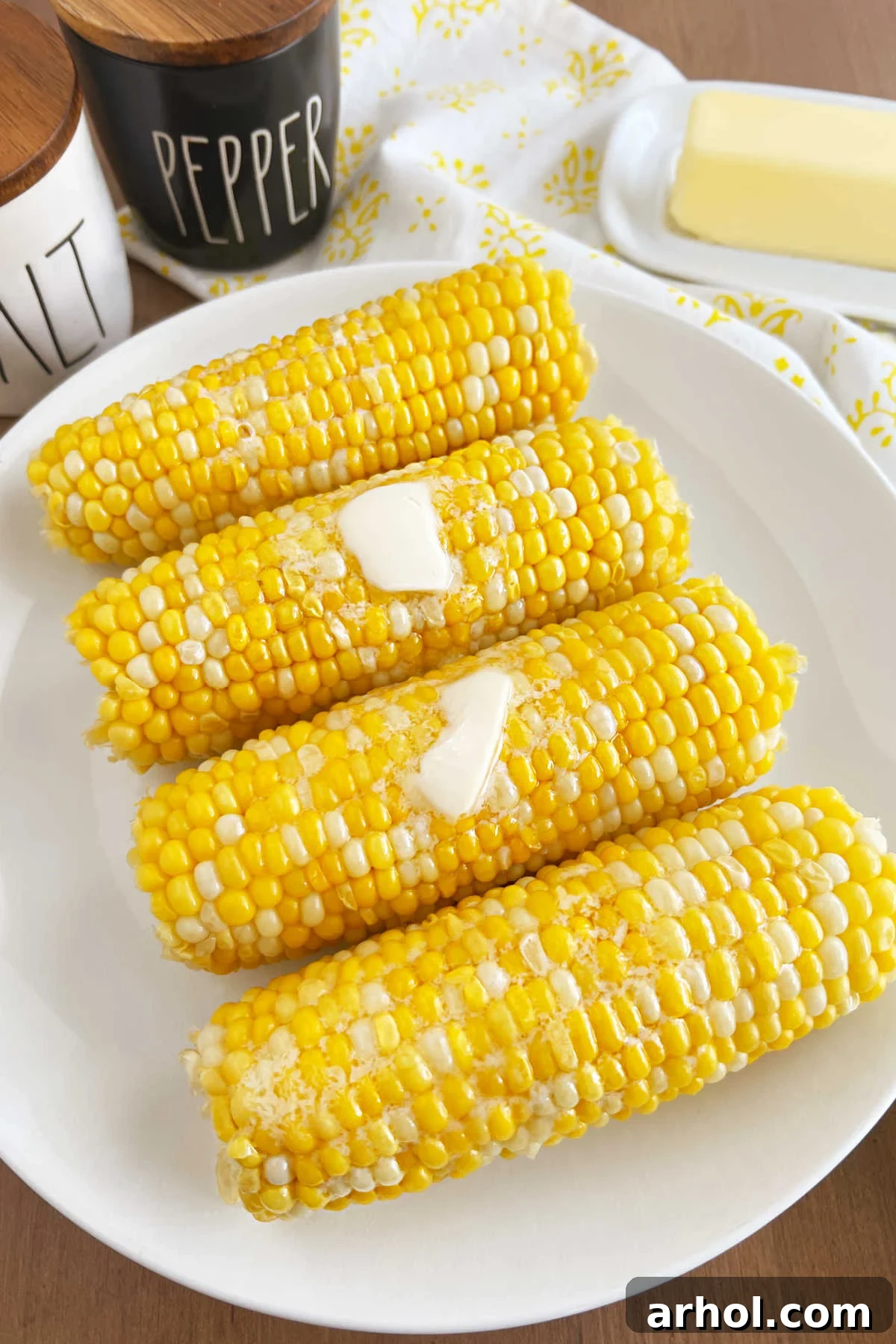
- Serve Immediately: Once cooked to your liking, remove the ears of corn from the pot using kitchen tongs and transfer them to a serving platter. Serve immediately with extra butter, a sprinkle of sea salt, freshly ground black pepper, or any of your favorite seasonings.
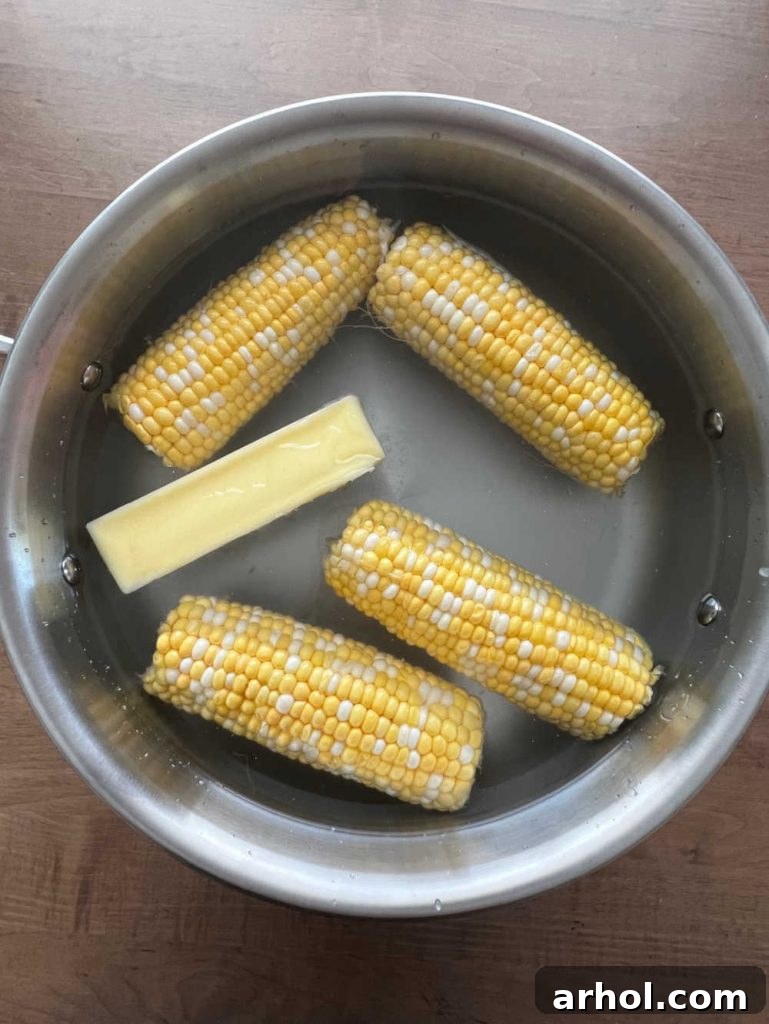
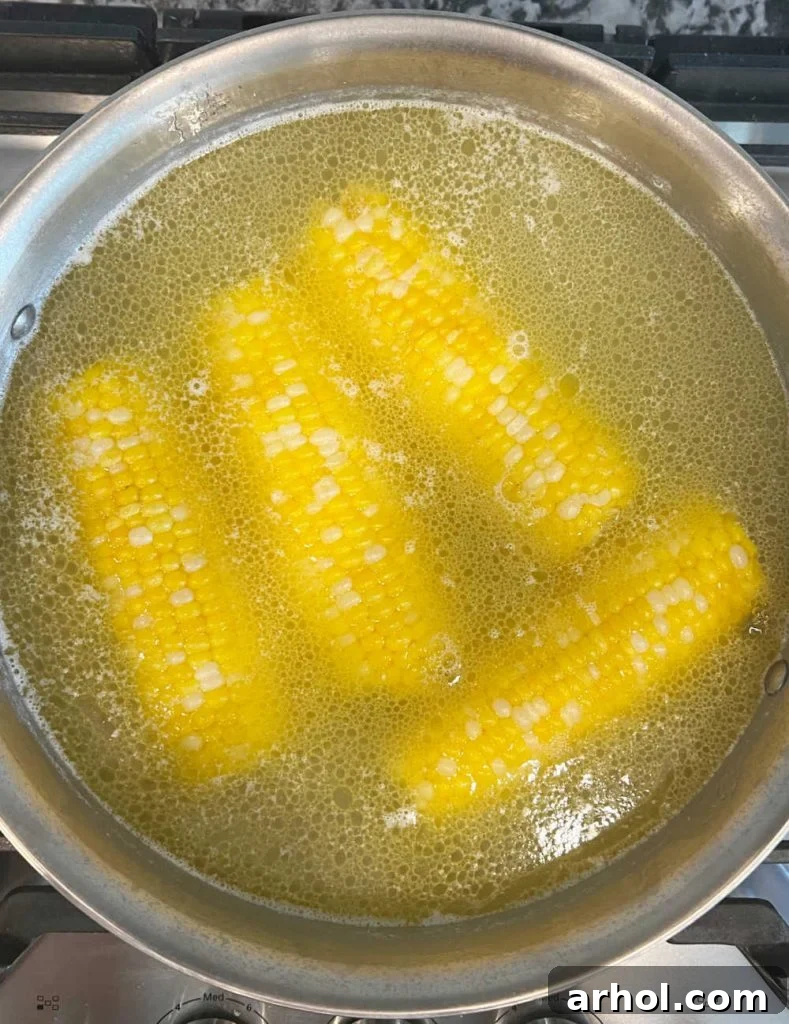
Pro Tip for Keeping Warm: If you’re not ready to serve all the corn at once, you can simply turn off the heat once cooked and leave the corn submerged in the warm butter bath. This keeps the corn warm, moist, and continually infusing with flavor for a few minutes without overcooking, making it ideal for entertaining or staggered serving.
Storage and Reheating Leftover Boiled Corn
Boiled corn on the cob is best enjoyed fresh, but leftovers can be easily stored and reheated for future meals or repurposed into other delicious dishes. Proper storage ensures the corn retains its flavor and texture.
Refrigeration: Allow any leftover corn on the cob to cool completely to room temperature. Once cooled, place the ears in an airtight container or wrap them tightly in plastic wrap or aluminum foil. Store them in the refrigerator for up to 3-4 days. Keeping air away from the corn is key to preventing it from drying out.
Freezing: For longer storage, cooked corn on the cob can be frozen. It’s often best to remove the kernels from the cob before freezing to save space and make them easier to use in recipes later. To do this, stand the cob upright on a cutting board and carefully slice downwards with a sharp knife, removing the kernels. Alternatively, you can freeze whole cobs, though they take up more space. Place kernels or whole cobs in freezer-safe bags or containers, removing as much air as possible to prevent freezer burn. Cooked corn can be frozen for up to 3 months.
Reheating:
- Microwave: For a quick reheat, place individual ears of corn (or kernels in a microwave-safe dish) in the microwave. Heat on high for 1-2 minutes, or until thoroughly hot. You may want to add a splash of water or a pat of butter before microwaving to help retain moisture.
- Stovetop: You can briefly immerse leftover cobs in a pot of simmering water for 2-3 minutes until heated through. Alternatively, heat a tablespoon of butter in a skillet and gently sauté the kernels or whole cobs for a few minutes, turning frequently, until warmed.
- Oven: Preheat your oven to 350°F (175°C). Wrap the corn cobs in aluminum foil with a pat of butter and a splash of water. Heat for 10-15 minutes, or until hot.
Repurposing Leftovers: Don’t let delicious leftover corn go to waste! Remove the kernels from the cob and use them in a variety of creative ways:
- Salads: Toss cooked corn kernels into fresh green salads, pasta salads, or grain bowls for added sweetness and texture. Try it in a vibrant Mexican street corn salad.
- Dips: Corn is a fantastic addition to creamy dips, like a cheesy hot corn dip or even a fresh Cowboy Caviar.
- Soups and Chilis: Add corn kernels to homemade soups, stews, or chilis during the last few minutes of cooking for a burst of flavor.
- Salsas: Create a fresh corn salsa with diced red onion, bell peppers, cilantro, lime juice, and avocado.
- Fritters or Patties: Mix corn kernels with flour, eggs, and seasonings to make savory corn fritters.
- Side Dishes: Sauté with other vegetables, or mix with rice or quinoa for an easy side.
Recipe Variations and Flavor Boosters
While classic butter-boiled corn is delicious on its own, there are many ways to customize and enhance its flavor profile. Feel free to experiment with these variations to find your family’s new favorite!
- Herbal Infusion: Add fresh herbs like a few sprigs of thyme, rosemary, or dill directly to the boiling butter bath. The herbs will gently infuse the corn with their aromatic essence, creating a more sophisticated flavor. A bay leaf can also add a subtle earthy note.
- Garlic and Onion: For a savory kick, toss in a couple of peeled garlic cloves or a quartered onion into the boiling water with the butter. Their flavors will permeate the liquid and lightly flavor the corn.
- Spicy Kick: If you enjoy a touch of heat, add a pinch of red pepper flakes or a small sliced jalapeño to the pot. This will provide a subtle warmth that complements the sweetness of the corn.
- Citrus Zest: A strip of lemon or lime zest added to the boiling water can impart a bright, fresh aroma and flavor that really makes the corn pop. Remove the zest before serving.
- Sweet & Savory Blend: As mentioned, a little sugar can boost sweetness. For a truly unique taste, combine a teaspoon of sugar with a half teaspoon of smoked paprika in the water for a subtly smoky, sweet flavor.
- Flavored Butters: Instead of plain butter, use a pre-made flavored butter (like garlic herb butter) or easily make your own. Simply mix softened butter with finely chopped herbs, minced garlic, or a squeeze of lime juice, then add to the pot.
- Creamy Delight: For an extra rich and decadent corn, consider replacing some of the water with milk or half-and-half. This creates a creamier cooking liquid that coats the corn beautifully, resulting in a silkier texture and richer flavor. This is particularly good if you plan to cut the corn off the cob and serve it as a side dish.
- Broth Base: For a different depth of flavor, replace some or all of the water with chicken or vegetable broth. This adds an umami layer that pairs wonderfully with the sweetness of the corn.
Expert Tips for Perfect Boiled Corn
Achieving consistently delicious boiled corn is simple, especially when you keep these expert tips in mind:
- Choose the Freshest Corn: This is paramount. The sweeter and juicier your corn is to begin with, the better the final result. Look for husks that are tightly closed and bright green, and silks that are damp and golden brown. The fresher the corn, the less starch it contains, which means it will be naturally sweeter and more tender.
- Shuck Thoroughly: Remove all husks and as much silk as possible. Stubborn silks can be removed by rubbing the cob with a damp paper towel. While a few strands won’t hurt, thorough cleaning makes for a more pleasant eating experience.
- Use a Large Pot: Ensure your pot is large enough so that the ears of corn can be fully submerged in the water without being overcrowded. Overcrowding can lower the water temperature too much, leading to uneven cooking.
- Don’t Overcook: Sweet corn cooks quickly. Overcooked corn can become mushy and lose its vibrant color and natural sweetness. Keep a close eye on it, especially during the last few minutes of cooking, and taste a kernel if unsure.
- Add Butter Early: The “butter bath” method is effective because the corn absorbs butter as it cooks. Adding the butter to the boiling water infuses the corn with flavor, rather than just coating it on the outside.
- Consider Salt Timing: While there’s debate, many believe adding salt to the boiling water can toughen corn. If you’re concerned, add salt after the corn is cooked, or use salted butter in the water and add extra salt only at the table.
- Handle with Care: Always use kitchen tongs when adding and removing corn from hot boiling water to prevent burns. Hot mitts are also advisable when handling the pot.
- Serve Immediately: Corn on the cob is best enjoyed straight from the pot. Its sweetness and texture are at their peak when hot.
- Cool Down Quickly (for storage): If you plan to store leftover corn, cool it rapidly after cooking by placing it in an ice bath or spreading it on a plate. This stops the cooking process and helps maintain its crisp texture.
More Sweet Corn Recipes to Try
If you’re a fan of sweet corn, there are countless ways to enjoy this versatile vegetable. Beyond the classic boiled method, explore these other fantastic recipes that bring out the best in fresh corn:
- Grilled Corn on the Cob in Foil — This method yields smoky, tender corn with minimal cleanup, perfect for barbecue season.
- Instant Pot Corn on the Cob — A super-fast way to cook a large batch of corn, ideal for busy weeknights or feeding a crowd.
- Microwave Corn on the Cob — The absolute easiest and quickest method for cooking a single ear or a few, retaining moisture and tenderness.
- Mexican Street Corn (Elote) — A flavor explosion! Enjoy sweet summer corn slathered with crema, chili powder, and crumbled Cotija cheese for a truly authentic street food experience.
- Air Fryer Corn on the Cob — Achieve deliciously roasted corn with a slight char in your air fryer, quick and easy with minimal oil.
How to Boil Corn on the Cob in Butter
Learn How to Boil Corn on the Cob in Butter with this easy corn recipe. One of the best ways to cook fresh sweet corn for an easy side dish the whole family will love!
Ingredients
- 4 ears corn on the cob (husks removed)
- 1 stick butter
Instructions
-
Bring a large pot of water to a rolling boil over high heat.
-
Use kitchen tongs to carefully add the stick of butter and the shucked ears of corn to the water.
-
Once the water returns to a boil, cook for 5-7 minutes or until the corn is bright yellow and the kernels can be easily pierced with a sharp knife or fork.
Notes
Cooking time may vary based on your preferred tenderness:
- Cook for 3-5 minutes for tender-crisp corn.
- Cook for 5-7 minutes for tender corn.
- Cook for 8-10 minutes for softer corn.
Nutrition
Calories: 280kcal, Carbohydrates: 17g, Protein: 3g, Fat: 24g, Saturated Fat: 15g, Polyunsaturated Fat: 1g, Monounsaturated Fat: 6g, Trans Fat: 1g, Cholesterol: 61mg, Sodium: 195mg, Potassium: 250mg, Fiber: 2g, Sugar: 6g, Vitamin A: 874IU, Vitamin C: 6mg, Calcium: 9mg, Iron: 0.5mg
Nutrition information is automatically calculated, so should only be used as an approximation.
Additional Info
I sincerely hope you enjoy this delightfully simple yet incredibly delicious recipe for butter-boiled corn on the cob as much as my family and I do! It truly captures the essence of summer with minimal effort. For more easy-to-follow recipes that anyone can master, be sure to sign up for our weekly newsletter and follow us on social media. Happy cooking!