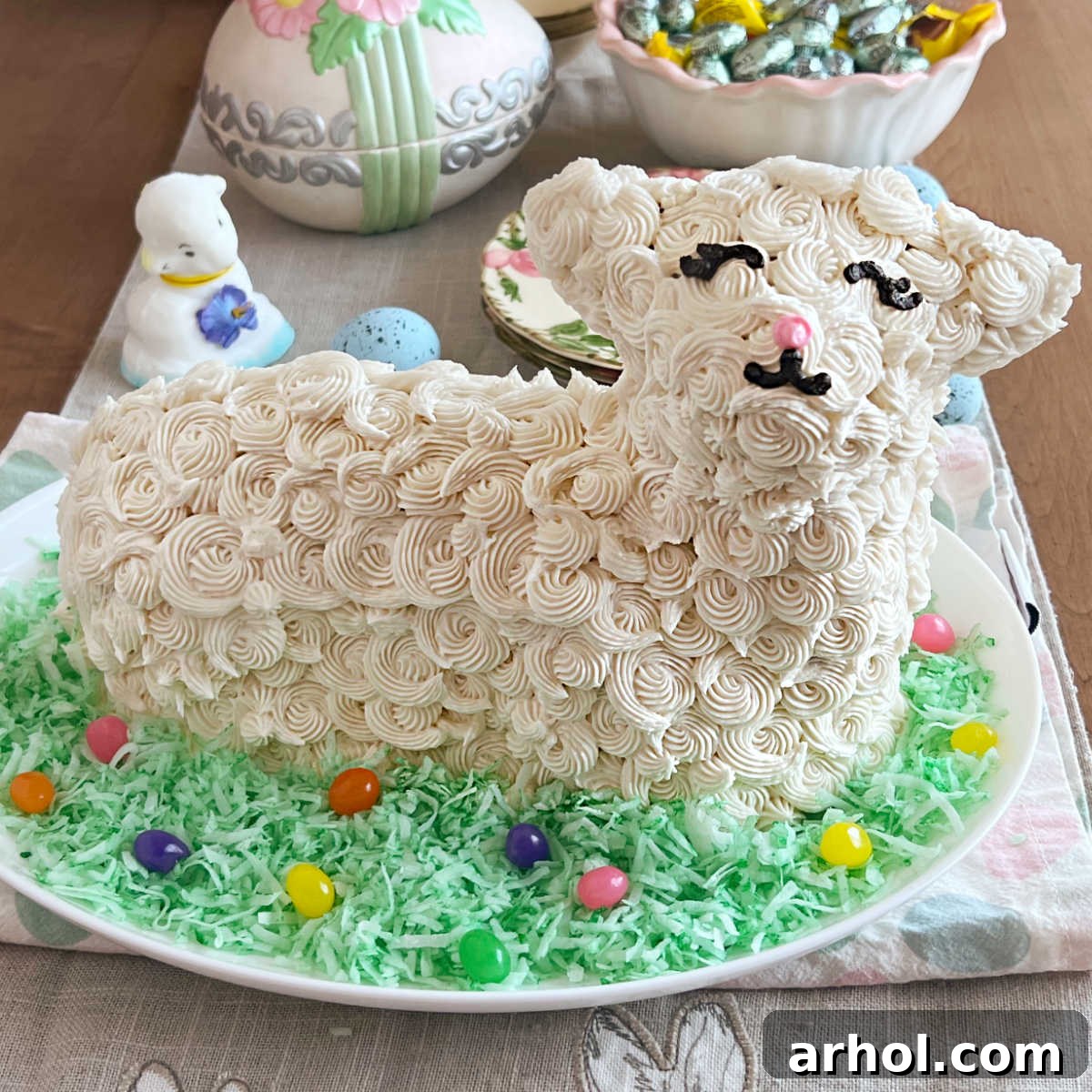
This Easter Lamb Cake recipe promises a truly special dessert for your holiday table. Crafted as a rich pound cake using a convenient cake mix, sour cream, and pudding mix, it’s baked to perfection in a classic lamb mold. The result is an absolutely adorable Easter centerpiece, almost too pretty to eat, and destined to be a memorable part of your Easter Sunday celebration.
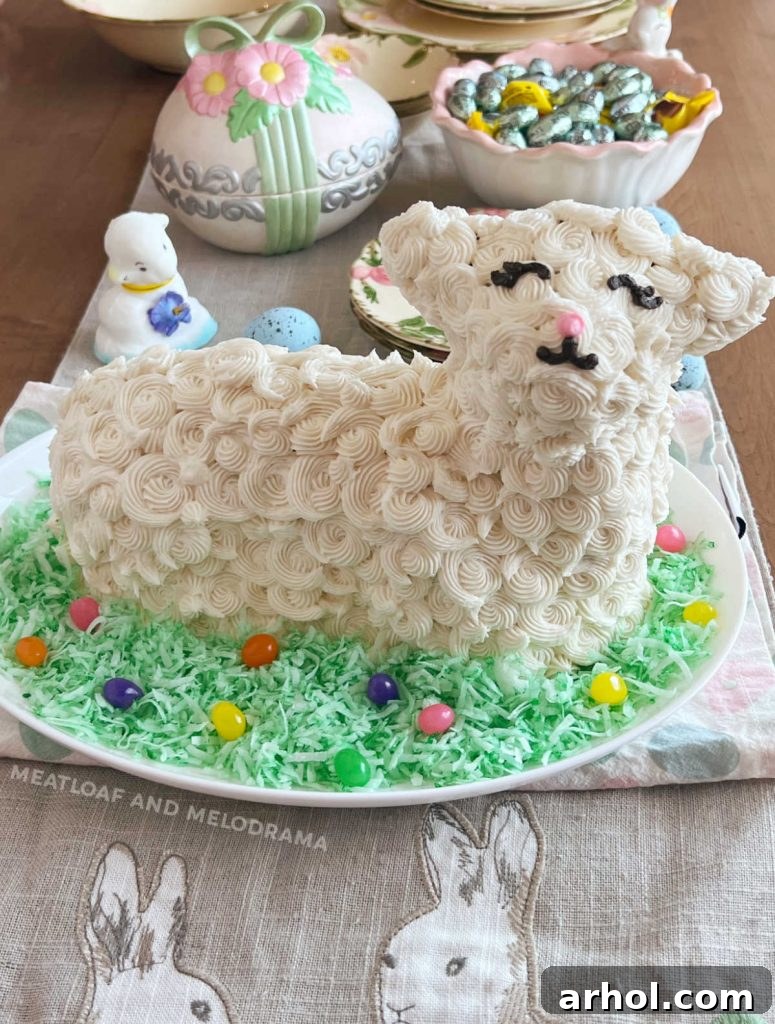
Table of Contents
- Introduction to Easter Lamb Cakes
- Why This Pound Cake Recipe Works
- Essential Ingredients for Your Lamb Cake
- Step-by-Step Guide to Making an Easter Lamb Cake
- Baking and Cooling Your Lamb Cake
- Decorating Your Adorable Easter Lamb Cake
- Creative Variations for Your Lamb Cake
- Storage Tips for Your Easter Lamb Cake
- The Best Easter Lamb Cake Recipe
- Conclusion
Introduction to Easter Lamb Cakes
If you’re seeking a dessert that will truly captivate your guests and become the focal point of your Easter feast, look no further than this delightful lamb cake. Lamb cakes are a cherished tradition, especially during Easter, in numerous cultures around the globe. This symbolic dessert, representing Jesus as the Lamb of God, holds deep meaning for many, making it a perfect addition to your holiday celebration.
For generations, families have passed down the tradition of baking lamb cakes. My own Polish grandma, for instance, would lovingly bake her Polish Easter cake using a sturdy cast iron cake pan. This delightful custom is also prevalent in German, Italian, Czech, and many other European households. It’s a beautiful way to connect with heritage and create lasting memories.
Beyond the lamb cake, Grandma’s Easter table often featured other traditional treats like Nut Roll, creamy Easter Cheese, light and airy babka, and a beautifully sculpted butter lamb. These culinary traditions add layers of richness and meaning to the Easter holiday, creating a truly festive atmosphere.
Why This Pound Cake Recipe Works
The key to a successful lamb cake lies in a dense and sturdy cake batter. This is precisely why pound cakes are the traditional choice for sculpted cake molds. Their robust texture ensures they maintain their intricate shape beautifully after baking, preventing any unfortunate crumbling or collapsing when removed from the mold. Achieving this perfect density can be a challenge with standard cake recipes.
While I cherish the memory of my grandma’s cast iron lamb mold and her original Polish recipe, I haven’t inherited them. After several attempts at baking the perfect scratch-made pound cake that would flawlessly work in our modern lamb mold, my daughter, also a keen baker, and I decided to simplify the process. We turned to a trusty cake mix, which offered a reliable base.
You might wonder why not just use a regular box cake mix. The truth is, a standard cake mix often produces a lighter, fluffier cake that simply isn’t dense enough to hold its shape in a detailed mold. We couldn’t find a specific box pound cake mix, so we created our own “pound cake from a mix” by incorporating a few extra ingredients that significantly boost its density and richness. This adaptation ensures your lamb cake emerges from the mold in perfect, charming form.
Essential Ingredients for Your Lamb Cake
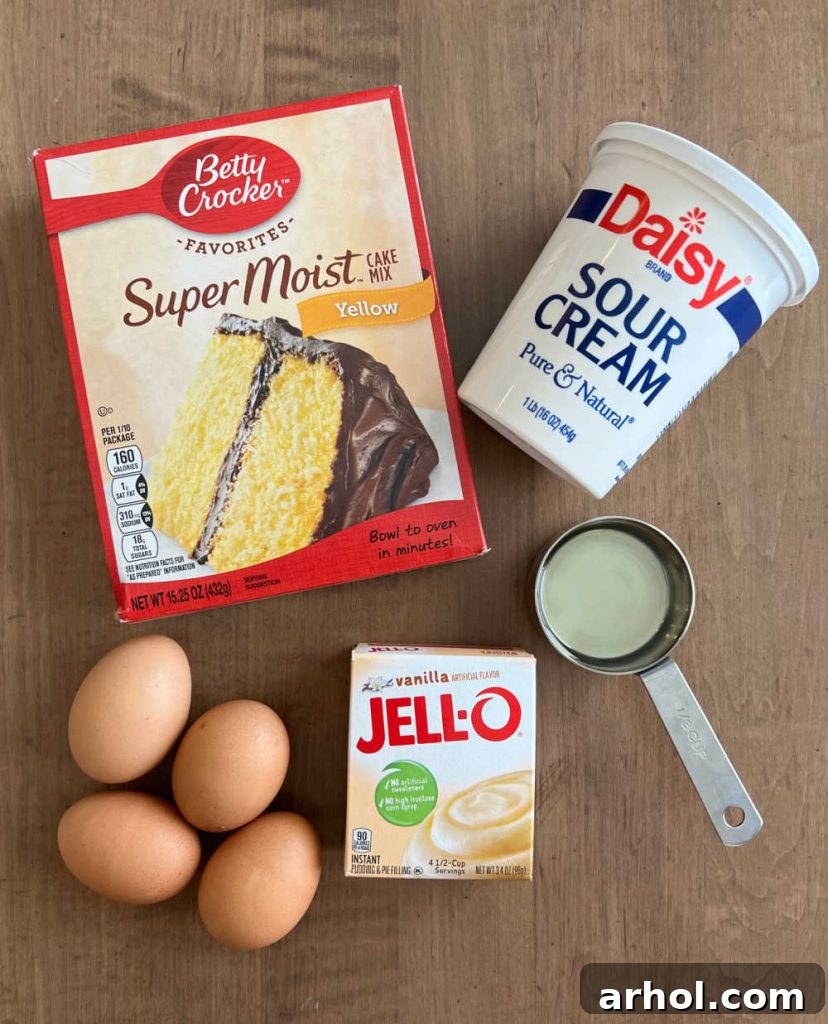
Gathering your ingredients for this charming Easter lamb cake is straightforward. You’ll find everything you need at most major grocery stores or through online retailers. The combination of these simple ingredients creates a rich, moist, and dense cake perfect for molding.
For the Pound Cake:
- 1 (15 oz) box yellow cake mix
- 4 large eggs
- 1 cup sour cream (adds incredible moisture and richness)
- ⅓ cup vegetable oil
- 1 (3.4 oz) box instant vanilla pudding mix (the secret to extra density and flavor)
For the Creamy Buttercream Frosting:
- 1 cup unsalted butter, softened (essential for a smooth, pipeable frosting)
- 2 teaspoons vanilla extract
- 4 cups powdered sugar (confectioners’ sugar)
- 4-6 tablespoons milk (adjust for desired consistency)
You will also crucially need a lamb cake mold or cake pan. Popular choices include the Nordic Ware lamb mold, which we used for this recipe, and models from Wilton and other companies. This specific cake batter recipe yields enough for one lamb cake and typically a few extra cupcakes, so keep your cupcake pan handy for any leftover batter!
Step-by-Step Guide to Making an Easter Lamb Cake
Creating this festive lamb cake is a rewarding process, and careful attention to each step will ensure a beautifully baked and easily unmolded dessert. Follow these detailed instructions for the best results.
Preparing Your Lamb Cake Mold: The Triple Greasing Method
First and foremost, preheat your oven to 350 degrees Fahrenheit (175 degrees Celsius). While the oven heats, meticulously prepare your lamb cake pan. This step is absolutely critical to prevent the cake from sticking and breaking upon removal.
- Open your two-piece cake pan. You will need to grease both halves very, very thoroughly.
- Begin by liberally spraying both sides of the mold with a non-stick cooking spray.
- Next, take a solid vegetable shortening, like Crisco, and slather it generously over every curve and crevice of both mold halves. Ensure complete coverage, leaving no spot untouched.
- Finally, dust a thin, even layer of all-purpose flour over the shortening-coated surfaces. A flour sifter or fine-mesh sieve works best for achieving a light and uniform coating.
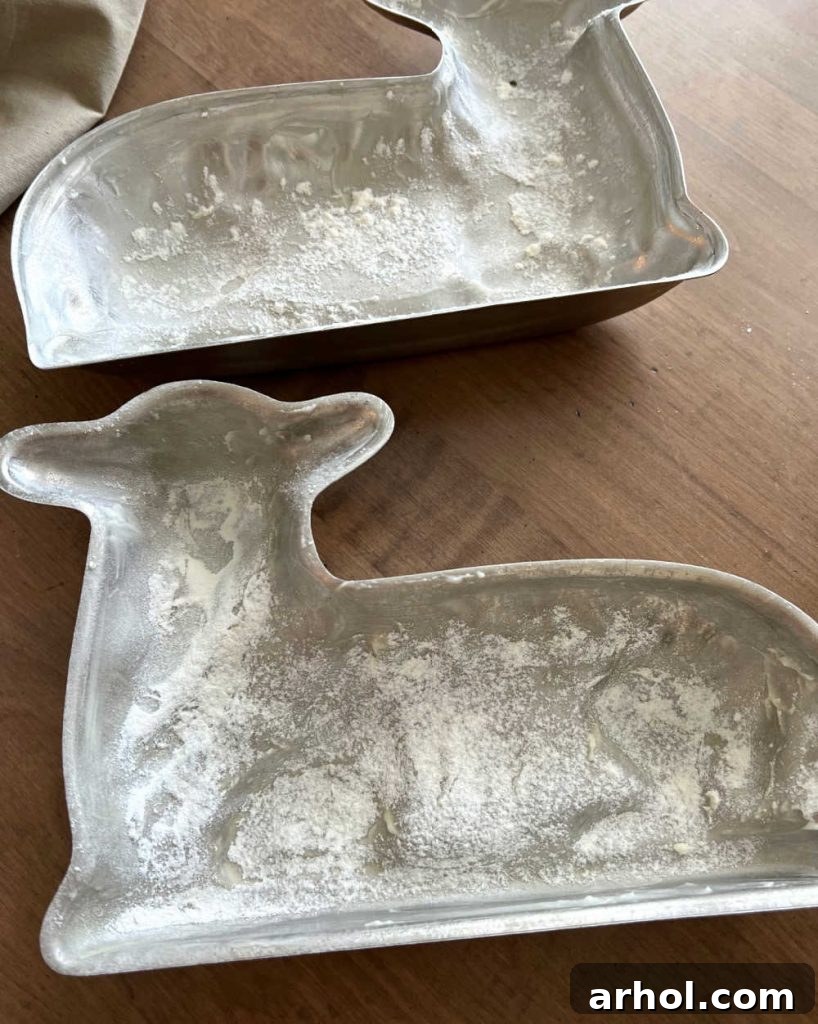
While this “triple greasing” method might seem excessive, trust me, it’s the ultimate insurance policy against a broken Easter lamb. Nobody wants to see their adorable creation crumble after all that effort!
Mixing the Perfect Pound Cake Batter
Once your mold is ready, it’s time to prepare the dense and flavorful batter.
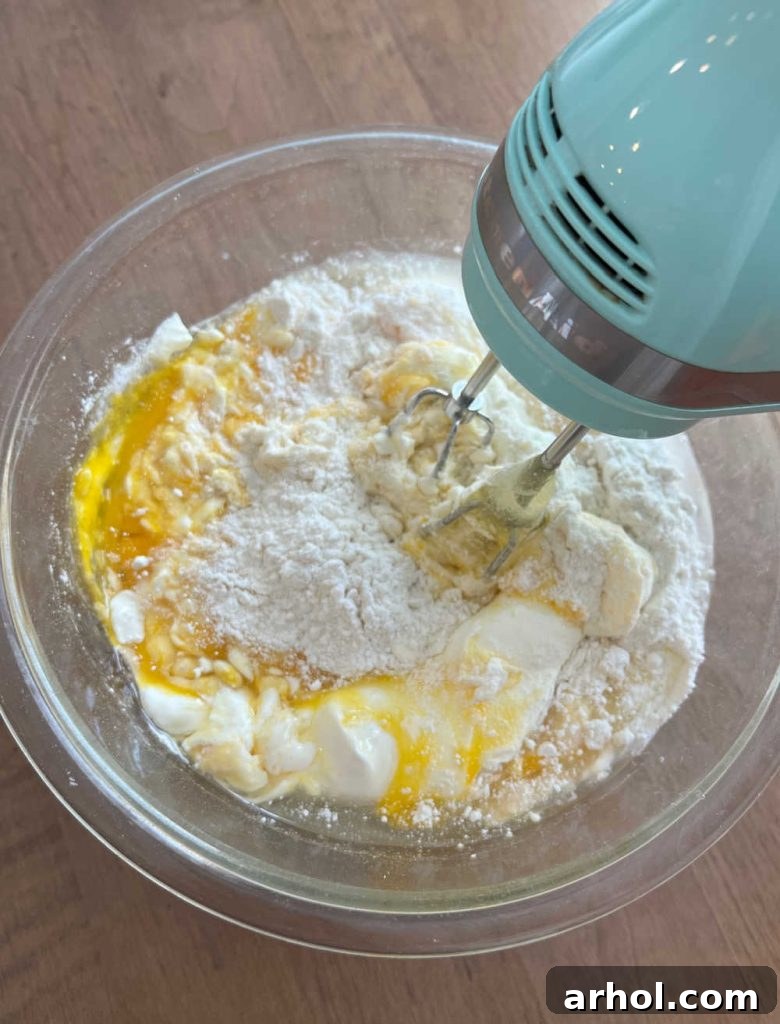
- In a large mixing bowl, combine all the cake ingredients: the box yellow cake mix, instant vanilla pudding mix, sour cream, vegetable oil, and large eggs.
- Using an electric mixer, start mixing on low speed until all ingredients are just blended and no dry spots remain.
- Increase the mixer speed to medium and continue beating the batter for 3 to 4 minutes. During this time, the batter will transform, becoming wonderfully thick and smooth. This ensures proper aeration and a consistent texture for your pound cake.
Filling and Assembling the Mold
Carefully filling the mold is crucial for a well-formed lamb cake.
- Place the front half of the cake pan (the side without the vent hole) face down on a rimmed baking sheet. The lamb’s nose should be touching the baking sheet. The half with the vent hole will go on top later.
- For the Nordic Ware mold, pour precisely 2 and three-fourths cups of the thick cake batter into the bottom half of the mold. You can add a tiny bit more if needed, but ensure the batter remains just under the rim. Overfilling can cause the batter to overflow during baking.
- Gently spread the batter evenly into all parts of the mold, ensuring it reaches the head, ears, and legs.
- *Optional Tip for Fragile Parts:* If you’re concerned about the head and ears holding their shape, you can insert a toothpick horizontally into each ear and a couple more into the neck area for extra support. Remember to remove them before serving! In our experience with this recipe, the cake holds its shape well without toothpicks, thanks to its dense texture.
- Carefully place the other half of the cake mold (the top half with the vent hole) directly on top of the filled bottom half, ensuring the vent hole is facing upwards.
- Gently transfer the assembled mold, still on its baking sheet, into your preheated oven.
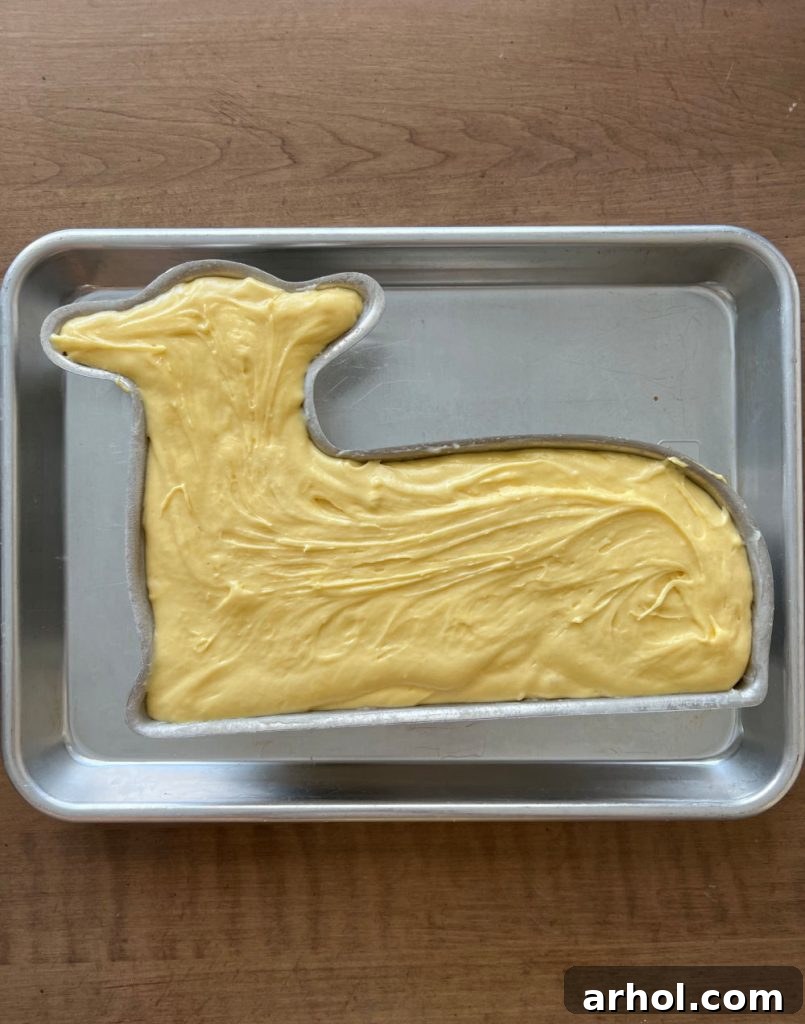
Don’t forget the extra batter! This recipe typically yields a bit more batter than needed for the lamb mold. Use the leftover batter to make a few delicious cupcakes. Simply pour into a cupcake pan and bake at 350°F (175°C) for approximately 18-20 minutes.
Baking and Cooling Your Lamb Cake
Patience is key during the baking and cooling process to ensure your lamb cake is perfectly cooked and structurally sound.
Achieving the Perfect Bake Time
Bake your lamb cake in the preheated oven for 50 to 55 minutes. To check for doneness, carefully insert a clean toothpick into the vent hole, which is usually located in the lamb’s head. If the toothpick comes out clean, your cake is done!
It’s crucial to wait until at least the 50-minute mark before performing the toothpick test. The head of the lamb mold tends to cook faster than the denser body, so checking too early might give a false reading, indicating the cake is done when the main body might still be undercooked.
The Critical Cooling Process
Once baked, the cooling process is just as important as the baking itself for a beautifully shaped cake:
- Allow the cake to cool inside the lamb mold for 5 minutes. This initial cooling helps the cake set and firm up before handling.
- After 5 minutes, carefully remove the top half of the mold. Let the cake continue to cool, exposed, for another 5 to 10 minutes.
- Finally, to fully release the cake, gently flip the bottom half of the mold onto a wire rack or a large cookie sheet. Allow the cake to cool completely at room temperature. This can take a significant amount of time, typically around 3 hours, depending on your kitchen’s temperature and humidity. Resist the urge to rush this step, as a warm cake is fragile and more prone to breaking during decorating.
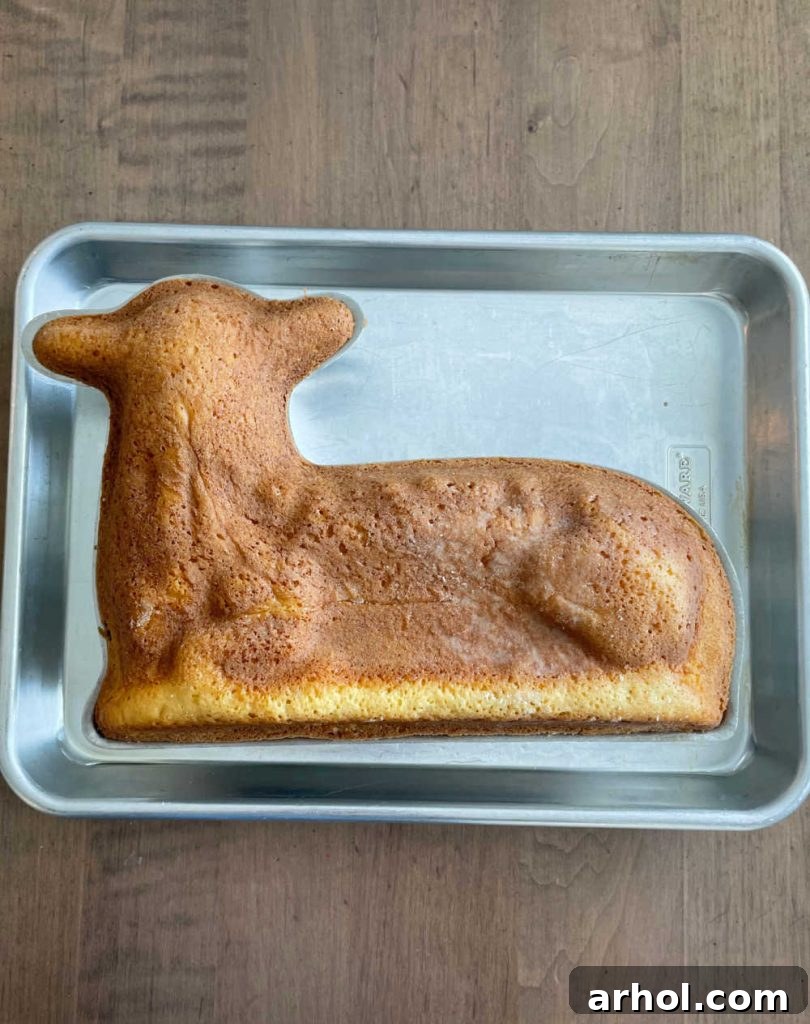
Once the lamb cake has completely cooled, it’s time for a little refinement. Use a sharp, serrated knife to carefully trim off any crisp edges or excess cake from the base. This step helps to even out the bottom surface, ensuring your adorable lamb stands steadily and proudly on your serving plate. Now, the fun part begins!
Decorating Your Adorable Easter Lamb Cake
Decorating your lamb cake is where its charming personality truly comes to life! You have a multitude of options, from intricate piping to simple glazes.
Choosing Your Frosting
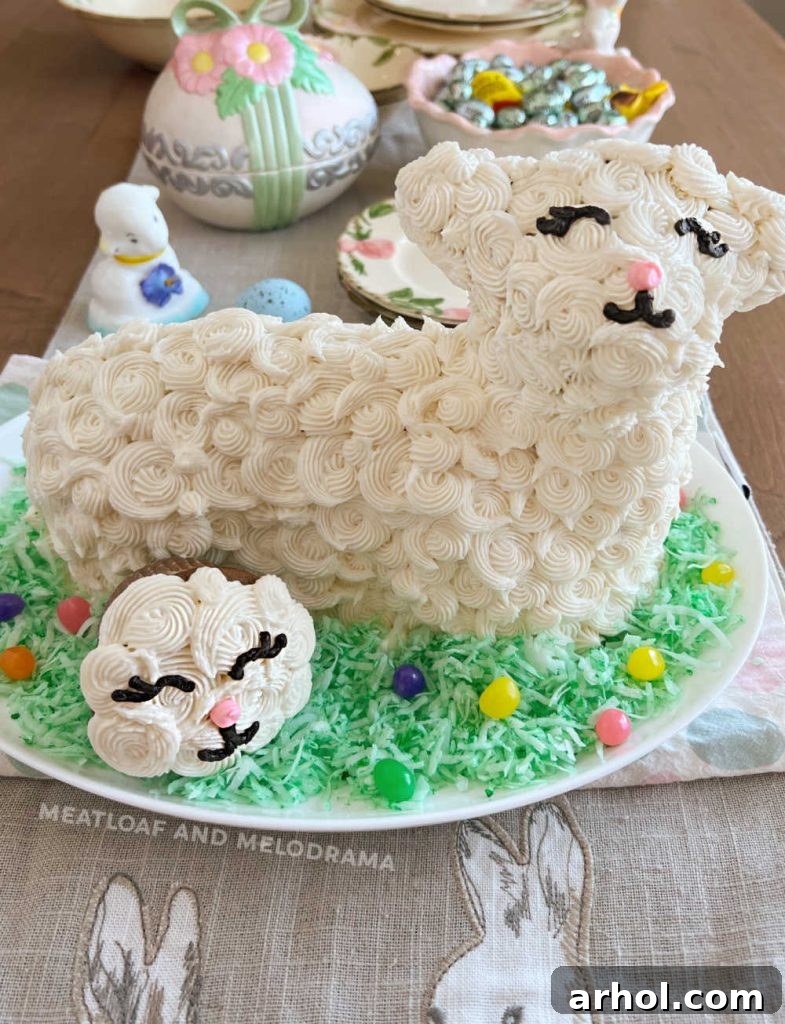
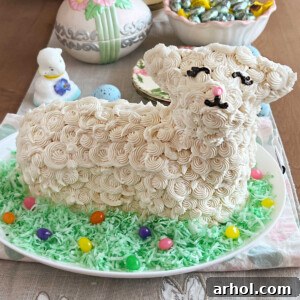
We opted for a classic buttercream frosting for this cute cake, using a pastry bag fitted with a star tip to create lovely swirls, mimicking the lamb’s wooly coat. Buttercream is wonderfully versatile and holds its shape beautifully for piping. If you prefer, a cream cheese frosting can also be used, though it tends to be softer and may not hold intricate piped designs as well. For a lighter touch, you could even opt for a simple sugar glaze.
Securing and Basic Decorating
To help your finished lamb cake stand securely on its serving platter, place a small dab of frosting on the plate where you intend to position the cake. Then, gently set the lamb’s base onto this frosting “anchor.”
Traditionally, I use a bright white frosting for the lamb’s wool. For the facial features, I prepare small amounts of pink frosting for the nose and black frosting for the eyes and mouth, adding just a drop or two of food coloring to achieve the desired hues.
Creating a Festive Scene
To make your lamb look utterly adorable and ready for an Easter celebration, arrange some edible grass around its base. If you don’t have store-bought edible grass, it’s easy to make your own! Simply place some shredded coconut in a bowl, add a couple of drops of green food coloring, and mix until the coconut is vibrantly green.
Arrange this vibrant green coconut “grass” around the base of your lamb cake. Then, scatter colorful jelly beans or other festive Easter candies throughout the grass to complete a sweet, whimsical scene. It’s incredibly cute and adds an extra layer of visual appeal to your Easter table!
Creative Variations for Your Lamb Cake
While the piped swirls are classic, feel free to personalize your Easter lamb cake with these creative variations:
- Simple Frosting: If intricate piping isn’t your style, simply spread your favorite frosting smoothly over the entire lamb. This creates a clean, modern look that’s equally charming. This method works especially well if you’re using cream cheese frosting, which might not hold piped swirls as sharply as buttercream.
- Personalized Features: Let your imagination run wild!
- Accessories: Pipe a small frosting bow around the lamb’s neck, or tie a colorful ribbon for an extra touch of cuteness.
- Facial Expressions: Instead of simple black dots, pipe open colored eyes, add rosy pink cheeks, or give your lamb a tiny smiling mouth. Edible glitter can add a magical sparkle!
- Jelly Bean Features: For an incredibly easy and fun decorating hack, use colorful jelly beans to create the lamb’s eyes, nose, and mouth. This is a fantastic option for involving kids in the decorating process and yields a whimsical, playful look.
- Coconut Coat: For a more textured “wool,” frost the cake smoothly with white frosting, then press shredded coconut all over the surface. This creates a wonderfully realistic and delicious fluffy coat.
Storage Tips for Your Easter Lamb Cake
Proper storage ensures your beautiful and delicious lamb cake stays fresh and enjoyable for longer.
- Immediate Storage: Once decorated, store your completed lamb cake in the refrigerator. If you’ve made it a day or two ahead of time and haven’t sliced into it yet, it can be left unwrapped for presentation.
- After Slicing: Once the cake has been cut, it’s important to protect the exposed surfaces from drying out. Wrap any leftover cake tightly in plastic wrap or place it in an airtight container. If you have a dedicated cake cover or dome, that’s an excellent option.
- Serving Temperature: For the best flavor and texture, especially with buttercream frosting, allow the lamb cake to sit out at room temperature for about 10-15 minutes before serving. This softens the butter in the frosting, making it more palatable and enjoyable.
- Make-Ahead Option: If you’re planning far in advance, you can bake the unfrosted lamb cake, allow it to cool completely, then wrap it securely in plastic wrap followed by aluminum foil. Freeze it for up to 3 months. Thaw in the refrigerator overnight before frosting and decorating for optimal flavor and freshness.
Pin Recipe
Print Recipe
Rated 5 out of 5 stars by 37 votes
The Best Easter Lamb Cake
Dee
15 minutes
55 minutes
4 hours
5 hours 10 minutes
10
Equipment
-
1 lamb cake mold
-
Large Mixing Bowl
-
Electric Mixer
-
Rimmed Baking Sheet
-
Wire Cooling Rack
-
Piping Bag and Star Tip (for decorating)
Ingredients
For the Cake
- 1 15 oz box yellow cake mix
- 4 large eggs
- 1 cup sour cream
- ⅓ cup vegetable oil
- 1 3.4 oz instant vanilla pudding mix
For the Frosting
- 1 c butter softened
- 2 tsp vanilla extract
- 4 c powdered sugar
- 4-6 tbsp milk
- Food coloring (black, pink, green for coconut)
- Jelly beans or other Easter candies (for decoration)
- Shredded coconut (for edible grass)
Instructions
For the Cake
-
Preheat oven to 350°F (175°C).
-
Thoroughly spray both sides of the lamb cake mold with non-stick spray.
-
Grease both sides generously with solid vegetable shortening, then sift a thin layer of flour over the molds. Set aside. This triple-greasing method is crucial for preventing sticking.
-
Combine the yellow cake mix, instant vanilla pudding mix, sour cream, vegetable oil, and eggs in a large bowl. Use an electric mixer to beat on low speed until just combined. Then, beat on medium speed for 3-4 minutes or until the batter is thick and smooth.
-
Place the bottom half of the lamb mold (the side without the air hole) face down on a rimmed baking sheet. Pour approximately 2 ¾ cups of the prepared batter into this mold. Ensure the batter is spread evenly into all details.
-
Place the top part of the mold over the bottom part, ensuring the vent hole is facing up. Place the combined molds on the small baking sheet and transfer to the preheated oven.
-
Bake for 50-55 minutes. To check for doneness, insert a toothpick into the vent hole. If it comes out clean, the cake is ready. Wait until at least 50 minutes to check, as the head cooks faster than the body.
-
Let the cake cool in the mold for 5 minutes.
-
Carefully remove the top mold and let the cake cool for another 10-15 minutes in the bottom mold.
-
Remove the cake from the mold by flipping it over onto a wire cooling rack or a baking sheet. Allow it to cool completely, which will take several hours (approx. 3 hours). This step is crucial for the cake’s stability.
-
Once completely cool, use a sharp knife to carefully trim off any crisp edges and flatten the bottom of the cake so it can stand upright on its own.
For the Frosting and Decoration
-
In a clean large bowl, beat the softened butter on medium speed for 5-10 minutes, or until it becomes light in color and fluffy.
-
Add the vanilla extract and mix until fully combined.
-
Gradually add the powdered sugar, one cup at a time, beating on low speed until incorporated. Increase speed to medium-high and beat for several minutes. Sifting the sugar can prevent lumps, but extended beating will also achieve a smooth consistency.
-
Add milk, 1 tablespoon at a time, until the frosting reaches a smooth, spreadable, but not runny, consistency ideal for piping.
-
Beat on medium speed for another 5-10 minutes until very light and fluffy.
-
Use a spatula to gently fold the frosting a few times, helping to remove any large air bubbles.
-
Set aside about ¼ cup of white frosting into two separate small bowls. Dye one bowl with black food coloring for the eyes and mouth. Dye the other bowl with pink food coloring for the nose.
-
Fill a piping bag fitted with a star tip with the remaining white frosting and pipe swirls all over the lamb to create its woolly coat. Alternatively, frost the cake smoothly with a spatula if preferred.
-
Using smaller piping bags or toothpicks, add the black frosting for the eyes and mouth, and the pink frosting for the nose.
-
For edible grass, mix shredded coconut with a few drops of green food coloring. Arrange around the base of the lamb cake. Add jelly beans or other Easter candies for a festive touch.
Notes
Serving size depends on how big slices are cut. This recipe typically yields 10 servings.
Use any leftover cake batter to make delicious cupcakes. Bake them for approximately 18-20 minutes at 350°F (175°C).
Nutrition
Carbohydrates: 50g,
Protein: 3g,
Fat: 25g,
Saturated Fat: 15g,
Polyunsaturated Fat: 1g,
Monounsaturated Fat: 7g,
Trans Fat: 1g,
Cholesterol: 137mg,
Sodium: 187mg,
Potassium: 72mg,
Fiber: 1g,
Sugar: 48g,
Vitamin A: 825IU,
Vitamin C: 1mg,
Calcium: 48mg,
Iron: 1mg
Nutrition information is automatically calculated, so should only be used as an approximation.
Additional Info
Dessert
European American
Contains affiliate links. See disclosure for information.
Did you enjoy this recipe? We love hearing from our readers! Please feel free to leave a comment below and share your experience. Your feedback helps us grow and improve!
Conclusion
Baking this Easter Lamb Cake has become a treasured tradition, one that I’m thrilled to perfect and share. Growing up, Easter simply wasn’t complete without this symbolic cake gracing our table. It’s more than just a dessert; it’s a meaningful representation of Jesus as the Lamb of God, bringing a deeper sense of connection and reflection to the holiday. I am incredibly excited to continue this beautiful tradition and share this perfect lamb cake with my own children, creating new memories for our family.
For more delightful and original recipes, including a wide array of Easter recipes, festive holiday desserts, and innovative cake ideas, be sure to subscribe to our newsletter. You can also follow us on social media for daily inspiration and delicious updates!