
The Unexpected Joy of Arizona’s Late Autumn Pumpkins
While many across the country have long since celebrated the vibrant fall season, with pumpkins already transformed into festive decorations, carved into spooky jack-o’-lanterns, or baked into delicious Thanksgiving pies, our corner of the Arizona desert operates on a slightly different calendar. Here, the autumn sun still shines brightly, and the cooler temperatures of late fall bring a unique charm. For us, the pumpkin season is just truly beginning, a testament to patience, nature’s timing, and the surprising resilience of a backyard garden project.
In most regions, the sight of golden-orange pumpkins adorning porches and gracing dinner tables signals the heart of autumn. These beloved gourds are synonymous with Halloween’s playful spirit and Thanksgiving’s bountiful feasts, often destined to become the star of many cherished recipes. But in the Sonoran Desert, where summer’s intense heat lingers and our “fall” often feels like an extended summer, the journey from a tiny seed to a ripe, orange pumpkin is a story of adaptation, anticipation, and a healthy dose of hopeful waiting.
Our Backyard Pumpkin Saga: A Desert Gardening Adventure
Our unique pumpkin journey began much earlier in the year, right in the midst of summer’s fiery embrace. My husband and two of our youngest gardeners decided to embark on a small-scale agricultural experiment, planting a handful of pumpkin seeds in a modest pot. What started as a simple, innocent activity quickly blossomed—quite literally—into an ambitious project. Those minuscule seeds, with an almost defiant spirit, soon sprouted into delicate seedlings, which then rapidly grew into robust young plants. Before we knew it, our small potted patch became a thriving miniature jungle, barely containing the burgeoning life within.
This rapid growth, in many ways, mirrored the lively dynamics of our own household! The pumpkin plants, much like growing teenagers pushing the boundaries of their confined spaces, began to outgrow their initial home at an astonishing pace. They seemed to demand more freedom, more room to stretch and explore. Any parent who has navigated the exhilarating, sometimes challenging, waters of raising teenagers will instantly understand this compelling urge for independence and expansion. Recognizing their plea, and before the roots completely busted through the pot, we knew it was time for a significant upgrade.
We carefully transplanted our ambitious pumpkin “kids” to a small, dedicated space in our backyard. While I’ve always dreamed of cultivating an expansive garden, the realities of our desert home dictate otherwise. The majority of our backyard real estate is happily claimed by the refreshing cool of our swimming pool, a necessary reprieve from the Arizona sun. The remaining, more modest area is divided between the children’s play zone and a small patch reserved for our beloved furry companions. It’s a cozy, bustling space, but certainly not a vast agricultural expanse.
The Vine’s Unstoppable Quest and a Surprising Discovery
Upon settling into their new ground, the pumpkin vine wasted no time asserting its presence. With an almost unstoppable zeal, it began its quest for backyard domination, spreading its verdant tendrils far and wide. It stretched across the non-pool areas, seemingly intent on exploring every nook and cranny. While I admired its sheer tenacity and inherent drive to grow, a lingering question began to cast a shadow over our gardening spirits: where were the pumpkins? Despite the vine’s impressive growth, it showed absolutely no signs of producing any fruit. What, after all, is a vibrant pumpkin vine without its signature orange globes?
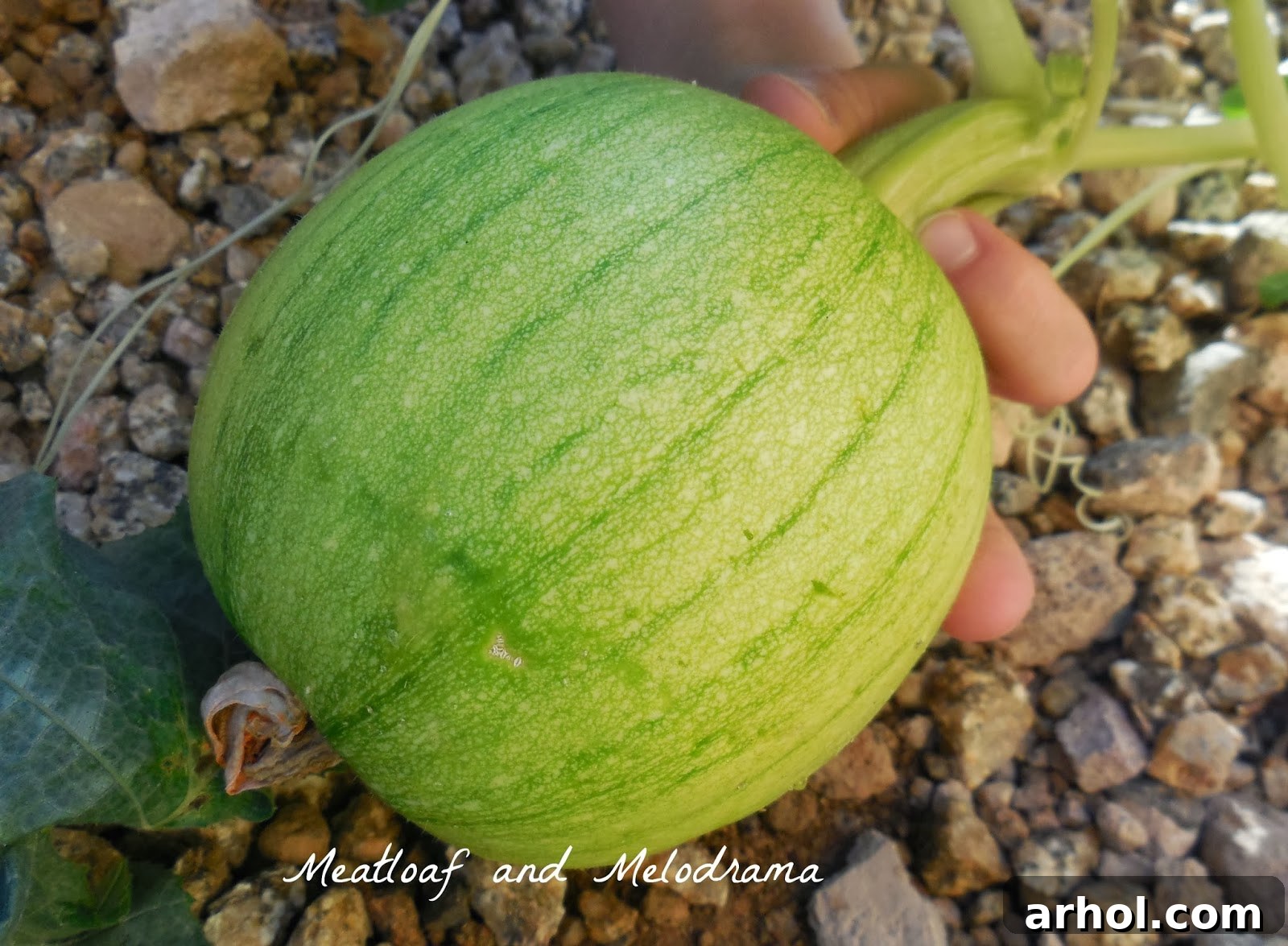
Just as we were on the verge of declaring our experiment a beautiful, albeit fruitless, botanical success story and considering a gentle “eviction” for our enthusiastic but unproductive vine, nature intervened with a delightful surprise. Hidden beneath the broad, protective leaves, we discovered not one, but three charming little pumpkins! It was a moment of pure joy and validation for our patience. I had previously shared a glimpse of one of these precious finds in an earlier post, capturing its youthful green stage.
The journey of these pumpkins has been a testament to nature’s unhurried pace. This particular little gourd, shown above, has been diligently growing and maturing over the past several weeks. While it hasn’t ballooned into a colossal specimen, its transformation is undeniable and deeply satisfying. We’ve been eagerly watching as its skin gradually shifts from a vibrant, youthful green to the warmer, richer hues of orange—a clear sign that our desert-grown pumpkin is finally nearing its prime.
Anticipating the Harvest: Thanksgiving Decor or Christmas Pie?
With Thanksgiving arriving a little later this year, our hopes are high that this tenacious pumpkin will achieve its full orange splendor just in time to become a cherished part of our holiday decor. The prospect of using our very own homegrown pumpkin as a festive centerpiece or a welcoming accent fills us with a special kind of pride and joy that store-bought decorations simply can’t match. It embodies the spirit of our unique Arizona fall, a season that often feels like an extended warm embrace.
A fun debate has also emerged within the family: what kind of pumpkin did we actually plant? My husband can’t quite recall if the original seeds were intended for ornamental use or if they were the coveted “pie pumpkins” renowned for their sweet, dense flesh. To my eye, its shape and size certainly suggest it could be a perfect candidate for a delicious pie. Are there any seasoned gardeners out there who can offer their expertise? We’d love to hear your insights on identifying a pie pumpkin versus a decorative variety!
The progress of these pumpkins has captivated the younger members of our family. Their excitement is palpable, a wonderful reminder of the simple magic found in observing nature’s cycles. They check on “their” pumpkins daily, marveling at the subtle changes and eagerly anticipating the full transformation. While I would absolutely adore the idea of transforming this very pumpkin into a delectable, homemade pie for our Christmas celebration, creating a truly farm-to-table dessert experience, I’ll be equally thrilled to simply have a beautifully ripened, orange pumpkin to grace our Thanksgiving table. It’s the journey, the family involvement, and the sheer delight of a homegrown harvest that truly matters.
The Joys and Lessons of Desert Pumpkin Cultivation
Growing pumpkins in the desert presents its own set of unique challenges and rewards. The intense summer sun requires careful watering and often some shade protection for young plants. Understanding the soil, water retention, and the optimal planting times become crucial. Our experience highlights that even in a relatively small space, and with environmental conditions that might not be considered “ideal” for traditional pumpkin patches, nature finds a way. It’s a powerful lesson in patience, perseverance, and the unexpected joys that can sprout from a tiny seed and a little family effort.
There’s an undeniable charm in growing your own produce, especially something as iconic and seasonal as a pumpkin. It connects us to the land, to the cycles of the seasons, and provides a deeper appreciation for the food we eat and the traditions we uphold. This year, our late-blooming Arizona pumpkins are more than just future decorations or pie ingredients; they are symbols of our family’s shared experience, a unique desert autumn story, and the enduring magic of life unfolding in our own backyard.
Thank you for taking the time to read about our little pumpkin adventure today, dear readers. If you possess any wisdom about pumpkin cultivation, particularly in challenging climates, or have your own heartwarming gardening stories, please do share them in the comments below. We’re always eager to learn from fellow green thumbs!
Warmly,
Dee 🙂